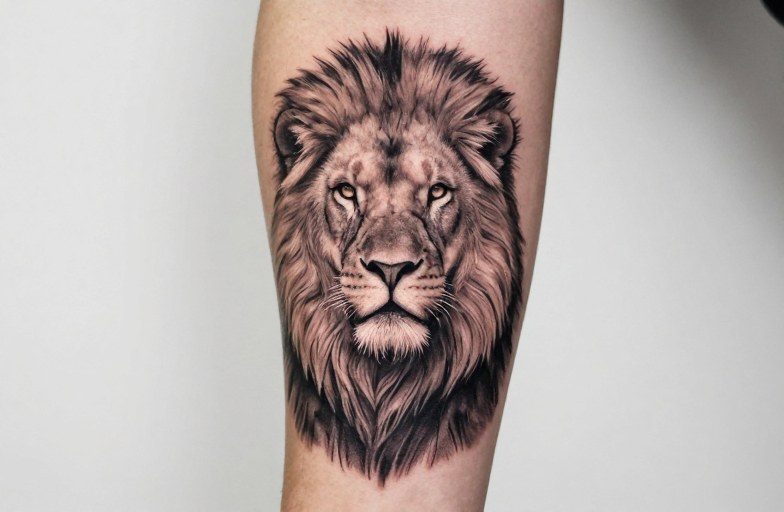
A lion tattoo most commonly represents raw courage, unshakable strength, and the willingness to protect what matters. Across centuries and continents, this animal has stood as a visual shorthand for leadership that doesn’t back down, someone who holds their ground and carries responsibility without crumbling. The meaning stays remarkably consistent whether the design is a full-maned portrait on a chest or a small geometric outline behind an ear.
Symbolism & Core Meaning
The lion carries weight that predates almost every modern nation. Its symbolic territory is broad but coherent: dominance without cruelty, power with purpose, and the quiet confidence of an animal that has nothing to prove.
The Protector Archetype
Female lions do the hunting, yet the male’s role as territorial guardian shaped how cultures read the species. This guardian aspect translates directly into tattoo meaning. People choose lions to mark their role as defenders, of family, of boundaries, of principles. The image works for parents, for those who’ve stepped into responsibility young, and for anyone who’s had to become their own shield. A sleeping lion carries different nuance than a roaring one: vigilance at rest, threat that doesn’t need to announce itself.
Pride and Self-Respect
“Pride” cuts two ways here. The lion’s actual social structure, prides as family units, blends with the human concept of dignity. The mane itself functions as honest signal: healthy males grow fuller manes, and this biological fact became cultural metaphor. A lion tattoo can mark recovery from humiliation, a refusal to accept less than fair treatment, or simply the decision to hold yourself to standard. The visual language doesn’t require explanation; the mane reads immediately as unapologetic presence.
Religious & Spiritual Angles
Religious iconography gives the lion its most specific symbolic jobs. These meanings layer onto personal interpretation without replacing it.
Judeo-Christian Traditions
The “Lion of Judah” appears in Genesis and Revelation, often linked to the tribe of Judah and later to Christ’s kingship and future return. Some trace the connection to David’s lineage, others to the animal’s perceived nobility among Near Eastern cultures. For tattoo wearers, this typically signals faith integrated with strength, not meekness, but controlled power. Designs often incorporate the crown, the cross, or Hebrew text. Placement on the chest or ribs keeps the reference personal rather than performative.
Hindu and Buddhist Contexts
Narasimha, the man-lion avatar of Vishnu, represents divine intervention at the edge of impossibility, when conventional solutions fail. The Buddha’s clan, the Shakya, used the lion as emblem, and “Sihagiri” (Lion Rock) in Sri Lanka shows the animal’s protective architectural function. Buddhist lion tattoos sometimes pair with lotus or dharma wheel, emphasizing the tension between ferocity and discipline. These designs tend toward illustrative or neo-traditional style rather than photorealism, letting the symbolic content read clearly.
Common Variations & Styles
How you render the lion changes what it communicates. Style isn’t decoration, it modifies meaning.
- Photorealistic portraits: Demand large, flat areas like chest, back, or thigh. The technical requirement for detail means these age better with bold contrast and limited fine-line whiskers that blur within five to seven years.
- Geometric/dotwork: Strips the animal to essential structure, triangles for mane, negative space for eyes. Reads as intellect over instinct, control over chaos. Upper arm and forearm placements suit the angular composition.
- Neo-traditional/Japanese influence: Borrowed from irezumi lion-dog (shisa) traditions, these often show floral elements, wind bars, or exaggerated features. The style signals respect for craft and historical lineage.
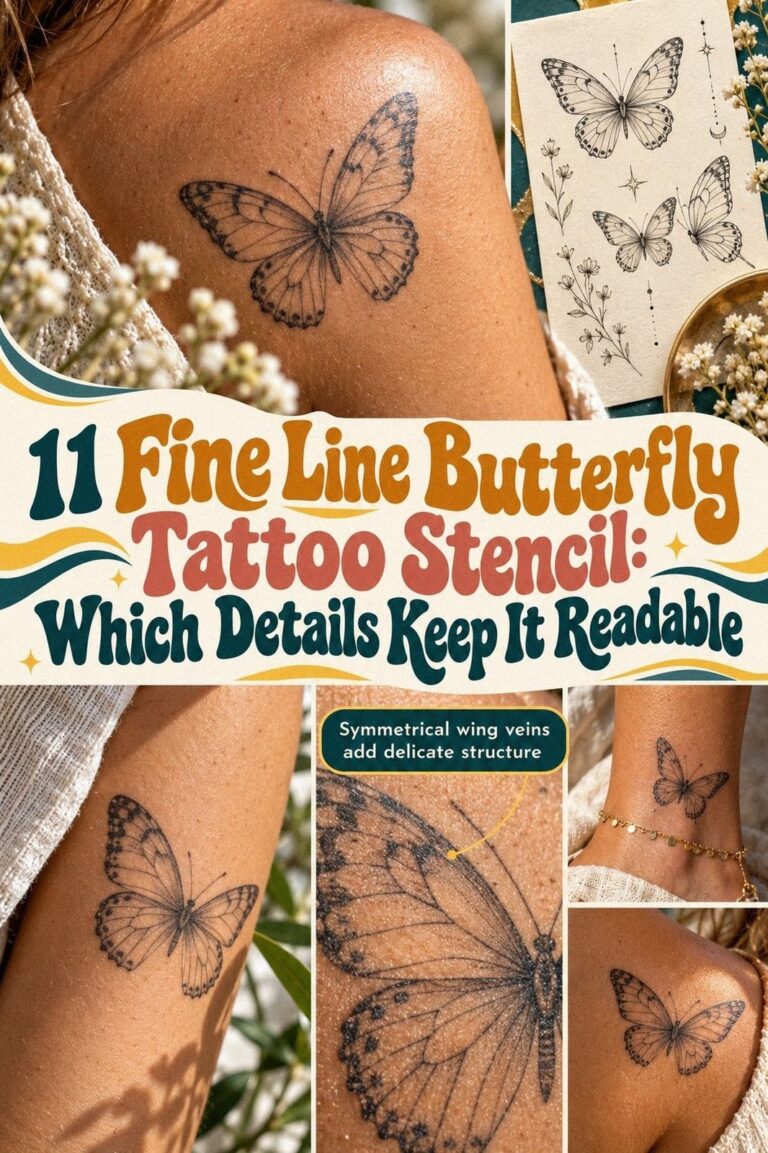
- Minimalist line work: Single-needle or fine-line profiles, usually small. Effective for first tattoos or hidden placements. The tradeoff: fine lines spread and soften faster, especially on high-movement areas like wrists or ankles.
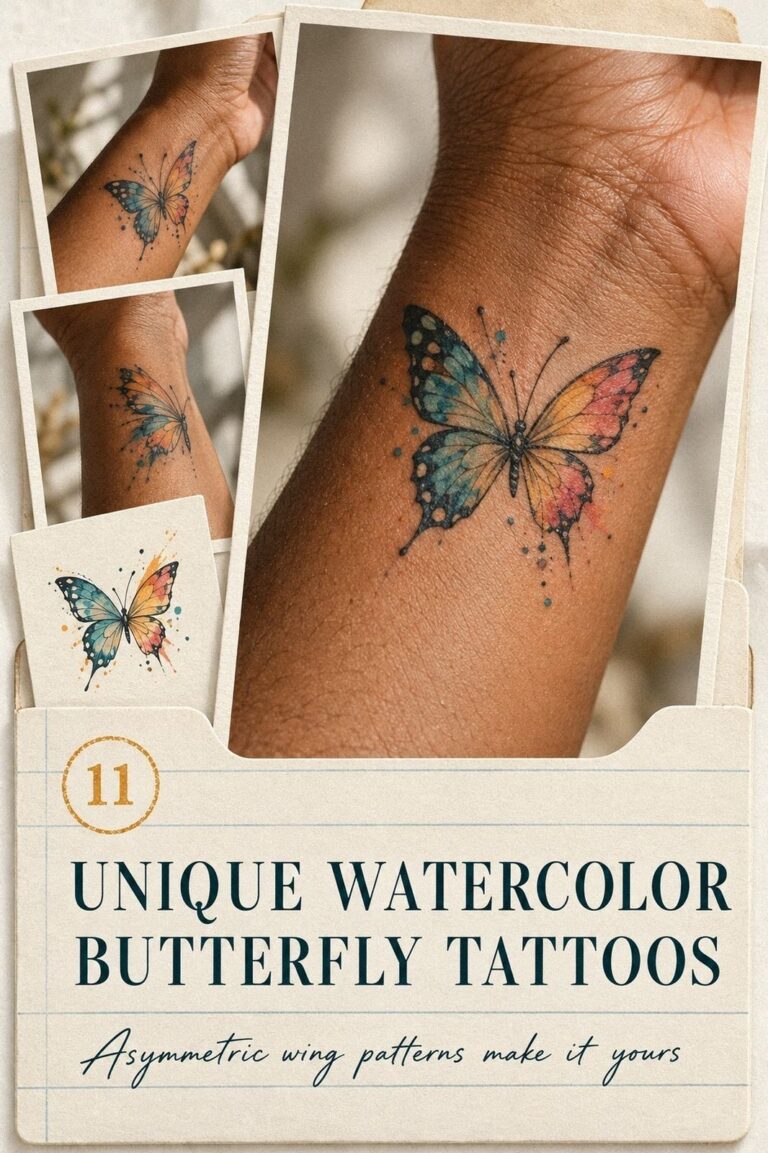
- Black-and-grey vs. color: Greyscale emphasizes texture and shadow; golden manes and amber eyes in color lean into the solar associations (Ra, Apollo, Mithras). Color saturation holds longer on pale, less sun-exposed skin.
Composition Choices
Roaring mouth open shows confrontation, warning, or release of suppressed emotion. Closed mouth and direct eye contact reads as judgment, assessment, or calm authority. Profile views emphasize the silhouette and mane; three-quarter views show personality but require more technical skill to execute well. Paw placement, resting, extended, or gripping, adds narrative detail that many miss.
Personal & Modern Meanings
Contemporary wearers rarely stick to single symbolic channels. The lion accumulates personal significance through context.
Some choose it after surviving violence or illness, not because the lion “fought,” but because it survived, remained intact, kept its territory. Others use it to mark professional identity: the person who makes hard decisions, who absorbs pressure without transmitting it downward. The “alpha” framing gets overused, but the underlying meaning, willingness to bear cost for group benefit, remains valid.
Gender associations have loosened considerably. Female lionesses appear more frequently now, emphasizing cooperative strength and strategic patience over solitary dominance. This shift reflects actual lion biology more accurately and gives women wearers imagery that doesn’t force them into masculine-coded symbolism.
Memorial lions incorporate dates, names, or companion imagery (often cubs). The parent-protector reading becomes explicit. These designs need careful composition to avoid clutter; the lion must remain recognizable at a glance or the protective symbolism gets lost in detail.
Design Tips & Pairings
Placement and companion elements sharpen or broaden the message.
- Chest/sternum: Classic for protector symbolism, close to heart and lungs. Symmetrical designs work best; the sternum line provides natural centering.
- Shoulder/deltoid: The mane wraps naturally around the rounded muscle. Historical armor often placed lions here, and the tradition carries.
- Thigh: Large canvas with relatively stable skin (less sun, less movement than calf). Good for detailed portraits that need space to breathe.
- Hand/finger: Small, visible, high-commitment. The lion’s face simplifies to basic geometry here; detail is impossible and unnecessary.
Companion Elements
Crowns add rulership but risk generic “king” cliché unless personalized. Clocks or hourglasses introduce mortality, power with expiration, urgency without panic. Roses soften the image, traditionally representing beauty that requires defense. Compasses or maps suggest the lion as guide or traveled protector. Cubs introduce lineage, future, or vulnerability held in tension with strength.
Script pairings work when the text is brief and the typography respects the image. Long quotes compete; single words or short phrases (names, dates, coordinates) integrate. Consider whether the text faces the wearer or the viewer, this choice determines whether the meaning is reminder or announcement.
Similar & Related Symbols
The lion occupies territory that other animals approach but don’t fully cover.
Tigers share the big-cat visual language but carry different cultural loading: Eastern associations, solitary hunting, raw aggression less tempered by social structure. Wolves emphasize pack loyalty and cooperative hierarchy rather than individual dominance. Bears represent raw power without the regal framing, more wilderness, less court. Eagles overlap in solar and kingly symbolism but add aerial perspective and divine messenger aspects.
Mythical alternatives include griffins (lion-eagle hybrids, amplifying guardian and treasure-protector roles) and chimeras (more monstrous, less noble). The sphinx combines lion body with human intellect, introducing riddles and hidden knowledge. These hybrids work when pure lion feels too straightforward or too common.
Before You Decide
The lion’s popularity is its strength and weakness. It’s universally readable but easily generic. Your version needs specific detail, particular mane treatment, chosen expression, personal companion element, or distinctive style, to avoid becoming visual noise. The best lion tattoos carry enough technical precision to honor the animal’s actual anatomy and enough personal modification to prevent interchangeability.
Consider how the image ages. Heavy black in the mane holds; fine detail in whiskers and fur texture softens. Discuss this explicitly with your artist, how will this read at ten years, not just ten days? The lion’s meaning is durable; the ink should be too.
Frequently Asked Questions
Does a lion tattoo always mean aggression or dominance?
No. Closed-mouth compositions, sleeping poses, and pairings with cubs or floral elements emphasize protection, patience, and family bonds rather than confrontation. The expression and context determine the emotional register.
What’s the best size for a detailed lion portrait?
Minimum fist-sized for recognizable facial detail, ideally larger. The mane’s texture requires space to render; compressed designs lose the silhouette that makes lions instantly readable. Thigh, chest, and upper back offer the most stable large canvases.
How do lion tattoos hold up over time?
Bold black lines and solid grey shading age well. Fine-line whiskers, subtle fur texture, and light color washes tend to blur and fade within five to eight years, especially on high-movement or sun-exposed areas. Plan for touch-ups or design with aging in mind.
Is a lioness a different meaning than a male lion?
Generally, lionesses emphasize cooperative strength, strategic hunting, and maternal protection rather than solitary dominance. The distinction matters most when the specific narrative, family defense versus individual authority, shapes your choice. Both carry core courage symbolism.
Leave a Reply