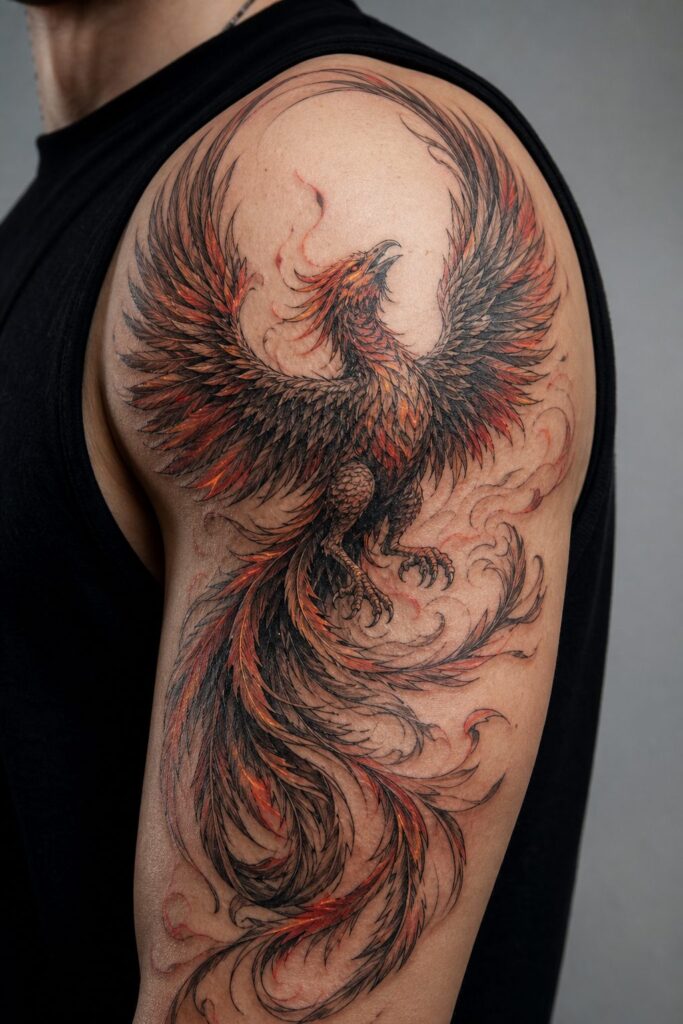
A phoenix tattoo represents rebirth, resilience, and the cycle of destruction and renewal. The mythological bird that burns and rises from its own ashes translates to skin as a declaration of surviving hardship, starting over, or refusing to stay down. For many, it marks a specific turning point, sobriety, leaving a toxic relationship, surviving illness, or rebuilding after loss. The image carries weight because the story is built in: fire, death, return.
Color vs Black and Grey
Color and black-and-grey phoenixes read completely differently and age on distinct timelines. Your choice should hinge on how much maintenance you’re willing to commit to and what emotional temperature you want the piece to carry.
Color: Fire and Intensity
Traditional color phoenixes lean hard into reds, oranges, and yellows with accent blues or purples in the tail feathers. The warmth matches the symbolism, this is a piece that screams. Neo-traditional and Japanese (hou-ou) styles push saturation even further, sometimes incorporating gold leaf effects or heavy background elements. The downside: warm pigments fade fastest. Red and orange are notorious for breaking down under UV exposure, and a color phoenix with poor aftercare can look muddy in five years. Expect touch-ups. Expect sunscreen. Expect that a big, bright piece will cost more upfront and over time.
Black and Grey: Ash and Structure
Black-and-grey phoenixes trade heat for architecture. The focus shifts to feather texture, wing span, negative space for flames, and the sculptural quality of the body. These pieces age slower and more gracefully. Smoke effects, embers rendered as stipple or whip-shading, and heavy blacks in the wing bones give the artist more room to play with contrast. If you want the symbolism without the visual noise, or if you work in a conservative environment where visible color draws attention, this route makes sense. The rebirth narrative still lands; it just whispers instead of shouts.
Common Variations & Styles
Not every phoenix rises the same way. The style you choose determines whether the bird looks triumphant, tortured, or transcendent.
- Japanese (Irezumi/Hou-ou): Paired with paulownia flowers, flames, and sometimes foo dogs. The hou-ou is distinct from the Western phoenix, often linked to imperial virtue and grace rather than pure rebirth. Heavy background, usually large-scale back or sleeve work.
- Neo-Traditional: Bold outlines, limited but saturated palette, exaggerated proportions. The bird often looks aggressive, beak open, talons forward. Good for arms and thighs where the shape can spread.
- Realistic: Feather detail rendered like a photograph. Requires a specialist. Looks best at scale, small realistic phoenixes turn to grey mush as ink bleeds.
- Geometric/Abstract: The bird broken into triangles, fractals, or negative-space silhouettes. Appeals to people who want the concept without the literal bird. Aging is unpredictable if lines are too fine.
- Minimalist/Single-Line: Contour only. Trendy, but risky. A single-line phoenix on an ankle or wrist will blur faster than you expect. Placement matters enormously here.
The Fire Problem
Flames are where phoenix tattoos often fail. Artists sometimes render fire as an afterthought, a lumpy orange halo. Good fire requires motion, tapering points, color gradients, or in black-and-grey, careful use of negative space to suggest heat without defining every lick. If your artist’s portfolio flames look like cartoon campfires, reconsider. The fire is half the narrative.
Similar & Related Symbols
People cross-shop phoenixes with other rebirth and resilience imagery. Understanding the differences helps you commit or pivot.
- Ouroboros: Cyclical renewal, but darker, self-consumption, eternity through repetition. Less triumphant, more existential.
- Koi (swimming upstream): Perseverance, transformation. Japanese tradition often links koi to dragon transformation. Less fire, more water. Good for people who connect to struggle rather than destruction.
- Lotus: Rising from mud, spiritual awakening. Quieter, more meditative. Common in Eastern-influenced pieces.
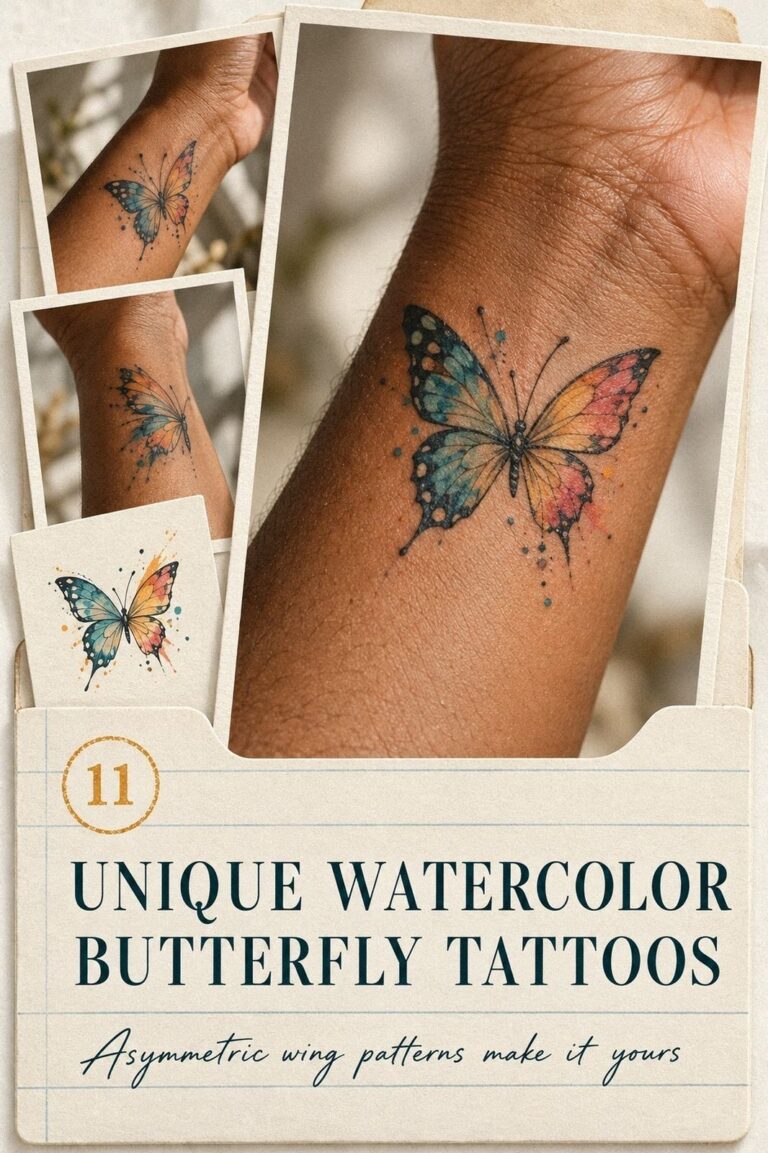
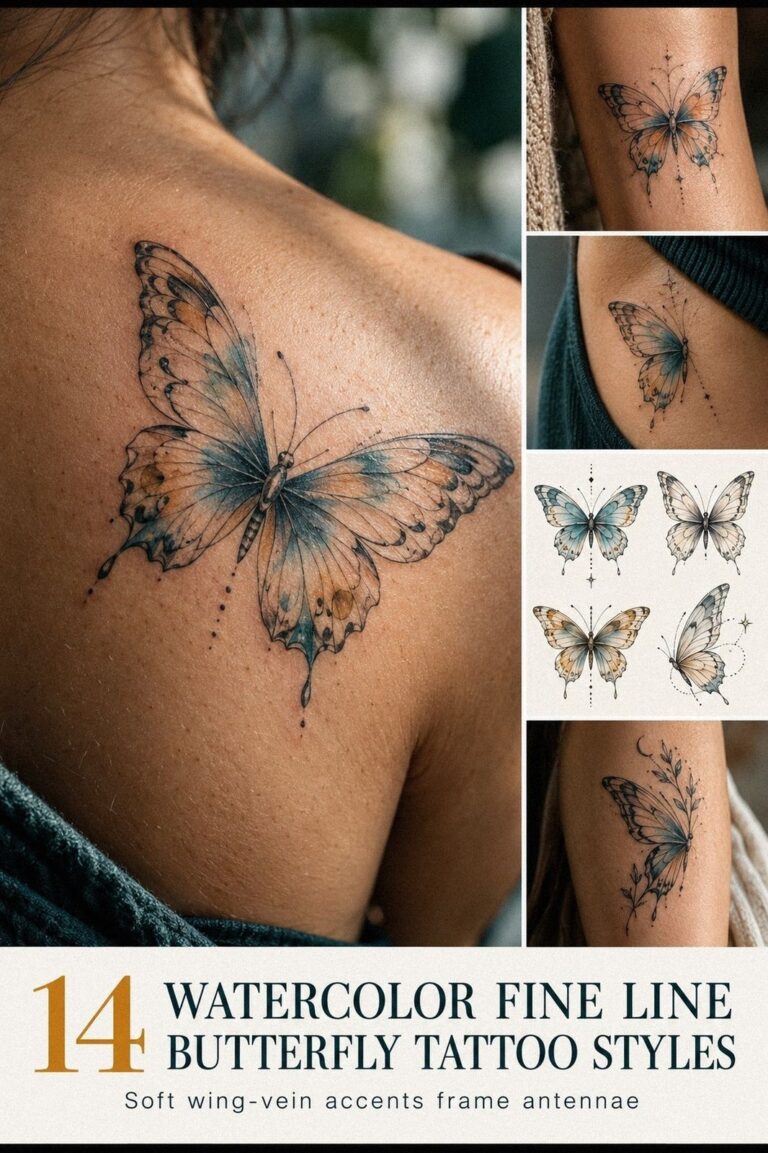
- Butterfly: Metamorphosis, but lighter. Often reads as feminine or delicate in ways a phoenix resists.
- Rising sun: New beginnings without the death prerequisite. Simpler, less baggage.
Some people combine symbols, phoenix rising through a lotus, or koi and hou-ou in a full Japanese back piece. Know that each addition complicates the composition and the healing.
Who Chooses This Tattoo
There’s no single demographic, but patterns emerge in placement and style. People who’ve survived something specific, cancer, addiction, divorce, prison, war, gravitate toward the phoenix because the image does the talking. They don’t need to explain the tattoo; strangers read it correctly. Others choose it preemptively, as armor or intention, a way of claiming resilience before testing it. Age range skews 25-45, usually a first or second large piece rather than a tiny spontaneous impulse. The phoenix demands space and commitment, which filters out the purely decorative.
Gender and Placement Patterns
Historically, men favored full-back Japanese hou-ou or chest pieces; women, rib-to-hip compositions or thigh work. Those lines have blurred. What remains consistent: the phoenix is rarely a first tattoo on a finger or behind an ear. The symbolism feels too heavy for that scale, and the detail required doesn’t shrink well.
How It Ages on Skin
Phoenixes are detail-dense. Feathers, flames, beak texture, eye highlights, every element competes for space. Over time, ink spreads. Lines that were crisp at 0.3mm thicken to 0.8mm or more. Small feathers merge into grey blobs. Color saturation drops, especially in warm tones.
What holds up:
- Strong black outlines with consistent line weight
- Large scale (palm-sized minimum, ideally much bigger)
- High contrast between subject and background
- Strategic negative space, letting skin breathe
What degrades:
- Micro-detail in feathers (individual barbs, fine stippling)
- Soft color gradients without hard edges
- White ink highlights (often disappear entirely)
- Tiny script or dates incorporated into the flames
A well-executed large phoenix with bold lines can look good at fifteen years. A small, delicate, color-heavy piece can need serious rework in three.
Best Placements
The phoenix is a vertical, ascending shape. Wings spread, tail trails, head lifts. This natural architecture dictates placement more than most designs.
- Full back: The classic. Wings span shoulder to shoulder, tail down to sacrum or upper glutes. Allows for Japanese background, full feather detail, and the largest scale. Heals poorly if you sleep on your back during recovery.
- Thigh (front or side): Vertical space for tail and body, enough width for wing spread. Less painful than ribs, easier to show or hide. One of the most versatile placements.
- Ribs to hip: Dramatic, painful, private. The curve of the body can distort the wing shape if the artist doesn’t account for movement. Not for first-timers.
- Chest to shoulder: Asymmetrical compositions work here, bird emerging from one side, flames wrapping the pec. Good for people who want visible symbolism without full back commitment.
- Upper arm/shoulder cap: Smaller scale, but workable if the bird is coiled or ascending rather than fully spread. Sleeve integration possible.
- Forearm: Risky. The shape wants verticality; the forearm is horizontal. Artists often solve this with the bird diving or coiled, which changes the emotional read from rising to struggling.
Placement and Pain Reality
Back and thigh are manageable. Ribs, sternum, and hip bone are brutal, thin skin, nerve clusters, bone proximity. A full rib phoenix with flame background is a multi-session project requiring real stamina. Factor that into your decision, not just the final image.
Key Takeaways
A phoenix tattoo represents rebirth through fire, but the execution determines whether that message survives. Choose scale over convenience, this image needs room. Prefer bold lines and high contrast for longevity, especially if you’re drawn to color. Match the style to your actual story, not an idealized version of it. Japanese hou-ou, neo-traditional rage, minimalist contour, each carries a different emotional temperature. Placement should follow the bird’s natural vertical ascent, not force it into a space that fights the shape. And budget for the long term: a good phoenix is expensive to get right and may need maintenance to keep reading clearly. The symbolism is ancient; your skin is not. Plan accordingly.
Frequently Asked Questions
Does a phoenix tattoo always have to include flames?
No, but omitting fire changes the narrative. Some designs use smoke, embers, or ash to suggest the burn without literal flames. Others rely on the bird’s posture, head raised, wings spread, to imply rising. The absence of fire can read more quietly, more personally, but the rebirth symbolism becomes harder for strangers to read at a glance.
How big should a phoenix tattoo be to hold up over time?
Palm-sized is the absolute minimum; open-hand spread or larger is significantly safer. Feather detail and flame texture need physical space to stay distinct as ink spreads. A phoenix smaller than your palm will lose definition within a few years, especially in high-movement areas like wrists or ankles.
Can a phoenix tattoo be covered up if I change my mind?
Covering a phoenix is difficult because of the dense black and saturated color typical in good ones. The wing structure and flame background leave little blank skin for a cover-up artist to work with. Laser removal is an option but struggles with red and orange pigments. Think of a phoenix as permanent in a way even other tattoos aren’t.
Is there a difference between a phoenix and a Japanese hou-ou tattoo?
Yes, though they’re often conflated. The Western phoenix is explicitly about rebirth from ashes, fire, death, return. The Japanese hou-ou is commonly associated with virtue, grace, and imperial authority, often depicted with paulownia and bamboo rather than flames. The visual language differs too: hou-ou tend toward more stylized, regal postures with distinct tail plumage. Know which tradition you’re drawing from before committing.
Leave a Reply