Traditional unique butterfly tattoos can stay crisp for years when you choose strong linework, sensible placement, and enough breathing room. I got mine during a nervous season, then kept it covered until I understood what it meant to me. You don’t need a huge design to make a bold statement. Sometimes, a small wing says everything!
Before I Let Anyone See It
Before the appointment, I had a clear patch of skin saved for the right idea. Every abandoned sketch revealed a different concern. One butterfly was too delicate, another felt too ornate, and a third looked like it belonged to someone else.
I kept comparing small unique butterfly tattoos and wondering whether the design would still feel personal after the novelty faded. I’d wear short sleeves, then change my mind. My skin was ready.
I wasn’t.
The details that kept returning were simple: open wings, a dark body, and a crisp border. A muted terracotta accent with an olive note felt striking without becoming loud. It also gave me a clear starting point for the consultation.
- Choosing a Small Traditional Butterfly Tattoo
- Sketching Unique Traditional Butterfly Wing Details
- Olive Skin, Vintage Color
- Selecting a Meaningful Butterfly Color Palette
- Placing the Butterfly Above My Collarbone
- Balancing Bold Lines with Delicate Details
- Adding Symbolic Flowers Around the Butterfly
- Three Flash Tests, One Clear Winner
- Planning a Fierce Butterfly Forearm Design
- Checking Linework Before the Tattoo Session
- Protecting the Ink During Butterfly Tattoo Healing
1Choosing a Small Traditional Butterfly Tattoo
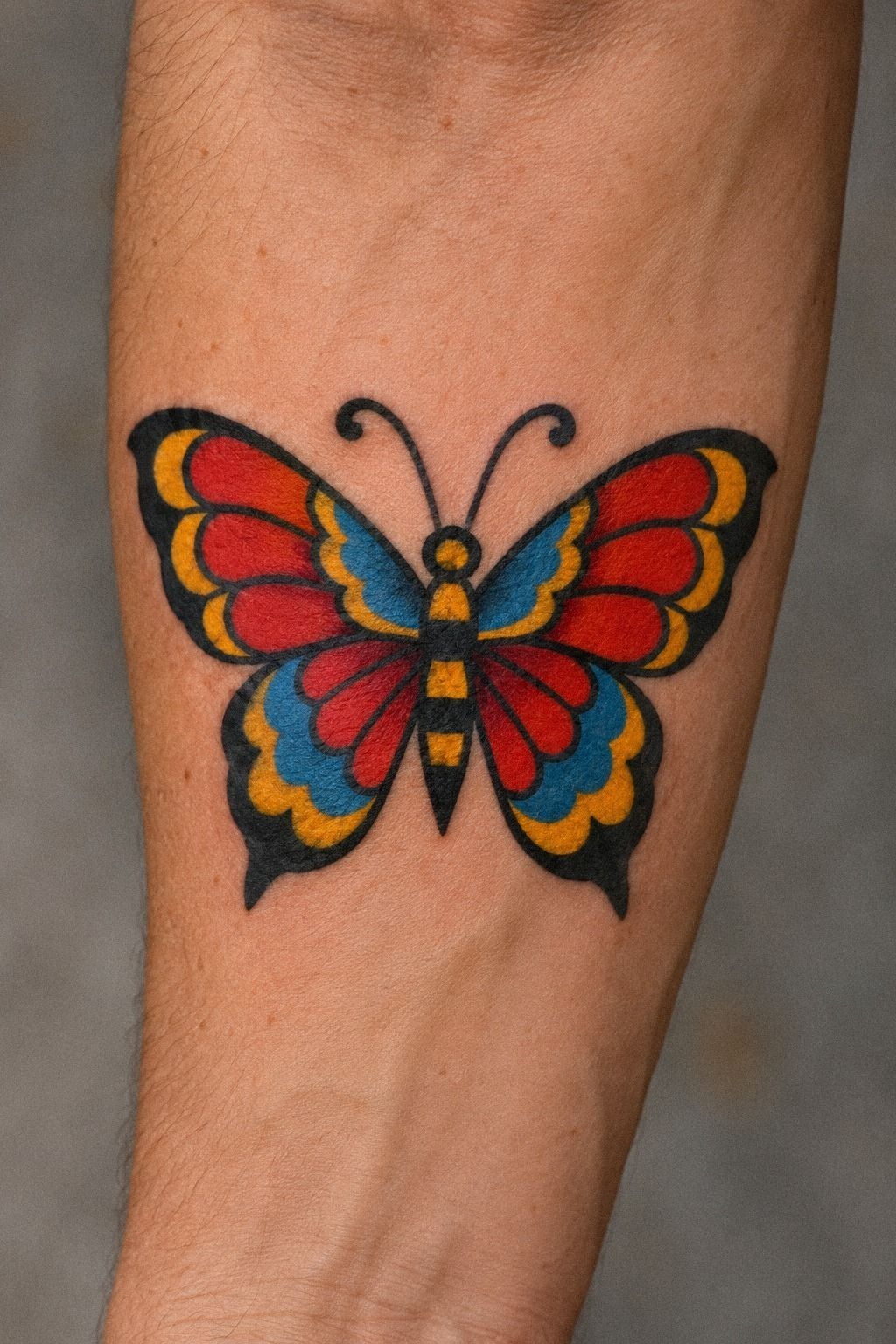
I started with a compact butterfly on my calf because I wanted visibility without committing my whole leg to the idea. The first drawing measured about 1.5 inches wide, with open wings and a symmetrical body. Terracotta pigment gave the design warmth against my medium olive skin while the darker body kept its silhouette clear.
You’ll want to check how the wings read from several angles, not only straight on. I held the sketch beside my leg, walked around, and watched the shape change as my calf flexed. My opinion was firm: I’d skip an overly narrow butterfly because the wing details could blur into a dark patch over time.
The artist used bold outlines around the wing edges and left small areas of skin untouched inside the pattern. That negative space kept the piece readable instead of crowded. The strongest examples use fewer marks with more intention.
I almost chose a more dainty version, but it disappeared whenever I stood several feet away. The small traditional design won because it still looked expressive at a glance. When you’re choosing something you’ll carry for years, readability matters more than squeezing in every possible flourish.
Before I booked, I asked whether the design would still be worth it if I removed half the interior lines. The artist said yes. That answer gave me better value than another page of references.
2Sketching Unique Traditional Butterfly Wing Details
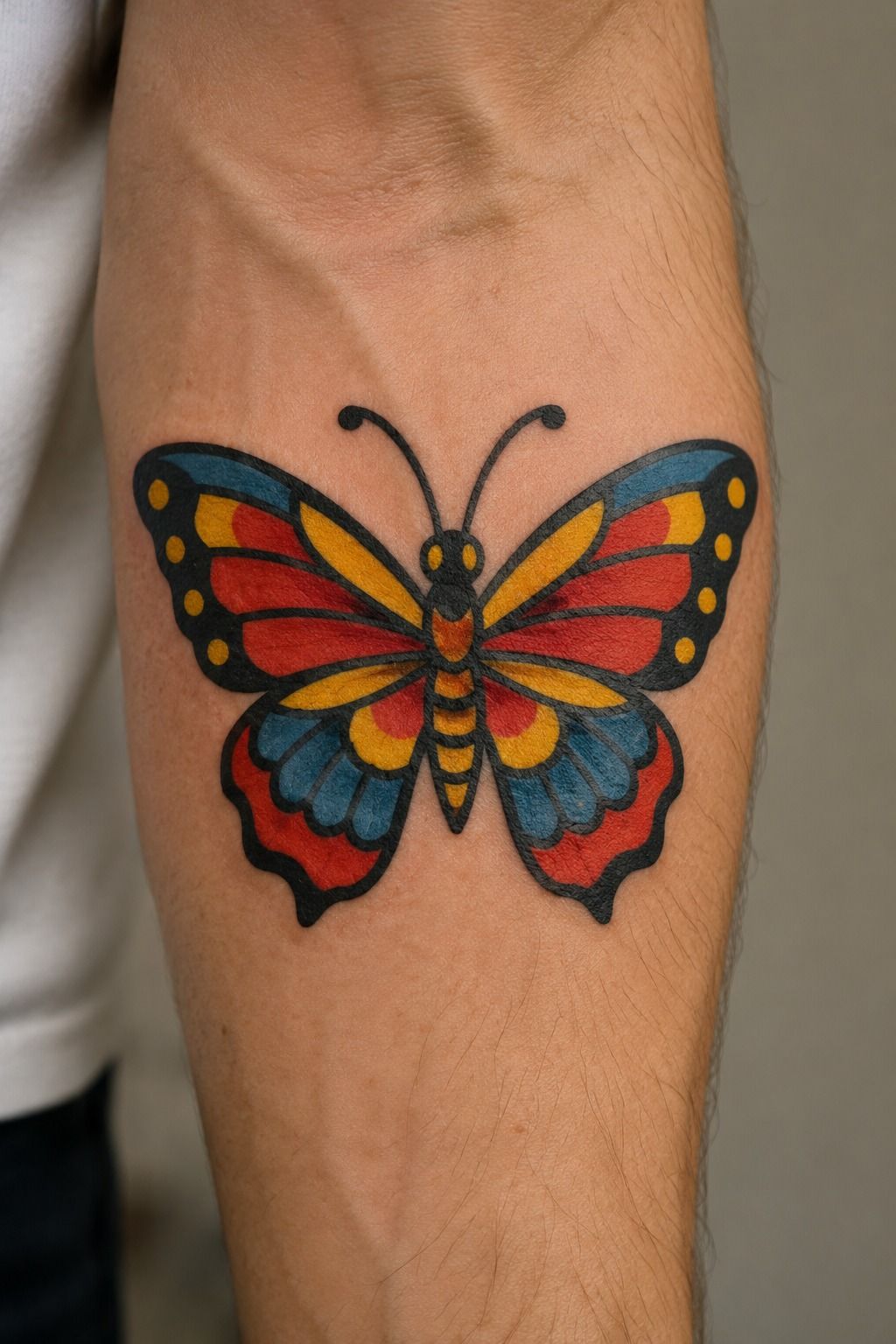
The second stage was the sketch, and this was where the design became mine. I asked for rounded wings, tiny scallops, and a central body that looked slightly heavier than the surrounding lines. Clay-colored shading helped me compare the airy option with the more dramatic version.
You don’t need every wing vein drawn in. I learned that quickly. The artist showed me two sketches, and the intricate wing pattern looked impressive on paper but felt busy beside my forearm.
I chose the simpler structure because your eye could follow it without getting lost. That decision made the butterfly feel minimal and understated, even with a few unusual marks.
My favorite detail was a pair of uneven marks near the lower wings. They weren’t perfectly mirrored, and that small difference made the butterfly feel whimsical rather than stamped. If you want a similar direction, study geometric unique butterfly tattoos for balance, then soften the geometry with one organic detail.
I kept the final sketch for three days before booking. That pause helped me separate excitement from attachment. You’ll know the drawing is working when you stop redesigning it and start imagining how it will move with your body.
Mine finally felt sharp, quietly daring, and unmistakably mine. A small aged-gold accent beside the clay wings gave it enough distinction without making the design busy. I could picture the finished piece without needing to force the idea.
That was the first real sign that the design had staying power.
3Olive Skin, Vintage Color
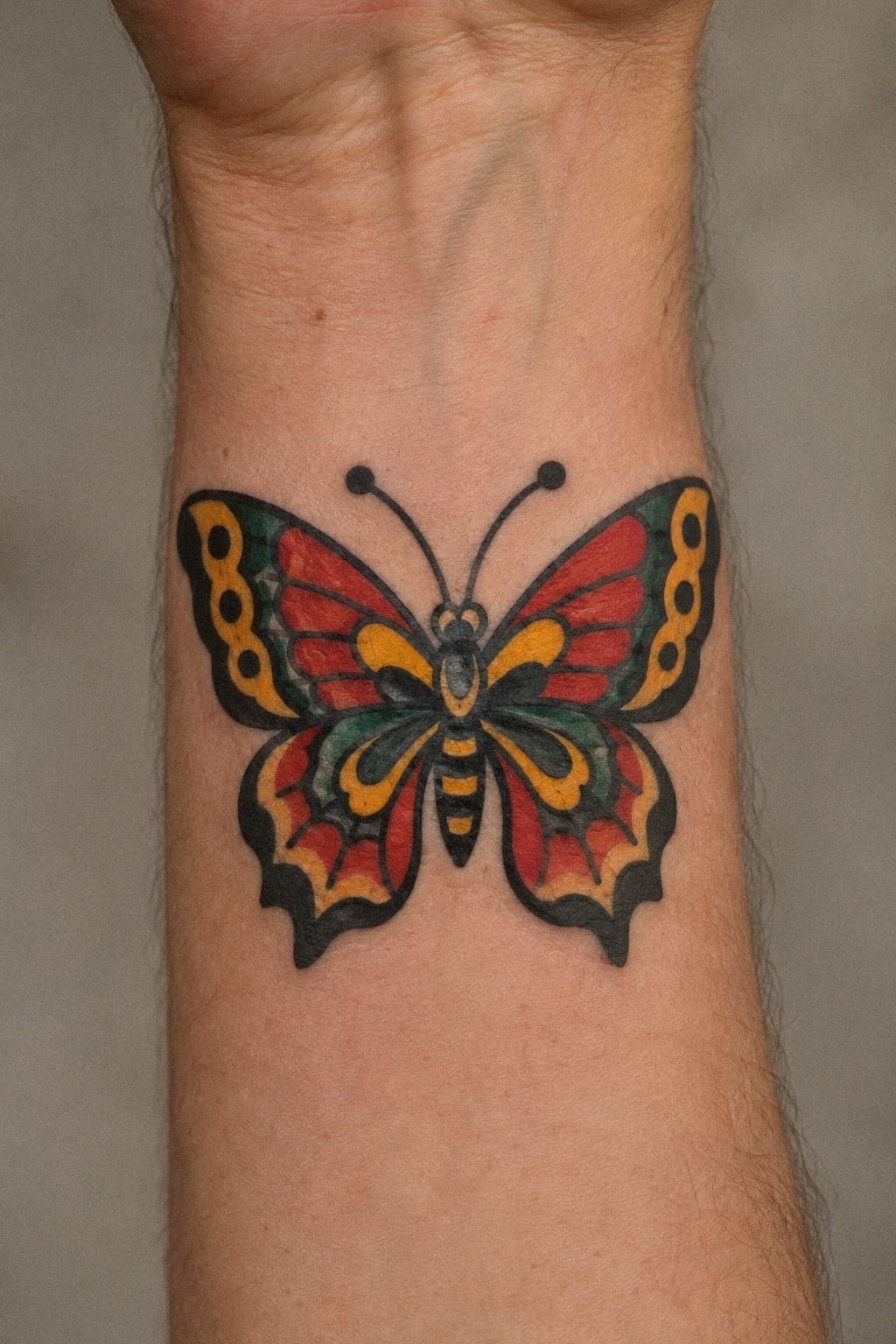
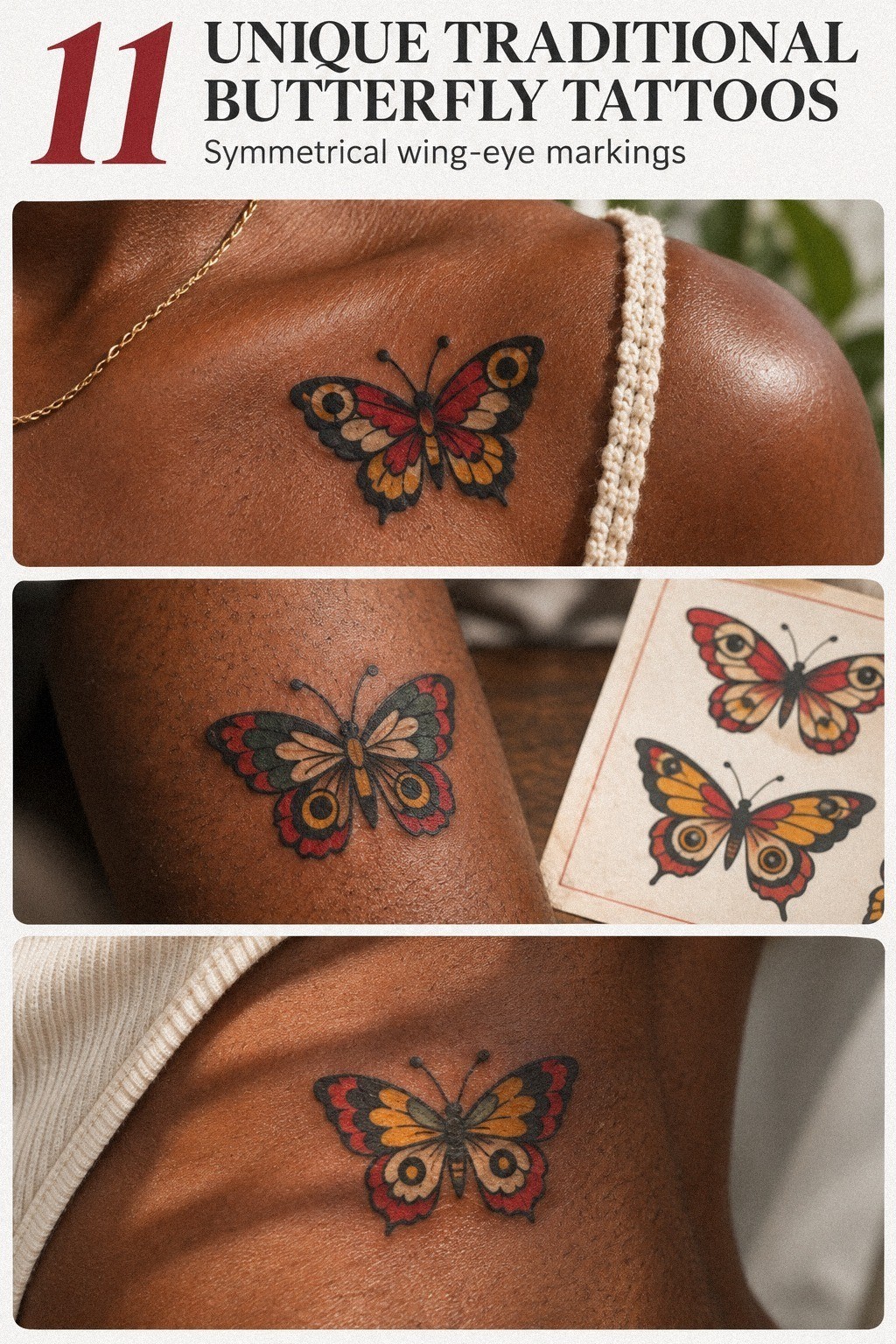
My skin has a medium olive undertone, so I didn’t want a palette that would look muddy once healed. Plum, soft grey, and a restrained rose-gold accent felt more vintage than a bright primary mix.
4Selecting a Meaningful Butterfly Color Palette

I wanted the colors to carry meaning without turning the butterfly into a coded message nobody else could understand. Navy pigment represented courage to me, while an ivory accent suggested distance, change, and the part of my life I’d finally stopped hiding.
You can make a palette meaningful by limiting it. I tried four colors at first, and the result felt playful but scattered. Navy, ivory, and a dark body looked more intentional.
My strongest recommendation is to choose one emotional color and one supporting shade. Let the skin provide the quiet space between them. That restraint made the design feel symbolic instead of overloaded.
The artist used saturated color blocks rather than watercolor-style washes. If you prefer softer edges, compare watercolor unique butterfly tattoos before requesting a quote. Don’t mix every visual language into one small piece.
I nearly added green because it looked stylish in the reference sketch. Then I realized I liked the idea more than the actual design. You’ll save yourself doubt if you ask whether each color belongs to your story or only looks exciting for five minutes.
Mine needed to feel meaningful, vintage, and unmistakably mine. The navy and ivory combination also gave the traditional shape a timeless quality.
That mattered more than matching a popular reference. The final palette kept the total cost within my planned budget.
5Placing the Butterfly Above My Collarbone

The collarbone version stayed on my flash sheet for weeks before I decided against it. Emerald and gold accents made the placement look romantic and bold, but the position would have made the tattoo visible in more situations than I wanted at that point.
You should think about visibility as part of the meaning, not merely a style choice. Above the collarbone feels romantic and intimate, while the calf gives you more control over when the design appears.
I chose the calf first because I wanted ownership before I wanted attention. That felt empowering. It also let me test whether the idea still felt right when nobody else could see it.
The flash sheet showed several hand-drawn butterflies with open wings, dark bodies, and small flowers. I liked the composition, but I’d skip copying the entire sheet. A single design has more emotional force than a crowded collection.
The tiny unique butterfly tattoos gallery helped me compare scale. A smaller piece can still look powerful when the silhouette is clear. Tiny does not have to mean forgettable.
When I finally showed the sketch to my sister, I expected a dramatic reaction. She simply said it looked like me. That was the moment I stopped treating the tattoo as a detail decision and started treating it as a personal one.
Sometimes your body tells you where the design belongs before your confidence catches up!
6Balancing Bold Lines with Delicate Details

On my medium olive skin, the artist adjusted the contrast so the butterfly wouldn’t lose its structure. Forest-green and rust accents worked inside the darker outer lines, while small open sections created delicate movement inside them.
The design looked fierce without becoming visually heavy. I wanted strength, but I didn’t want every mark competing for attention.
You’ll want to discuss line weight directly, especially if your reference uses very fine details. I chose bold borders with restrained interior marks because thin lines can spread as tattoos age.
The artist showed me healed examples, and the pieces with clearer structure held their shape better. That evidence made the higher quote feel worth paying. Good linework is part of the long-term value.
My first instinct was to add more veins, dots, and tiny curls. But the extra details flattened the wing pattern from a normal distance. I removed them.
If you’re drawn to softer work, compare delicate unique butterfly tattoos with traditional examples before deciding where your own design needs strength. The final balance felt elegant and raw at once.
You could see the delicate details up close, but the butterfly still had a graceful outline from across the room. That was the goal: a design that rewarded attention without demanding a magnifying glass.
7Adding Symbolic Flowers Around the Butterfly

I considered framing the butterfly with a single-stemmed flower, but I didn’t want the surrounding shape to compete with the wings. Dusty-rose petals became the final choice because they felt expressive, while a narrow charcoal stem gave the design a clean vertical rhythm.
You can use flowers to clarify meaning, but you don’t need a botanical border around every tattoo. I rejected roses, daisies, and leaves because they made the butterfly feel less personal.
The flower suggested remembrance and resilience without explaining itself too loudly. That quiet symbolism felt sacred to me, even though another person might read the same flower differently.
The calf design looked strongest with one flower placed slightly below the butterfly, not directly behind it. The watercolor small butterfly tattoo examples helped me compare how one stem can guide the eye without overwhelming the main subject.
I kept the flower smaller than the wings. A larger bloom would have become the emotional center, and I wanted the butterfly to remain there. The final arrangement felt flowing rather than rigid.
You’ll notice the difference immediately when you compare the silhouette with and without the flower. The best addition should make the main design clearer. It shouldn’t make you spend more simply because there is empty skin nearby.
8Three Flash Tests, One Clear Winner

Before the appointment, I tested three arrangements: butterfly alone, butterfly above the flower, and butterfly angled slightly toward the knee.
The strongest version used camel and black accents with a warm-white gap between the wings and the flower. That combination looked classic without losing the unusual character I wanted.
The angled version felt more edgy, but it made the butterfly harder to read when my leg was relaxed. I chose the centered arrangement because it held its shape more consistently.
9Planning a Fierce Butterfly Forearm Design
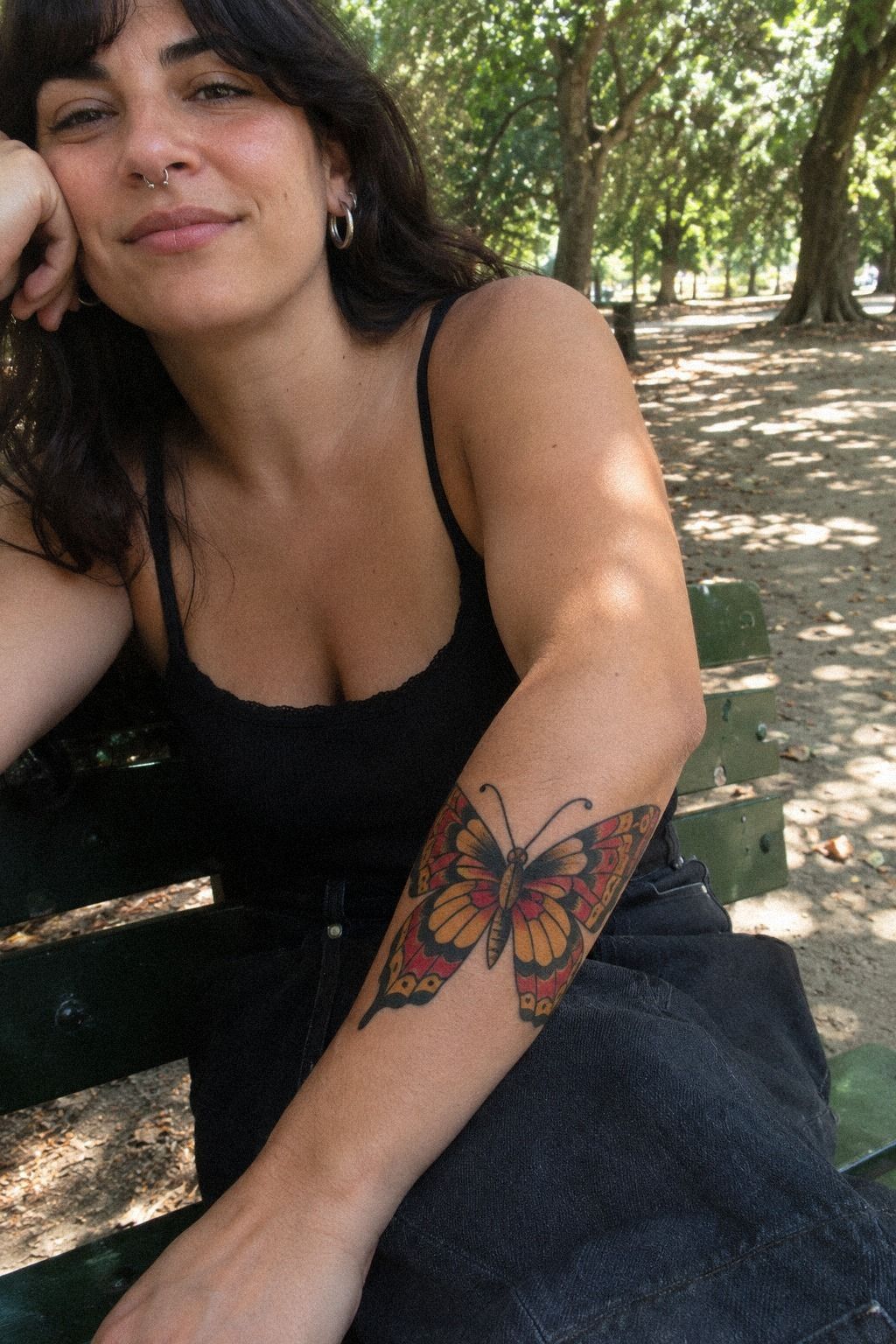
The forearm version was my most daring option because it would be visible almost every day. Midnight-blue pigment with copper and ivory details gave the open-wing butterfly enough contrast while keeping the design connected to the rest of my ideas.
You’ll want to consider how the design reads when your arm is relaxed, bent, and turned sideways. I tried all three positions. The first stencil was too horizontal, so the butterfly looked compressed whenever I moved.
A longer central body fixed that without making the tattoo much larger. The adjustment gave the design a more masculine edge, although the same structure could easily feel feminine with softer wings and color.
I preferred this fierce version to a soft, floating design because the forearm gave it room to make a clear statement. If you’re unsure about visibility, study minimalist unique butterfly tattoos and compare how much personality comes from placement rather than decoration.
In the end, I didn’t choose the forearm first. I kept it as a future idea because you don’t have to solve every tattoo decision in one appointment. That restraint felt understated and empowering.
Your best design may be the one you give time to become obvious. If a placement keeps making you hesitate, pause before you pay. A delayed decision can protect both your skin and your budget.
10Checking Linework Before the Tattoo Session
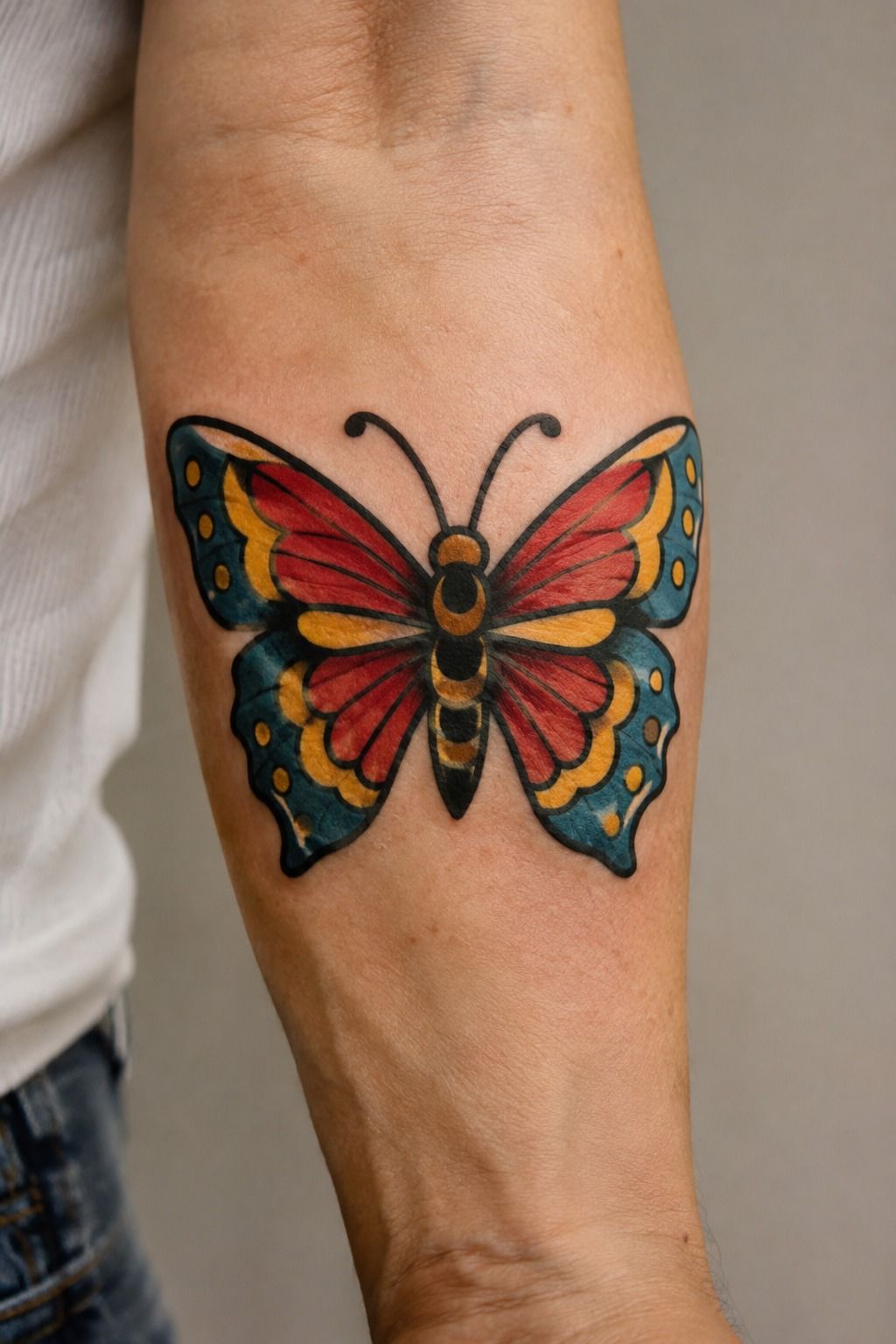
The final checkpoint was a direct stencil comparison on my skin. Sage-green transfer marks made it easy to see which lines were essential before the session began.
You should inspect the wings for uneven thickness, accidental tangles, and cramped spaces. I checked the body, antennae, flower stem, and outer border separately.
The lower left wing needed one fewer interior line. Removing it made the whole pattern more polished and easier to read. Small edits can create more value than adding another expensive detail.
My artist also checked the direction of the stencil against the calf. That practical step mattered more than another hour of scrolling through references. I’d rather have a clean, slightly simpler tattoo than a complicated design with one section that never settles correctly.
And yes, I was nervous. The appointment lasted under two hours, including setup, stencil placement, and the tattoo itself. You’ll feel more grounded when you’ve already made the important decisions.
The tattoo needle shouldn’t be the moment when you discover what your design means. If you’re still debating the main symbol, ask to reschedule the appointment. A clear stencil is worth more than rushing into a low quote.
11Protecting the Ink During Butterfly Tattoo Healing
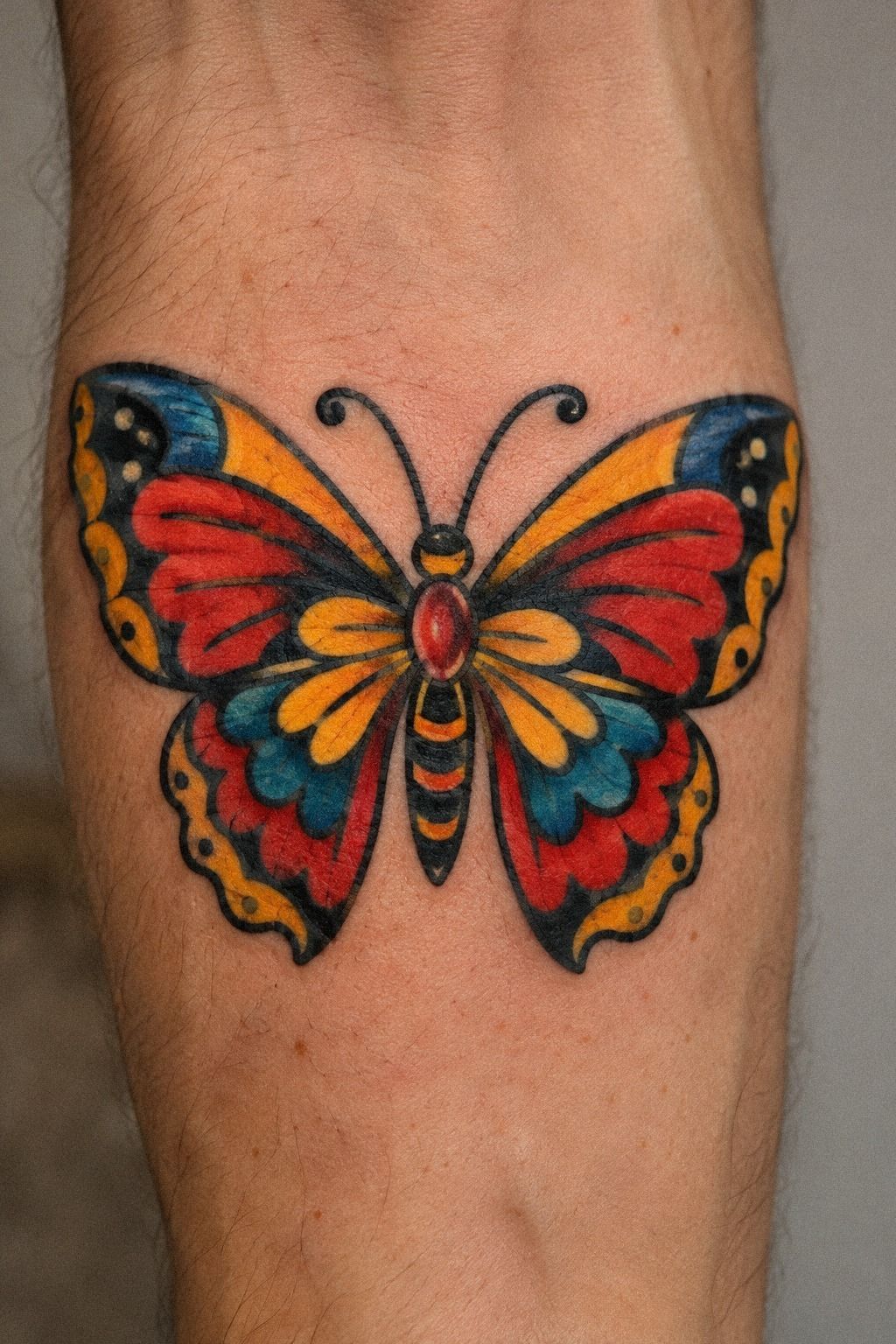
After the appointment, I treated the tattoo like an open wound, not a finished accessory. The terracotta, olive, and darker details looked vibrant at first, then settled as the skin healed.
I followed the artist’s written instructions, washed gently, and avoided picking at flakes. You can protect a fresh butterfly tattoo by keeping friction low and avoiding prolonged sun exposure.
The color shifted during the first several weeks. That was normal, but I still contacted the artist when I had a question instead of guessing. Good aftercare protects both the design and your peace of mind.
How Much It Cost
I planned around a typical US range instead of pretending every studio charges the same amount. A reputable tattoo studio may set a minimum of about $50 to $100, while hourly rates often fall near $100 to $250.
A small traditional butterfly commonly lands around $100 to $300. The final price depends on the artist, region, placement, color, and detail.
My design stayed near the lower end because it was compact, but the consultation and careful stencil work still mattered. You shouldn’t choose an artist only because the quote is low.
Clean linework, healed examples, and strong hygiene are worth more than saving a small amount. The cheapest option isn’t always the most affordable choice over time.
Before booking, I asked for the expected total, minimum charge, deposit policy, and aftercare instructions in writing. That conversation made the appointment feel clear instead of mysterious.
You can compare visual directions through traditional black butterfly tattoo references before requesting a quote. Knowing the likely cost helped me choose details with confidence.
Before You Book
Start by deciding how visible you want the tattoo to be. The calf gave me control, while the forearm would have made the design part of nearly every outfit and daily interaction.
Then consider scale. A tiny butterfly can look dainty, but cramped details may not age as clearly as a slightly larger silhouette. The right size depends on the marks you want to keep.
I’d also ask whether the artist has healed work in a similar style. Fresh tattoos can look bold and finished, but healed examples reveal much more about line stability and color.
If you’re working with a strict budget, tell the artist early. They may suggest fewer colors, a shorter session, or a simpler design. Those changes can preserve the meaning without lowering the quality.
The small unique butterfly tattoos references helped me explain the scale I wanted. I also saved the geometric unique butterfly tattoos page to show the balance I liked.
What I Asked Before Paying
I asked how the design would be adjusted for my skin tone, how long the appointment might take, and which details were most likely to soften over time. Those questions gave me a better sense of the artist’s process.
I also asked whether the color choices would change the quote. The written estimate made it easier to compare value instead of reacting to a vague number.
A professional should be able to explain the deposit, cancellation policy, minimum charge, and aftercare plan. You don’t need to feel awkward asking about money. Tattoo cost is part of the decision.
I brought the watercolor unique butterfly tattoos references only to explain what I didn’t want. The softer style was beautiful, but saturated traditional blocks suited my idea better.
I also checked tiny unique butterfly tattoos to make sure my chosen width wouldn’t force too many marks together. That comparison saved me from choosing a size based only on a reference image.
Why I Chose to Show It
I kept my butterfly covered because I thought showing it meant I had to explain it. That belief lasted longer than the tattoo itself. Once the skin settled and the colors softened, I realized the design didn’t need a speech.
The strongest part is the contrast between the traditional butterfly structure and the personal decisions inside it. The wings are familiar, but the uneven marks, navy color, and single flower came from a specific chapter of my life.
I’ve changed my mind about visibility. A tattoo doesn’t become more meaningful because everyone sees it, and it doesn’t become less important because you keep it private.
I chose the calf first because it gave me control. Later, I showed it when I wanted to, not because anyone had earned an explanation. That choice felt sacred and deeply personal.
The delicate unique butterfly tattoos references reminded me that softness can still be strong. The watercolor small butterfly tattoo examples also helped me understand how color changes the mood.
If you’re planning your own piece, start with the detail you keep returning to. Maybe it’s a black body, a bright wing, a flower, or an unusual angle. Then remove everything that only looks impressive in a reference image.
Your final design should feel bold, vibrant, and easy to recognize as yours. That feeling is more important than copying a trend!
A Few Things Worth Answering
How much does a traditional unique butterfly tattoo usually cost?
A small design usually costs about $100 to $300 in the US, while studio minimums may run around $50 to $100. The final price changes with the artist, region, size, color, placement, and session length.
Ask for a quote before booking, and tell your artist whether you want blackwork, saturated color, or intricate wing details. You’ll get a clearer answer with a reference image and approximate size.
Are traditional unique butterfly tattoos a good idea for a first tattoo?
Yes, especially when you choose a tolerable placement and a design with clear lines. A manageable first tattoo can feel meaningful without requiring a long session or complicated aftercare.
The forearm, calf, thigh, and shoulder are often more tolerable than ribs, feet, hands, or sternum. You should still choose a subject that feels personal, not merely easy.
How do I choose a tattoo artist for traditional unique butterfly tattoos?
Look for healed examples, clean linework, and a portfolio that includes traditional work. A strong artist portfolio should show consistent outlines, balanced color, and careful stencil placement.
You’ll also want to check studio hygiene and ask how the artist handles consultations. Don’t book from a single fresh tattoo reference. Several healed examples will tell you much more.
How much do traditional unique butterfly tattoos hurt?
Pain varies by person and placement. More tolerable areas often include the outer forearm, calf, thigh, and shoulder, while ribs, feet, hands, and sternum can feel sharper.
I found the calf manageable, with stronger sensitivity near the knee. You can eat beforehand, drink water, and tell your artist if you need a pause. There’s no prize for pretending.
How long does a traditional unique butterfly tattoo take to heal?
The surface usually heals in about two to three weeks, while complete healing can take around two to three months. Gentle aftercare includes mild washing, light moisturizing, and avoiding sun and swimming during early healing.
You shouldn’t scratch, peel, or soak the tattoo. Follow your artist’s instructions, because products and coverings can vary. If redness or discomfort seems unusual, contact a medical professional.
What’s the best placement for traditional unique butterfly tattoos?
The calf, forearm, thigh, and shoulder are practical choices because they offer readable space and are often more tolerable. Flexible placement also lets you control visibility when you want privacy.
You’ll want to avoid cramped areas if the design has open wings and several internal marks. I chose the calf because the silhouette stayed clear while standing, sitting, and walking.
If I Had to Pick One Upgrade
If I had to pick one, I’d start with a small traditional butterfly on the calf. You’ll get readable space, easier visibility control, and fewer cramped lines than on the wrist.
Before committing, compare minimalist unique butterfly tattoos with traditional black butterfly tattoo references. Look for the shape that still feels right after the first excitement fades.
Pin the idea for later, then let the sketch sit until it feels like yours. My final choice became more classic, more confident, and more meaningful because I waited.
A tattoo should not need to shout to matter. Mine stayed hidden until I was ready, and showing it later felt like a choice, not a performance.