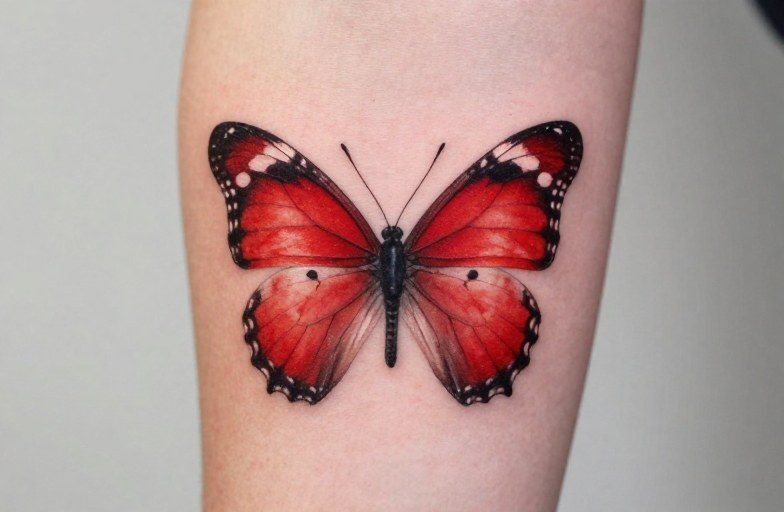
A red butterfly tattoo primarily signals transformation charged with intensity, change that didn’t come easy, or passion that survived it. The butterfly shape carries the familiar arc of growth and reinvention, while the color red adds heat: love, courage, blood, warning, or sheer vitality depending on context. Together, they create a symbol that reads differently from a black or blue butterfly, more urgent, more declarative.
Similar & Related Symbols
Butterfly imagery sits in a crowded neighborhood of metamorphosis symbols. Understanding where the red variant diverges helps clarify what you’re actually asking for.
Butterfly vs. Moth
Moths share the complete metamorphosis lifecycle but carry darker associations, night, attraction to flame, impermanence. A red butterfly specifically borrows none of that nocturnal melancholy; it stays diurnal, active, visible. The color choice pushes it further from moth territory into something more assertive and public.
Phoenix and Dragonfly
Phoenix imagery demands rebirth from literal ash, more dramatic and singular. Dragonfly tattoos suggest change too, but with an emphasis on adaptability and illusion rather than the butterfly’s structured progression from cocoon to flight. Red butterflies occupy a middle register: significant change, yes, but change that follows organic stages rather than sudden conflagration.
- Black butterfly: grief, mystery, sometimes memorial
- Blue butterfly: calm, luck, sometimes specific to certain regional folklore
- Monarch butterfly: migration, endurance, Mexican cultural associations with deceased loved ones
- Red butterfly specifically: passion-infused transformation, love that altered you, survival with intensity intact
Common Variations & Styles
The same red butterfly concept fragments into visually distinct approaches depending on technique and tradition. Each carries subtle shifts in how the meaning reads.
Traditional and Neo-Traditional
American traditional builds red butterflies with bold outlines, limited shading, and saturated single-pass color. The red reads as flat and declarative, almost poster-like. Neo-traditional allows more dimensional shading, ornamental elements, sometimes jewel tones alongside the red. Both approaches age well; the strong outlines prevent the red from blurring into pink soup over a decade.
Realistic and Watercolor
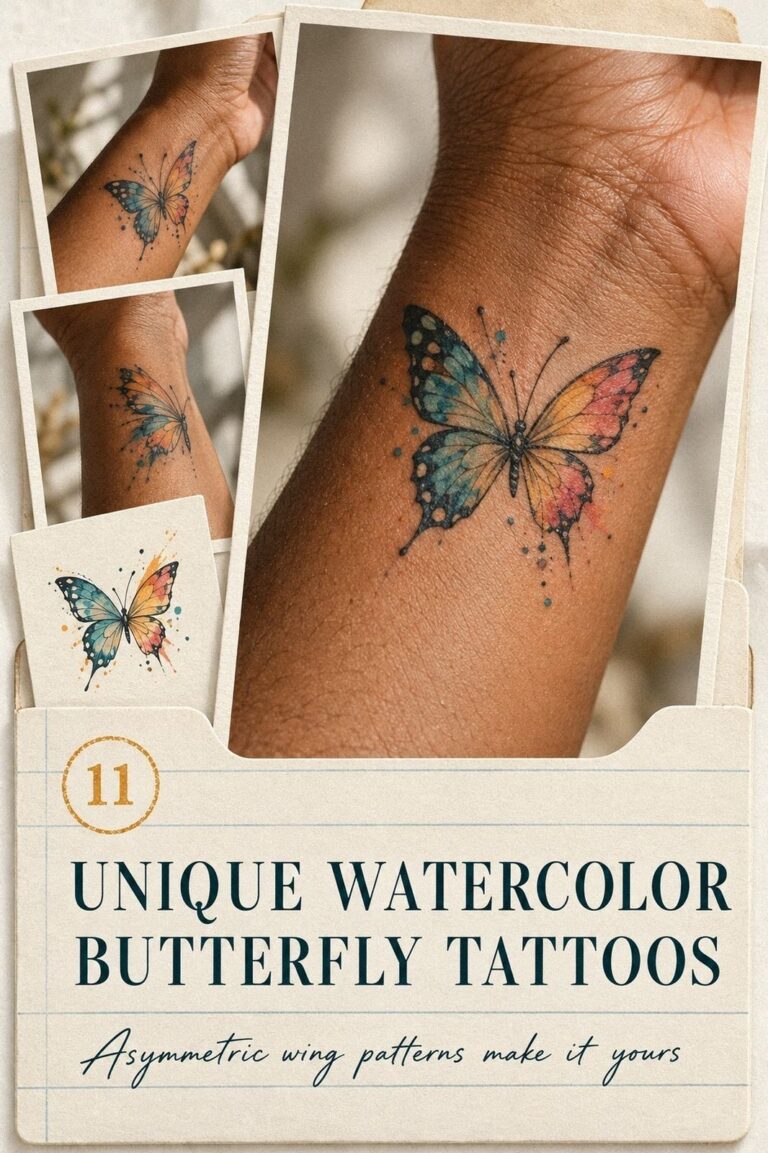
Realistic red butterflies require reference to actual species, the Scarlet Mormon, the Red Lacewing, the Postman. These carry biological specificity that abstract designs lack. Watercolor styles let the red bleed and feather, suggesting motion, transience, something caught mid-flutter. The tradeoff: watercolor red fades faster, especially on high-movement areas, and touch-ups become part of the lifecycle.
- Minimalist line work: single-needle outlines, red ink only in select wing sections
- Japanese-inspired: often larger, incorporated into broader compositions with peonies or wind bars
- Biomechanical: wings as mechanical panels, red as warning color or hydraulic fluid
- Negative space: red surrounding a butterfly-shaped absence of ink
Design Tips & Pairings
Placement and companions change how a red butterfly functions visually and symbolically. The butterfly’s wing shape creates natural movement lines that skilled artists use to complement body contours.
Placement Reality
Shoulder blades and upper backs give butterflies natural flight positioning. Wrists and ankles work for smaller pieces but sacrifice detail; red ink on wrist skin, which sees constant sun and friction, fades notably within five years. Ribs and sternum offer large canvases but hurt more and heal slower due to movement and clothing contact. The red in a sternum piece often needs a session or two more than blackwork to saturate fully.
Common Pairings
Roses with red butterflies create a doubled love-and-passion statement that can feel heavy unless balanced with green foliage or black negative space. Clocks or hourglasses introduce time’s passage, transformation measured, finite. Script lettering risks cliché unless the text genuinely matters and the font avoids generic cursive. Skulls paired with red butterflies generate the classic memento mori tension: life and death as co-pilots, beauty in ephemerality.
- Single butterfly vs. swarm: solitude versus community, individual change versus collective movement
- Dagger through butterfly: betrayal, lost innocence, protection of something fragile
- Flames or fire: obvious but effective, transformation through trial
Religious & Spiritual Angles
Red butterflies carry specific freight in several spiritual frameworks, though practitioners vary in how literally they take these associations.
In some Catholic traditions, particularly Mexican and Filipino contexts, red butterflies are often linked to departed souls, messengers or visitations. This overlaps with monarch butterfly associations in Día de los Muertos observance, though the red variant specifically sometimes signals urgent communication from the dead rather than general remembrance. Chinese culture commonly associates red with luck and joy; a red butterfly there might suggest fortunate transformation or love arriving. Some Japanese interpretations connect butterflies to souls of the living or dead, with color adding emotional temperature.
Contemporary spiritual practitioners outside organized religion sometimes adopt red butterflies as chakra symbols, root chakra energy (red) meeting heart or throat chakra expression (flight, voice). This is newer synthesis rather than ancient tradition, but it demonstrates how symbols accrue meaning through use rather than origin alone.
Personal & Modern Meanings
Beyond inherited symbolism, people assign red butterflies meanings from their own biography. The tattoo becomes a marker of specific events rather than general concepts.
Survival and Recovery
Red signals blood, struggle, the body that persisted. People who’ve survived illness, abuse, or addiction sometimes choose red butterflies to mark the transformation without sanitizing its cost. The color refuses to let the change look easy or pretty; it insists on the heat of the process.
Love and Loss
Romantic love that changed someone’s trajectory, or its absence that did the same. A red butterfly can commemorate a relationship that ended but remade the person, or a love that continues and continues altering. The butterfly’s brief natural lifespan adds poignancy, beauty that doesn’t last in form but does in effect.
Modern political and social movements have adopted red butterflies too, sometimes as symbols of migrant justice (drawing on monarch migration imagery) or feminist solidarity (transformation of women’s roles). These collective meanings layer onto personal ones without replacing them.
Who Chooses This Tattoo
No demographic owns the red butterfly, but patterns emerge in who gravitates toward it and why.
First-time tattoo clients sometimes select butterflies for their approachable symbolism and moderate size; choosing red over black or blue often signals someone who wants the piece noticed, who isn’t apologizing for having it. People with multiple tattoos might add a red butterfly as a color accent in a larger collection, or as a deliberate softening of heavier imagery nearby.
Age trends are less pronounced than you’d expect. Younger clients sometimes choose them for aesthetic reasons, red photographs well, suits certain skin tones dramatically. Older clients often arrive with specific biographical events to commemorate. The design works across experience levels because the core symbol is legible without being juvenile.
Gender presentation varies by region and subculture. In some tattoo communities, butterflies carry feminine coding that some men avoid; in others, the red color and associated intensity makes it read as gender-neutral or masculine. Cultural background matters too, clients from traditions where red butterflies carry ancestral meaning often want that specificity honored in design choices.
The Bottom Line
A red butterfly tattoo means transformation with the volume turned up, change that cost something, love that altered your trajectory, survival that kept your intensity intact. The specific meaning depends on the wearer’s context, but the symbol’s range is genuinely broad rather than emptily universal. Design choices matter: traditional boldness versus watercolor delicacy, solitary versus paired, placement that shows or hides. Work with an artist who understands how red ages on your particular skin tone and who can adjust saturation accordingly. The best red butterfly tattoos function as both personal marker and visually coherent piece of body art, urgent in color but settled in composition.
Frequently Asked Questions
Does red ink fade faster than black in butterfly tattoos?
Red ink does fade faster than black, especially on sun-exposed areas like hands, wrists, and forearms. Expect more frequent touch-ups, and consider bolder saturation initially to account for aging. Your artist can recommend specific red formulations that hold better in your skin tone.
What’s the difference between a red butterfly and a monarch butterfly tattoo?
Monarch tattoos reference a specific species with orange and black patterning, often carrying Mexican cultural associations with deceased loved ones. Red butterflies are less species-specific and more color-symbolic, passion, intensity, love, or blood rather than migration and ancestral return.
Can a red butterfly tattoo work on darker skin tones?
Absolutely, but the red needs to be deeper and more saturated to read clearly. Bright fire-engine red can heal pinkish or orange on melanin-rich skin. Experienced artists will adjust toward crimson or burgundy bases that maintain their character rather than trying to force a lighter red that won’t hold.
Is there a stigma around butterfly tattoos being ‘basic’?
Butterfly imagery is common, which some mistake for lacking significance. The symbol’s popularity actually speaks to its genuine resonance across cultures and eras. Execution distinguishes pieces: custom design, thoughtful placement, and personal context transform a common symbol into something specific to you.
Leave a Reply