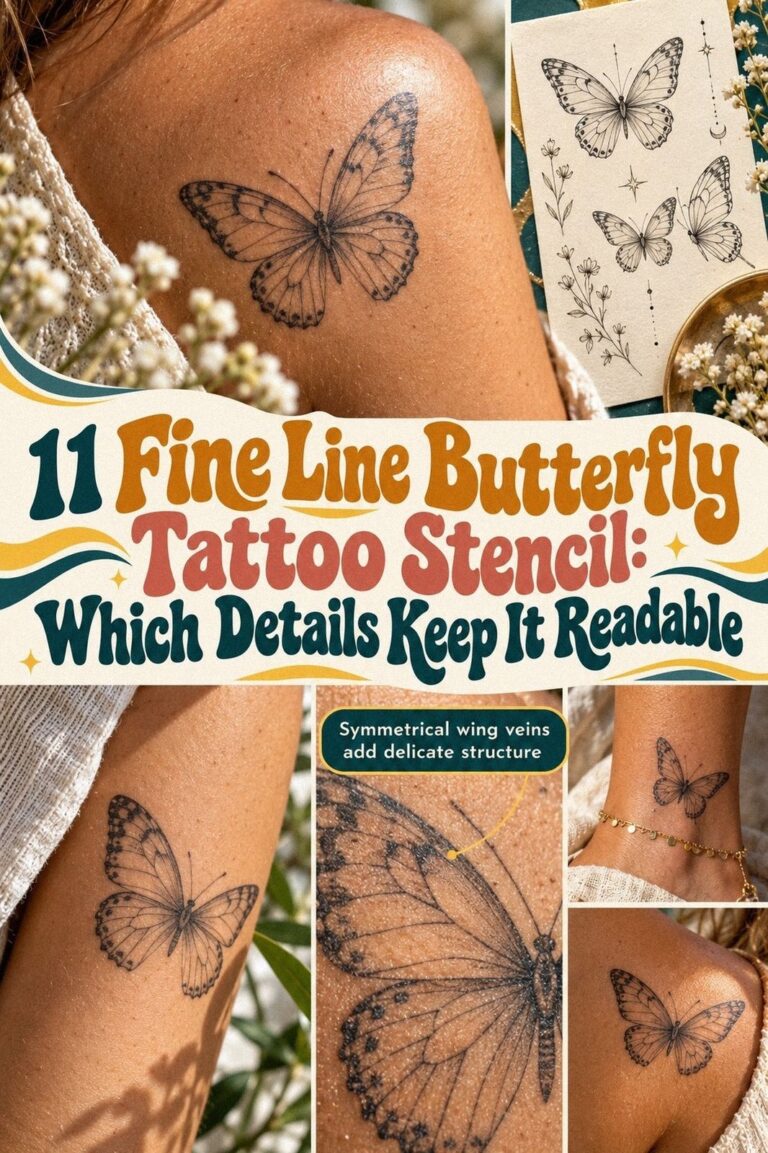
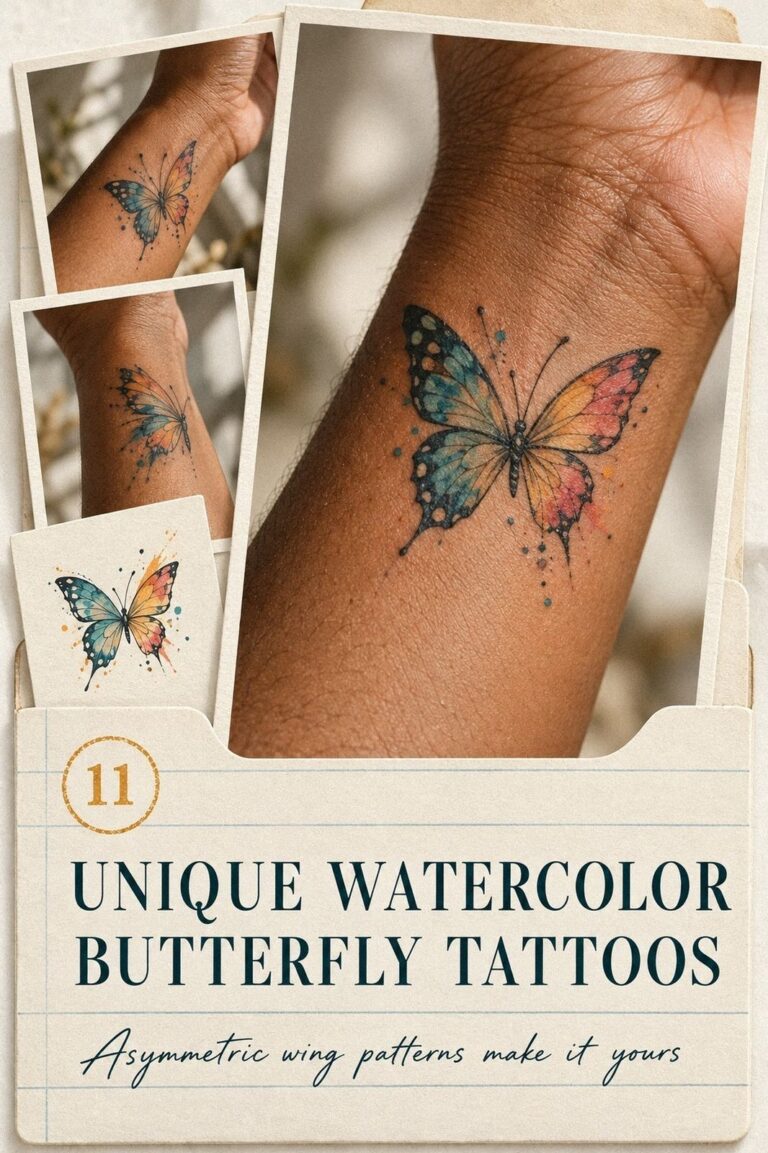
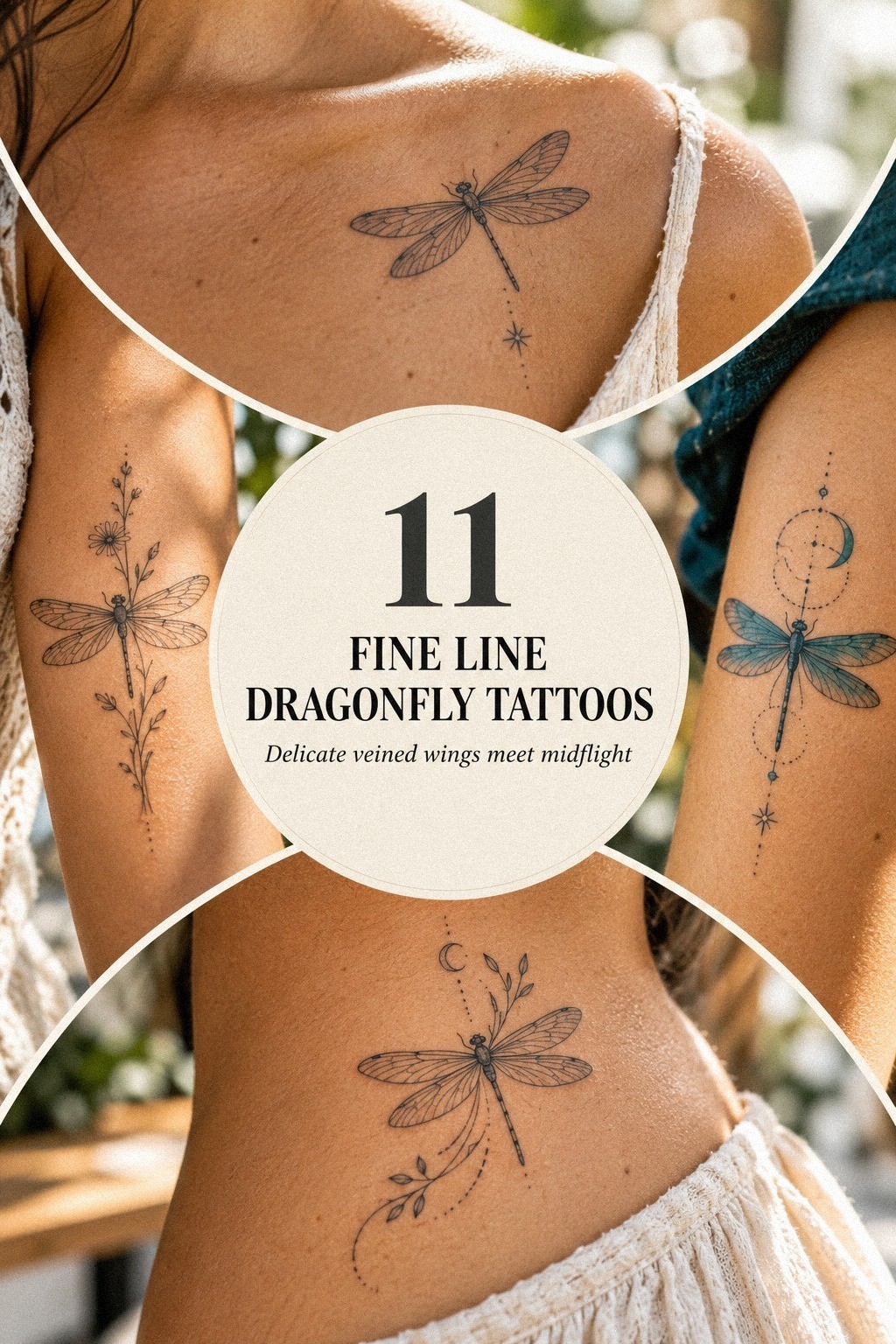
My fine line dragonfly tattoo hurt less than I expected, and the appointment took less time than I’d feared. I wanted something delicate but meaningful, with crisp wings and a flowing body that wouldn’t look crowded on my skin. I nearly chose a larger design. I’m glad I didn’t.
Before the Appointment
Before booking, I had too many saved references and no clear favorite. Some were ornate, some were fierce, and others were so tiny they’d lose their character over time. I kept tracing the same dragonfly silhouette with my finger, imagining it along my calf, wrist, shoulder, or upper back.
The design I chose was a slim dragonfly curling along the body, with fine scale-like texture, tiny claw details, and open wings. It felt personal without becoming loud. I didn’t want a heavy black shape, but I also didn’t want a whisper of ink that disappeared from a short distance.
That balance mattered. A striking tattoo still needs breathing space!
Before choosing an insect, I compared a few motifs through this tiny fine line butterfly tattoo guide. It helped me notice which references felt symbolic and which ones were only visually pretty.
What I Wanted the Dragonfly to Say
I didn’t choose a dragonfly because it was trendy. I liked its symbolic link to change, movement, resilience, and a more powerful version of yourself. The meaning stayed understated, which made it feel more personal.
My favorite concept had a graceful body, expressive wings, and one slightly imperfect detail. That gave it a raw quality. It wasn’t trying to look like a logo or copied flash.
The dragonfly also felt more empowering than delicate alone. Its wings could look elegant and ethereal, while the narrow body gave the design a sharp, almost edgy character. I wanted both sides present.
If you’re comparing symbolic insects, this minimalist butterfly tattoo guide can help you decide whether a simpler motif still carries enough meaning.
Why I Rejected a Bigger Dragonfly
A larger dragonfly would have allowed more intricate markings, but it would also have changed the mood. I wanted something sleek and personal, not a design that dominated the entire area.
The bigger option looked bold on paper. In practice, it felt less elegant and less connected to my body. The smaller version had a sharper personality because every line had a job.
The price difference wasn’t dramatic enough to decide for me. The real value was choosing the size I’d still enjoy seeing years later. A tattoo can be worth it without being large!
I also compared the darker structure in these fine line black butterfly tattoo references. They showed me how quickly a small wing can become visually heavy when too many marks compete.
- I Chose a Small Fine Line Dragonfly
- Saving Ideas Wasn’t the Same as Choosing
- I Sketched the Body Before the Wings
- Which Wing Shape Worked on My Wrist?
- I Tested the Fine Line Stencil
- Dragonfly Details Need Open Skin
- I Managed the Sharp Moments
- Placement, Visibility, or Both?
- I Followed a Calm Healing Routine
- Healed Linework Changed My Opinion
- Why Does the Dragonfly Still Feel Like Mine?
1I Chose a Small Fine Line Dragonfly
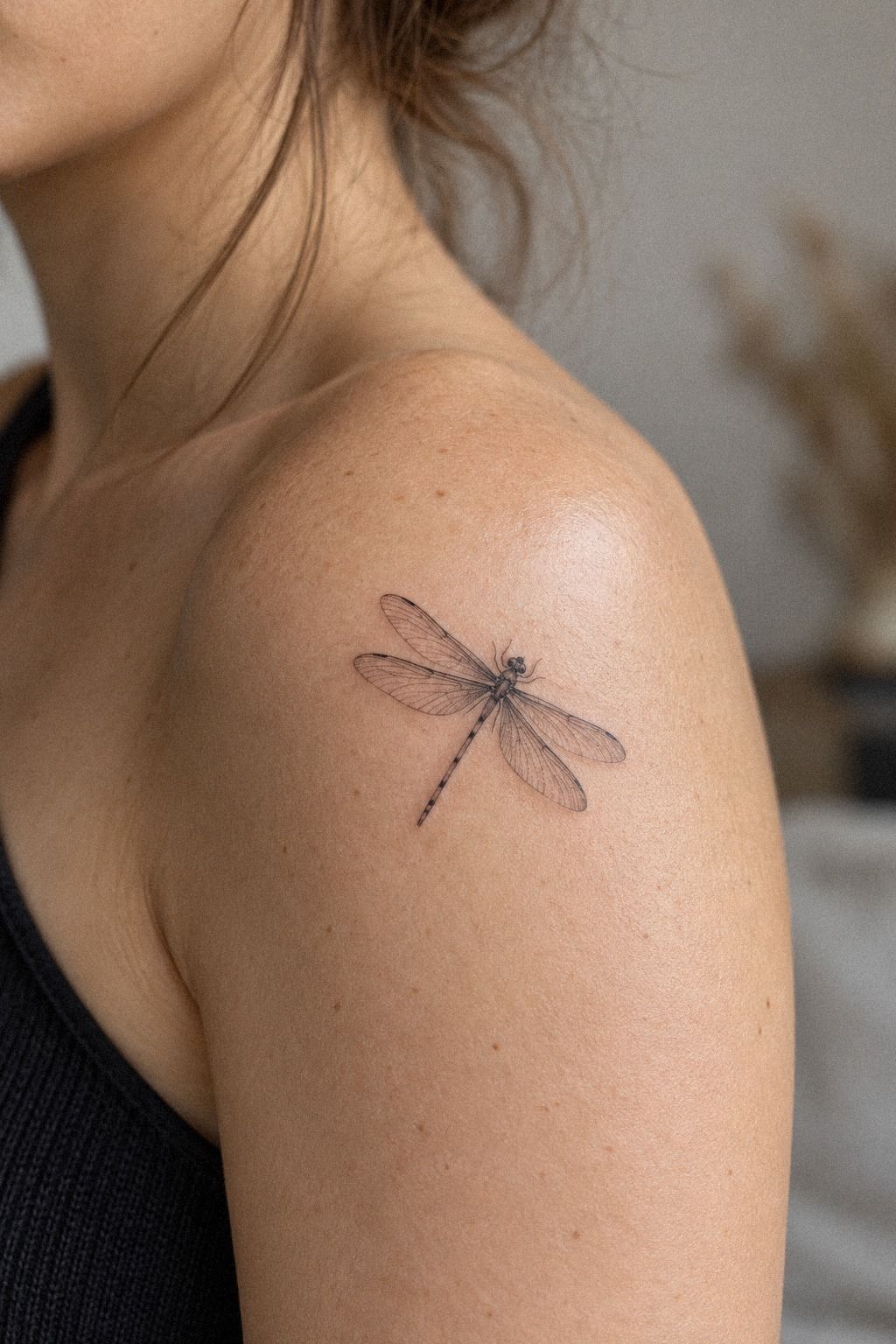
I chose a small fine line dragonfly tattoo because the shape could follow my calf without fighting its natural curve. A compact design gave the wings space to breathe, while the curling body created movement from the ankle upward. I asked for single-needle black ink and a slightly stronger outline around the body so the motif wouldn’t become too faint.
The artist showed me two versions: one dainty and one more intricate. The smaller sketch was charming, but it lost the tiny wing structure. I picked the second version, even though it was less minimal, because I wanted the tattoo to read as a dragonfly immediately.
– Small black linework, clean enough to read from a distance – Fine wing veins, delicate without looking unfinished – Slim body curve, flowing rather than stiff
I’d still make the same call. The open silhouette gave the design a timeless quality, and the body remained recognizable even when I looked at it quickly.
If you’re comparing small tattoo ideas, this tiny fine line butterfly tattoo guide helped me understand how much detail a small subject can carry before it starts looking cramped.
2Saving Ideas Wasn’t the Same as Choosing
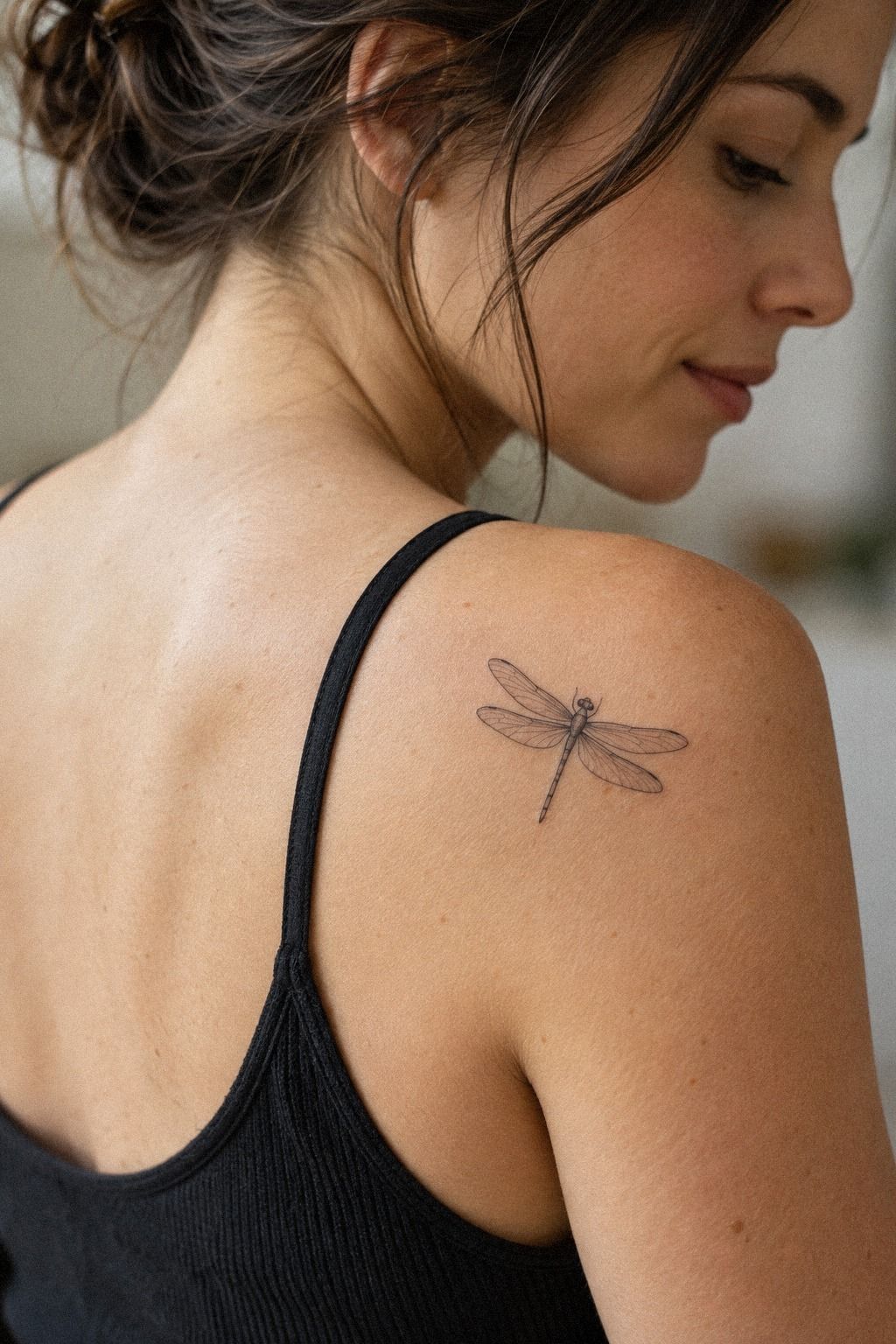
I saved fine line dragonfly tattoo ideas for nearly three weeks before booking. My collection became a mix of polished references, rough sketches, and designs that looked striking only because of their dramatic presentation.
The useful question was simple: would I still like the shape without the dramatic effect? Some references felt vibrant online but flat when I studied the actual line placement. Others were understated in the best way.
I removed every design that depended on dense shading, oversized wings, or decorative marks I couldn’t explain. That left me with a smaller group of personal, symbolic, and classic options.
I used this fine line butterfly tattoo reference to compare stencil proportions before I committed. It reminded me that a design has to work as a clear outline first.
3I Sketched the Body Before the Wings

I sketched a unique fine line dragonfly by starting with the body instead of the wings.
4Which Wing Shape Worked on My Wrist?
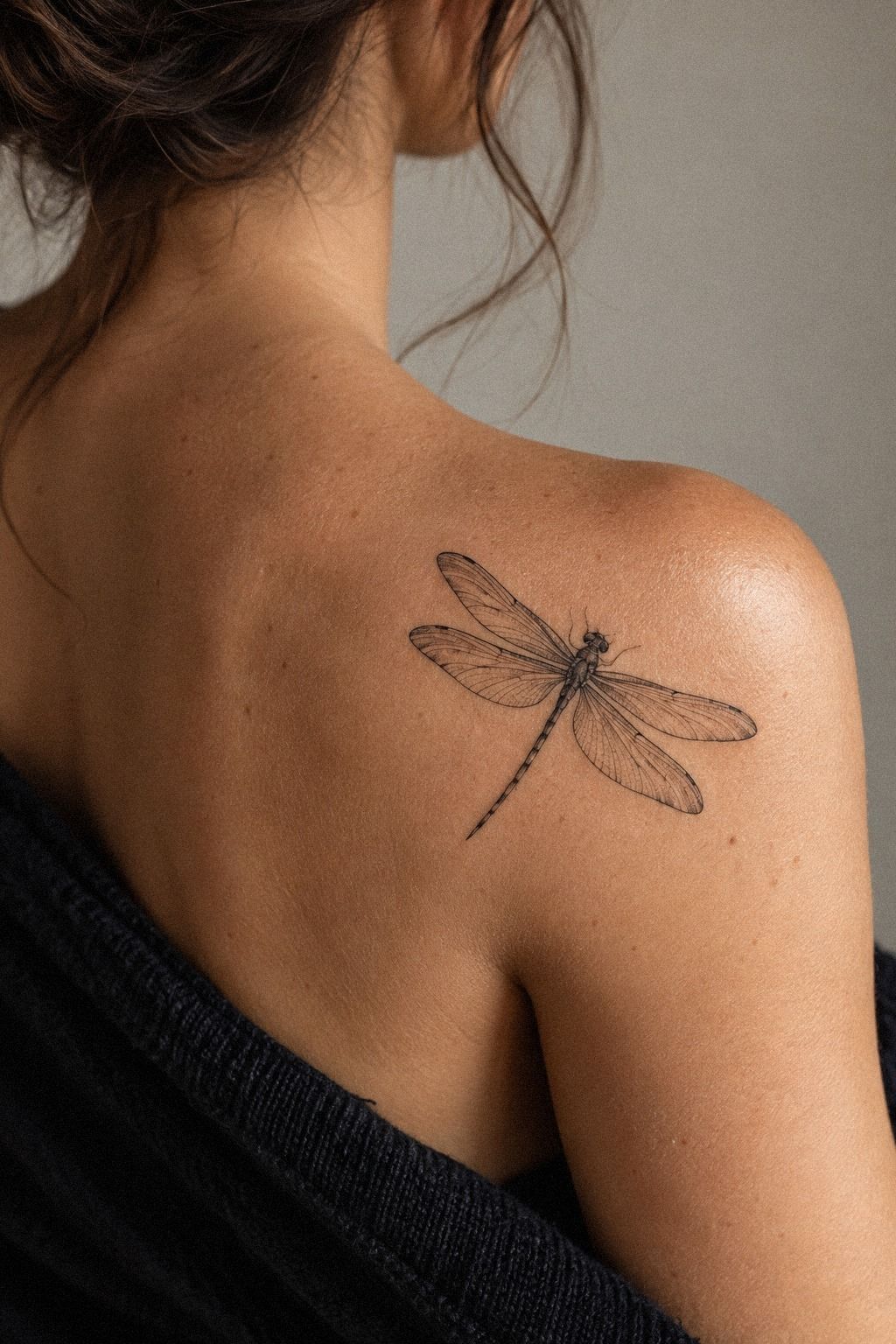
I matched dragonfly wings to my wrist by measuring the available area with a paper stencil. The first version was too wide, and the outer wing tips nearly touched the natural crease.
The second version narrowed the wings without making them look dainty. It kept the central body bold enough to read while giving each side its own negative space.
I moved the paper stencil through several positions and checked it while my hand was relaxed. A wing shape can seem elegant when your wrist is straight and feel awkward when you turn your hand.
The final wrist placement was expressive but practical. It didn’t interrupt the natural movement of my hand, and the dragonfly still looked recognizable from the side.
I also reviewed these minimalist butterfly tattoo ideas to compare compact wing structures. That comparison made my choice feel more intentional.
5I Tested the Fine Line Stencil
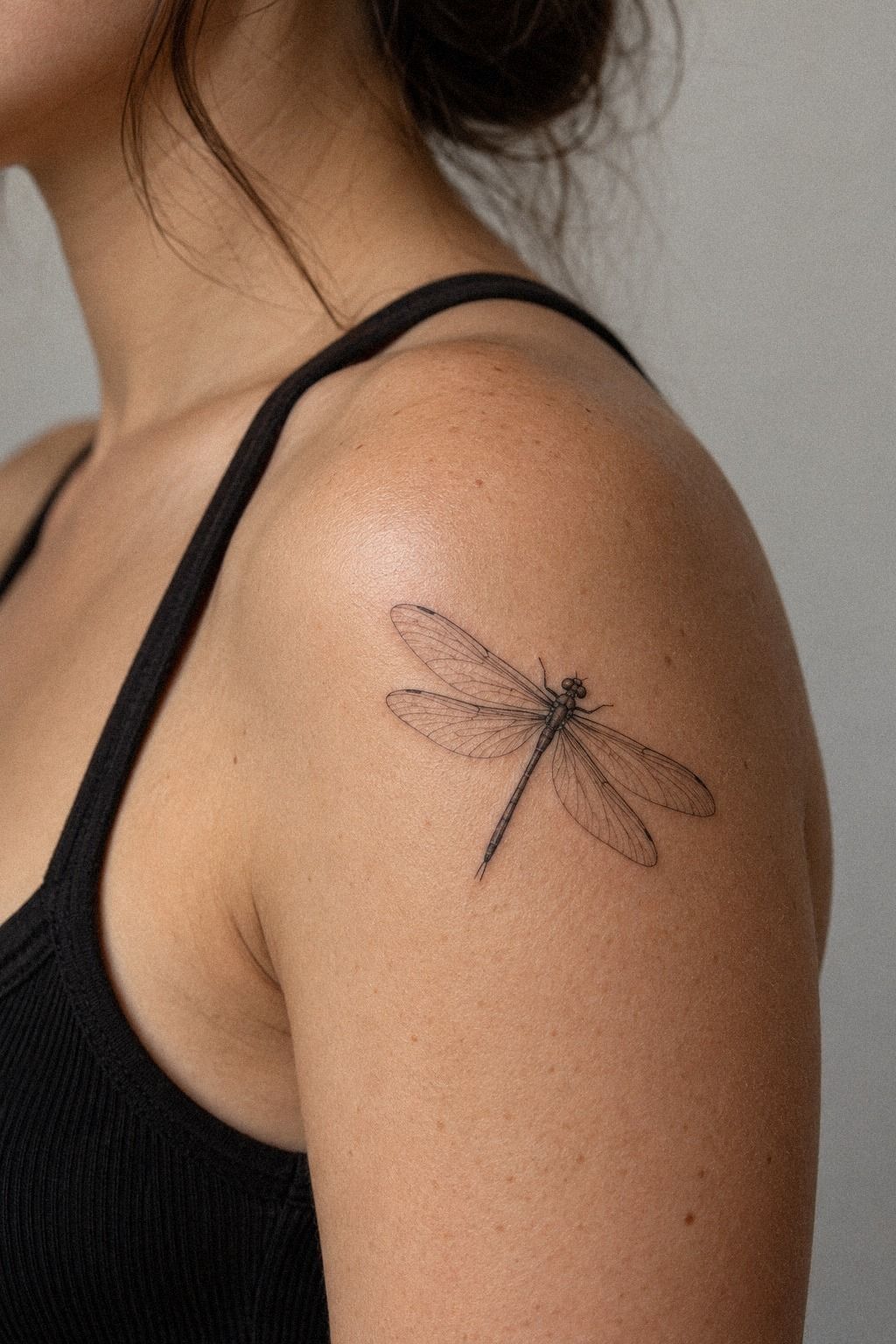
I tested the fine line tattoo stencil before any ink touched my skin. I checked the design while standing, sitting, and moving my arm naturally. A design can seem perfect while still and feel awkward once your body changes position.
The stencil looked more understated than I expected. That was useful. I could see exactly how much skin surrounded the wings and whether the body curve felt natural.
I asked the artist to shift the design slightly. That small adjustment improved the balance and made the placement feel deliberate. The stencil changed everything!
Never rush this part. The paper stencil is your last low-cost chance to change the shape, scale, or position.
A thoughtful consultation adds value to the appointment. I’d rather spend ten extra minutes checking proportion than pay for a correction later.
You can use this fine line butterfly stencil reference to think through scale, but your artist still needs to adapt the design to your body.
6Dragonfly Details Need Open Skin
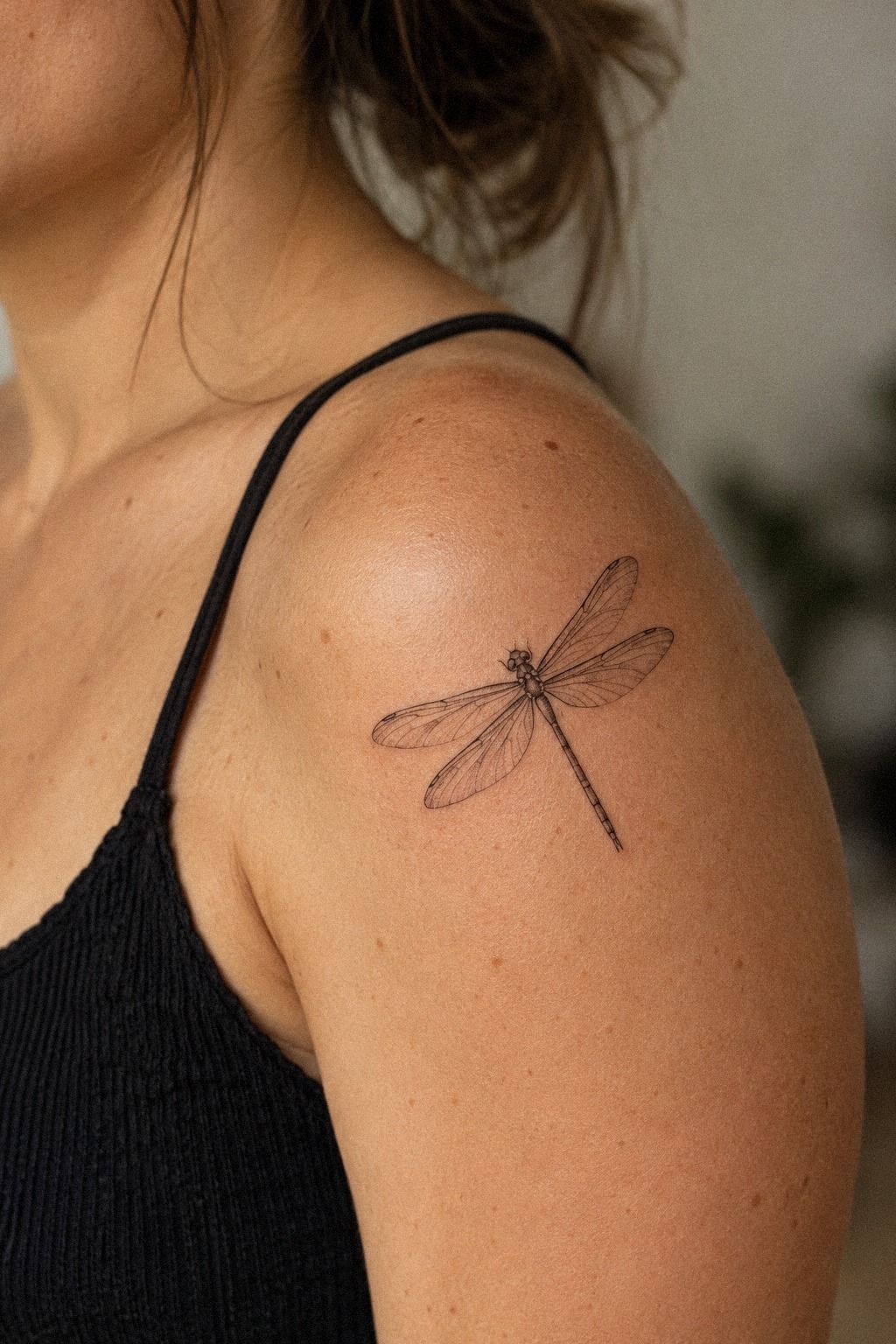
I added tiny dragonfly wing details only after the main outline looked right. On my skin, the contrast came from thoughtful line placement rather than adding every possible mark. The design used a fine black outline with small internal veins, leaving enough open skin to keep the wings readable.
The artist placed the strongest lines along the outer wings and used fewer interior strokes near the center. I liked that hierarchy. It made the tattoo feel polished and vibrant without becoming heavy.
I’d skip random dots and scattered ornament because they can muddy a small design once healed. The tattoo needed clarity more than decoration.
– Layered wing veins, expressive but not crowded – Open skin channels, preserving the delicate shape – Controlled dotwork, adding texture without visual noise
The stencil looked minimal, but the finished design felt intricate when I studied the smallest details. That contrast was exactly what I wanted.
Your fine line black butterfly tattoo references can help you judge how much black is enough. Dragonfly wings need air. If you fill every opening, the insect loses its graceful character.
7I Managed the Sharp Moments
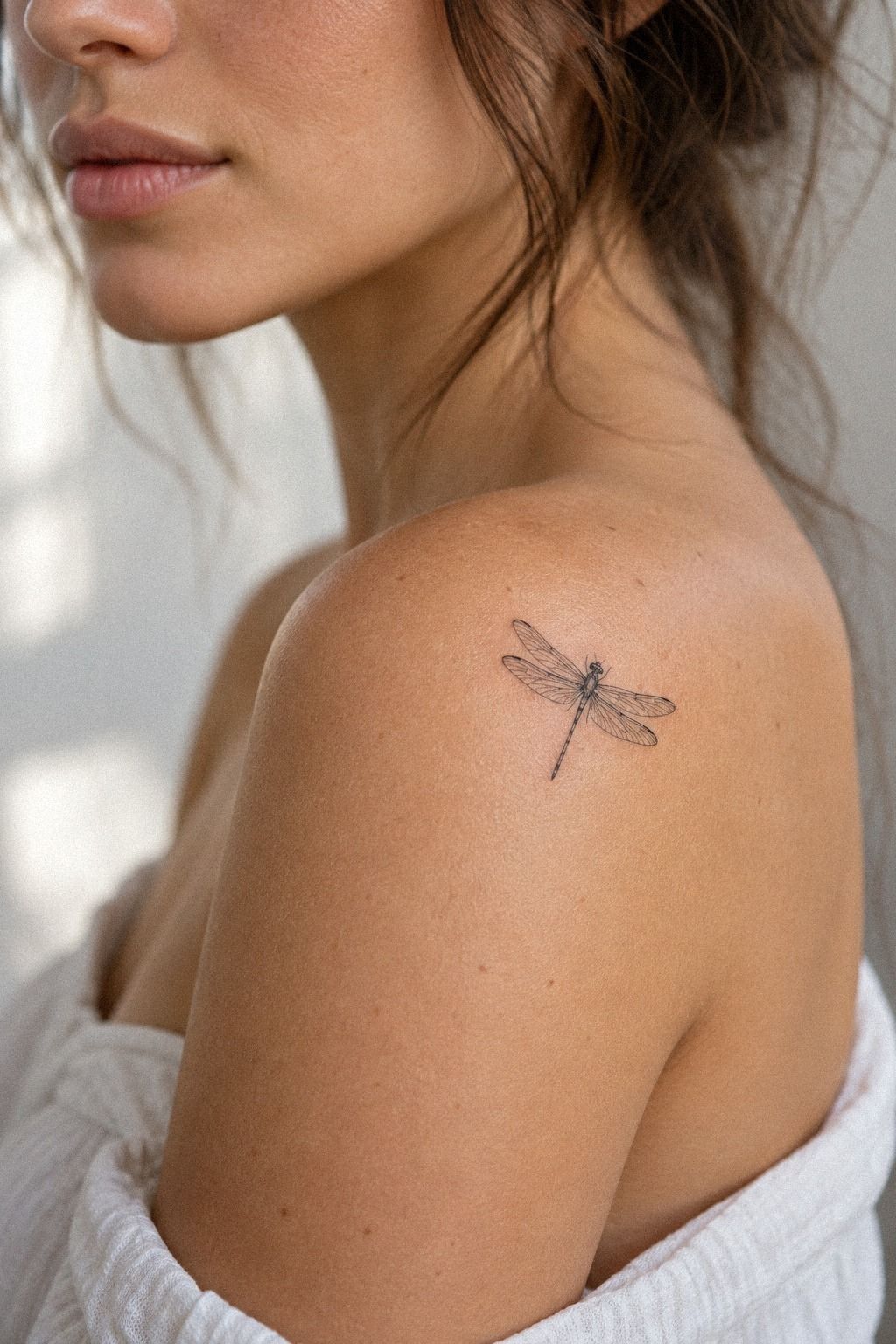
I managed fine line tattoo pain by relaxing my shoulder, breathing steadily, and refusing to build the appointment into a dramatic event. The upper back gave the artist a broad surface, and that placement felt more tolerable than ribs, feet, hands, or the sternum.
My pain arrived in sharp flashes, then settled. The needle movement was distracting more than frightening. I brought water, ate beforehand, and wore clothing that didn’t rub against the area.
The appointment felt manageable!
If you’re nervous, an upper arm, thigh, shoulder, or forearm can be a more forgiving starting point than a bony zone. Your experience will vary, but placement changes the whole mood of the appointment.
– Upper-back placement, broad and easier to keep still – Short pauses, enough to reset my breathing – Loose clothing, reducing unnecessary irritation
Don’t choose a placement only because it hurts less. Your tattoo still needs to fit your daily life, visibility preferences, and long-term plans.
These minimalist fine line butterfly tattoo ideas helped me compare visible placements without treating pain as the only factor.
8Placement, Visibility, or Both?
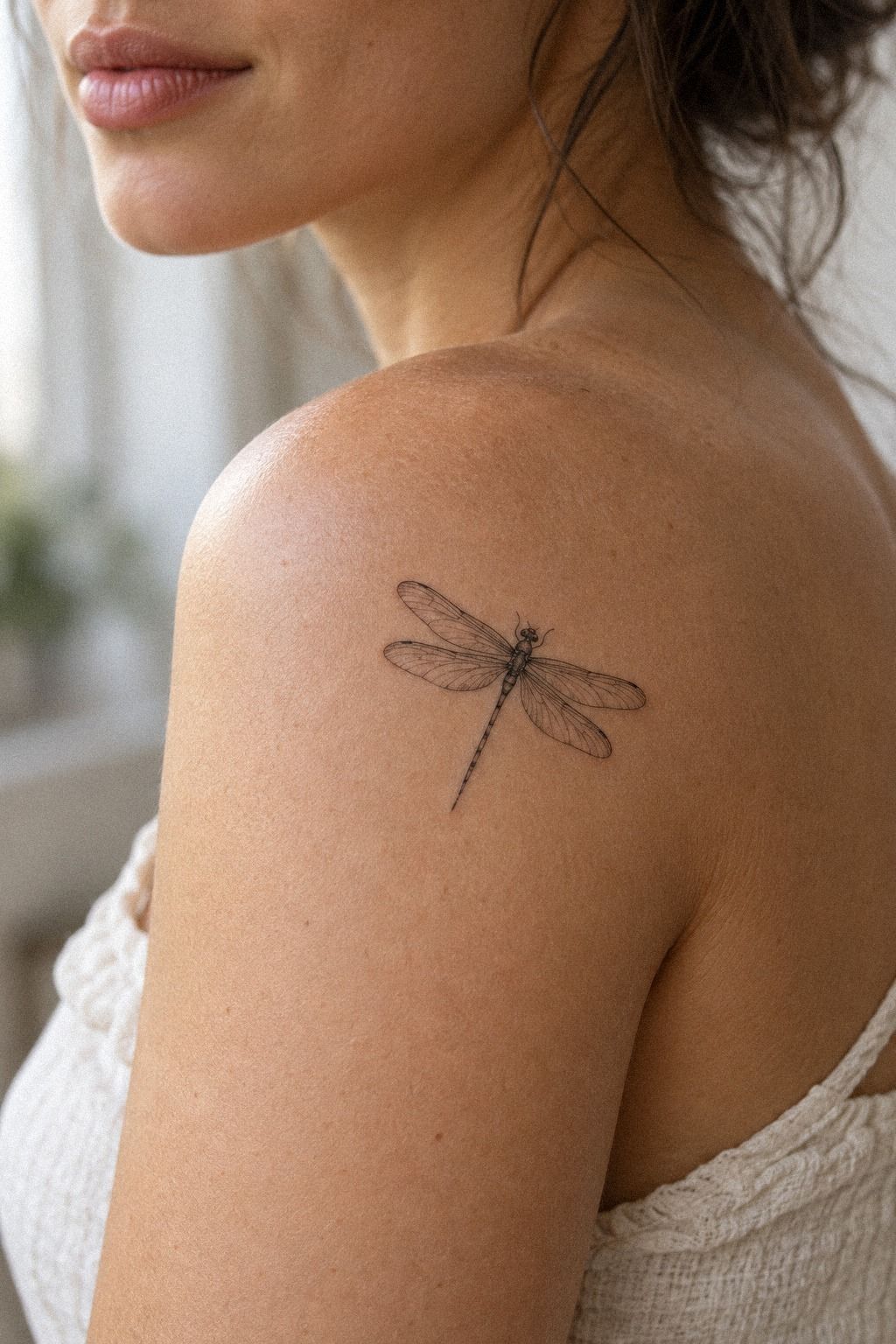
I checked the dragonfly ink placement while my arm was relaxed, bent, and moving naturally.
9I Followed a Calm Healing Routine
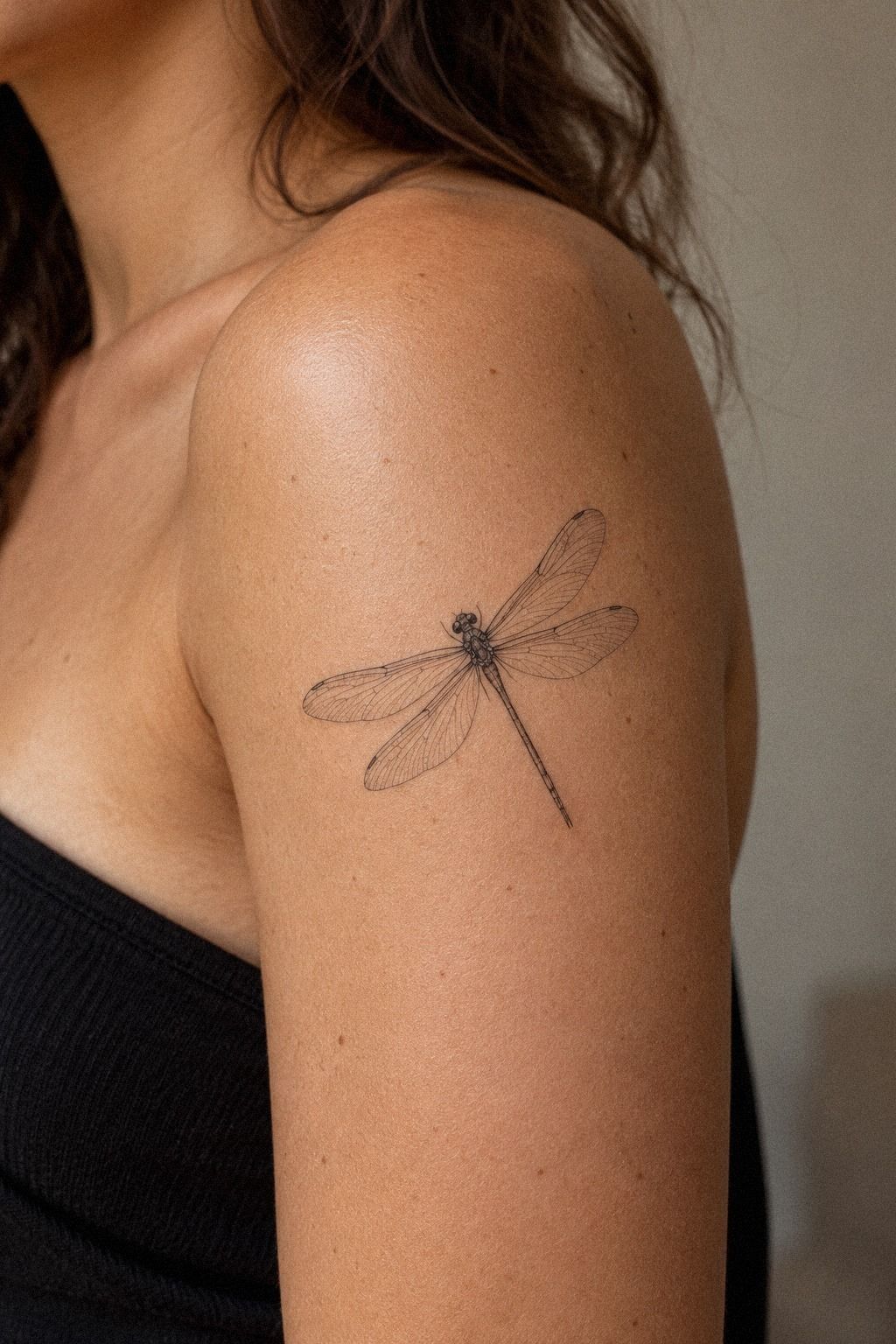
I followed my tattoo healing routine carefully because fine line work needs a clean, calm healing period. I washed the area gently, used a light layer of approved moisturizer, and kept it away from soaking water, direct sun, and friction.
The surface usually takes about two to three weeks to settle, while complete healing can take about two to three months. I didn’t judge the final appearance during the first few days.
Fabric can brush against an active area all day, especially if you wear snug sleeves. I chose soft, loose clothing and didn’t pick at peeling skin. The tattoo looked slightly dull before it looked crisp again.
– Gentle washing, without scrubbing the fine lines – Light moisturizer, never a thick sealed layer – Sun protection, once the surface had fully healed
Your artist’s aftercare instructions come first because products and coverings vary. I’d also avoid swimming and strong sun while the surface is healing.
This fine line butterfly tattoo stencil reference helped me remember how different a fresh outline can look from a healed one.
10Healed Linework Changed My Opinion

I protected the delicate dragonfly linework by giving the tattoo time to settle before judging it. Fresh ink looked darker and sharper, while the healed lines softened into the skin.
That difference didn’t scare me. It helped me understand why spacing mattered. The tattoo wasn’t supposed to stay as dark as it looked on appointment day.
Fine lines can widen over time, especially where skin receives repeated sun exposure or friction. Black ink with sensible spacing tends to hold its structure better than an overloaded design.
I’d rather have fewer bold details than a crowded wing that blurs into one dark patch. The healed result felt polished, expressive, and still easy to read.
Ask your artist for healed examples in natural light. This fine line butterfly tattoo guide can help you compare the design before ink, but it can’t predict every skin response.
– Fresh stencil view, checking proportion and spacing – Healed tattoo view, checking softened line weight – Long-term care, preserving contrast and clarity
Don’t treat sunscreen as optional once the tattoo is healed. UV exposure can dull the contrast and make delicate linework look less crisp over the years.
11Why Does the Dragonfly Still Feel Like Mine?
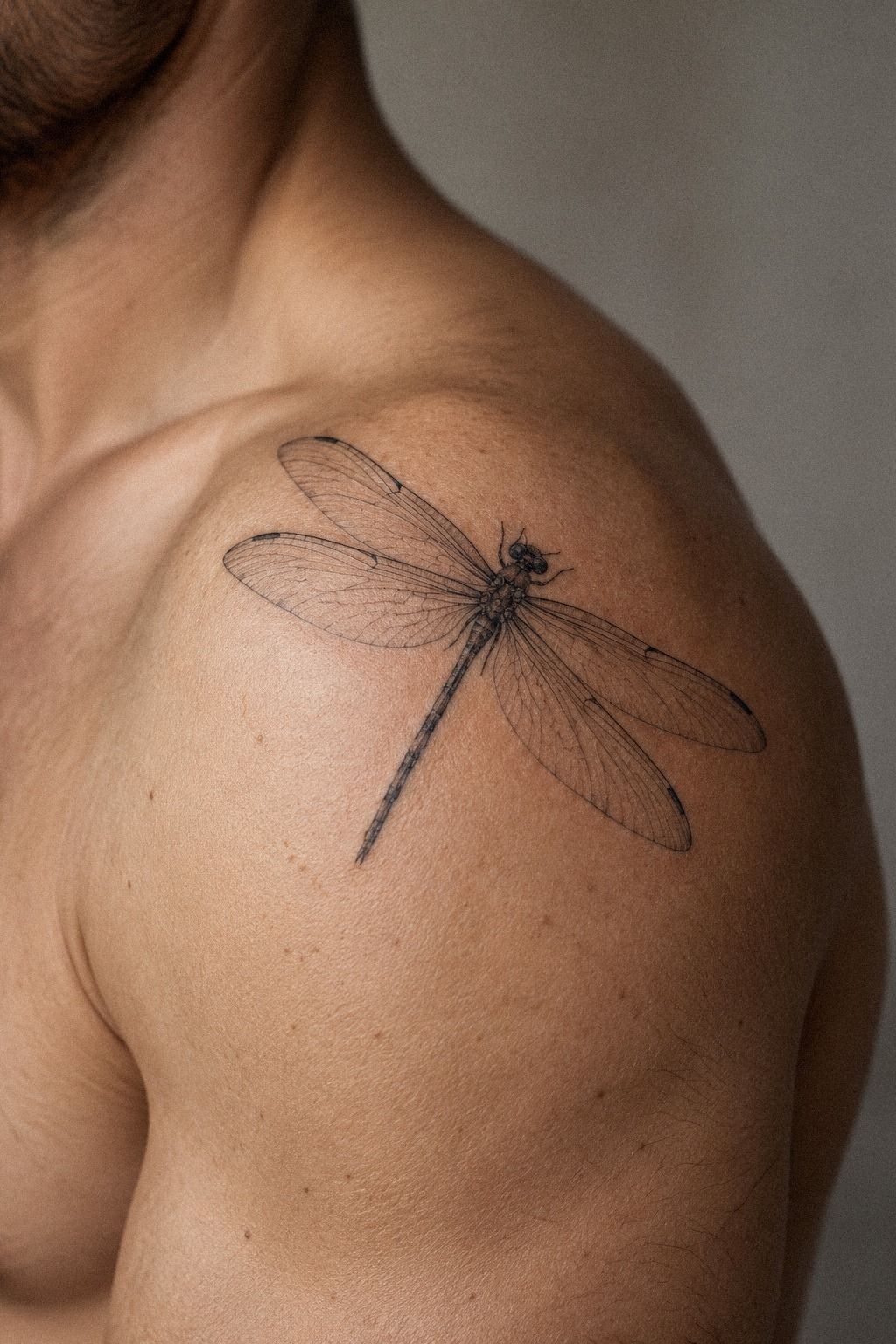
I loved my meaningful fine line dragonfly because it felt symbolic without needing a speech attached to it.
How Much Did It Cost?
I planned around the typical US range instead of expecting one universal price. A small fine line dragonfly tattoo often falls around $100 to $300, while some studios charge a minimum of about $50 to $100 or use an hourly rate near $100 to $250.
The final price depends on the artist, region, design complexity, and appointment length. Ask for the studio minimum before sending a deposit. Your design may be tiny, but the artist’s preparation, sterilization, stencil work, and experience still matter.
The cheapest quote isn’t always the best value. I’d rather pay a fair price for a polished portfolio and healed results than save money on work I’d later want corrected.
This minimalist butterfly tattoo guide helped me compare the cost of a simpler motif without assuming that small means effortless.
Choosing an Artist: The Healed-Work Test
I’d choose an artist by looking for crisp linework, consistent spacing, and healed examples. Fresh tattoos can look iconic under strong studio lights, but healed work shows how the artist handles restraint.
Ask whether the artist has experience with fine line tattooing and whether they’ll tell you when a reference contains too much detail. I appreciated direct advice more than automatic agreement.
A polished portfolio should include several placements, not only one perfect image. Look for how the artist handles curves, tiny gaps, and delicate silhouettes.
I’d also ask about hygiene, deposits, stencil adjustments, and aftercare. A clear consultation made me feel confident before the needle touched my skin.
This fine line butterfly tattoo stencil reference is useful for preparing questions about scale, but the artist’s healed portfolio should make the final decision.
When Small Details Become Too Much
The most difficult choice was knowing when to stop adding detail. I wanted an intricate dragonfly, but every extra vein competed with the central shape.
I kept the outer wings sharp and reduced the marks near the body. That made the final tattoo feel bold without turning dense.
A dainty design doesn’t have to be faint. It can be crisp, daring, and personal when the line hierarchy is clear.
If you’re unsure, place the stencil on your skin and study it from several distances. I used these fine line black butterfly tattoo references to see how much contrast the wings needed.
What I Learned From Choosing Fine Line Dragonfly Tattoo
I learned that the most important decision wasn’t the dragonfly itself. It was the balance between detail and breathing space. I went back and forth because I wanted the design to feel intricate, but every added mark made the wings less readable.
I also learned that placement changes the emotion of the design. On the wrist, the dragonfly feels visible and energetic.
Along the calf, it feels flowing and slightly fierce. Near the collarbone, it becomes intimate.
None of those choices is universally right, so your body and daily habits need to lead the decision. My tiny fine line butterfly tattoo guide helped me compare how small motifs behave in different placements.
The pain question mattered less after I compared locations honestly. Ribs, feet, hands, and sternum can feel more intense because they’re bony or sensitive. Forearm, thigh, shoulder, and upper-arm placements are often easier for people to tolerate.
I wouldn’t ignore healed examples. Fresh ink can look vibrant and sharp, while healed linework settles into a softer finish. That change is part of the design.
Choose an artist who can show you both stages, explain spacing, and tell you when your idea needs fewer details. A polished tattoo depends on judgment as much as technique.
The tattoo became meaningful because I made the choices slowly. I didn’t chase the most dramatic reference. I chose a sleek body, open wings, and a placement that made sense for me.
That’s the part I’d repeat. If you’re still comparing insect motifs, these fine line butterfly tattoo references can help you separate a personal idea from a passing visual trend.
What People Always Want to Know
How much does a fine line dragonfly tattoo usually cost?
A fine line dragonfly tattoo usually costs about $100 to $300 in the US. Some shops charge a $50 to $100 minimum, while hourly rates may run about $100 to $250. Your artist, region, placement, and design detail will affect the final quote.
Are fine line dragonfly tattoos a good idea for a first tattoo?
Yes, a fine line dragonfly tattoo can be a meaningful first tattoo if you choose a tolerable placement and an artist with clean healed work. Forearm, thigh, shoulder, and upper-arm placements are often easier than ribs, feet, hands, or sternum.
How do I choose a tattoo artist for fine line dragonfly tattoos?
Choose an artist whose portfolio shows crisp linework, healed examples, and consistent spacing. Look for fine line experience, clear studio hygiene, and designs similar to yours. Don’t rely on fresh examples alone because healed ink tells you more about long-term results.
How much do fine line dragonfly tattoos hurt?
Pain varies by person and placement. Ribs, feet, hands, and sternum can feel more intense, while the forearm, thigh, shoulder, and upper arm are often more tolerable. The session may feel sharp but manageable, especially when the design is small.
How long does a fine line dragonfly tattoo take to heal?
The surface usually heals in about two to three weeks, while complete healing can take about two to three months. Gentle washing, light moisturizing, and avoiding sun and swimming during early healing help protect the linework. Follow your artist’s specific instructions first.
What’s the best placement for fine line dragonfly tattoos?
The best placement depends on visibility, pain tolerance, and how the design follows your body. A forearm offers visibility and a broad canvas, while the shoulder or upper arm gives you more flexibility. Choose a location with enough open skin for the wings to remain readable.
Can a fine line dragonfly tattoo stay readable over time?
It can stay readable when the design uses sensible spacing, clear line hierarchy, and enough open skin. Sun protection matters after healing, and an artist’s healed portfolio can show how their work settles. Overloading tiny wings with detail makes long-term clarity less predictable.
Where I’d Start First
If I had to pick one, I’d start with the upper arm. It’s easier to tolerate than bony zones, gives the wings enough open skin, and lets you protect the tattoo from daily friction.
Save your favorite reference, check healed work, and let the stencil sit before you commit. A smaller, personal dragonfly can be just as bold as a larger design!