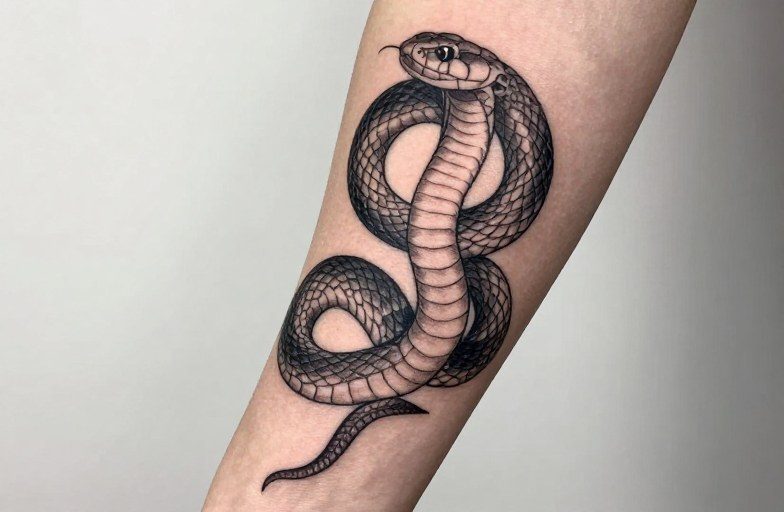
The snake in Chinese symbolism carries weight that differs sharply from Western depictions. Rather than pure menace or temptation, it represents intelligence, adaptability, and the cyclical nature of renewal. For a tattoo, this opens up meanings around personal transformation, strategic thinking, and the ability to shed what no longer serves you, literally and figuratively.
Symbolism & Core Meaning
Chinese cultural associations with the snake run deep and complex. The creature occupies the sixth position in the zodiac, and those born under it are often linked to traits that make for compelling tattoo narratives.
Zodiac and Elemental Associations
Snake years in the Chinese zodiac cycle through five elemental variations, wood, fire, earth, metal, and water, each shifting the symbolic flavor. A metal snake might emphasize sharpness and resilience; a water snake, fluidity and intuition. Tattoo collectors sometimes choose their birth element’s snake, or the element they feel they need more of in their lives. The zodiac snake itself is considered one of the most enigmatic signs: outwardly calm, internally calculating, capable of striking with precision when the moment demands.
Dual Nature: Wisdom and Warning
The snake’s reputation in Chinese tradition holds genuine duality. It guards treasures in folklore, yet its venom demands respect. This makes it a symbol of earned knowledge, wisdom that comes with risk, power that requires restraint. A tattoo can lean into either pole or hold both in tension. Some designs emphasize the snake as a guardian figure, coiled protectively. Others highlight the strike, the moment of decisive action. The meaning you emphasize depends on placement, posture, and what you pair with the snake.
Personal & Modern Meanings
Contemporary wearers layer personal significance onto this ancient symbol in ways that feel immediate and lived.
Rebirth Through Shedding
The physical reality of snakeskin shedding translates cleanly into tattoo metaphor. Unlike phoenix imagery, which can feel grandiose, the snake’s renewal is grounded, repetitive, almost workmanlike. It happens as needed, not as spectacle. This resonates with people who’ve undergone multiple reinventions, career pivots, recovery, leaving relationships or places. The tattoo becomes a private marker of accumulated survivals rather than a single dramatic transformation.
Calculated Ambition
In competitive fields, the snake’s patience and strategic strike appeal. It’s not the tiger’s brute force or the dragon’s celestial luck. The snake waits, observes, acts with precision. For someone who built something slowly or who values preparation over spectacle, this symbolism carries specific pride. The tattoo can function as a reminder of that methodology, a visual anchor for how you operate.
Who Chooses This Tattoo
Certain patterns emerge among people drawn to Chinese snake imagery, though no single profile dominates.
- Zodiac-born snakes: Often seeking to claim or reclaim their sign’s complexity, especially if they’ve felt stereotyped as “sneaky” rather than strategically intelligent.
- People in transition: Career changers, immigrants, those rebuilding after loss, the shedding metaphor lands with concrete weight.
- Collectors with Asian heritage: Sometimes reconnecting with cultural symbolism, sometimes choosing specifically Chinese rather than generalized “Asian” imagery as a more precise statement.
- Those avoiding more common symbols: Dragons saturate the market; snakes offer comparable depth with less visual cliché.
The snake also attracts people who want danger-adjacent imagery without the aggression of predators like tigers or wolves. The threat is latent, coiled, intelligent rather than savage.
Religious & Spiritual Angles
Chinese spiritual traditions incorporate the snake in ways that can inform tattoo meaning without requiring religious commitment.
Taoist and Folk Contexts
In some Taoist-influenced folklore, snakes possess or develop spiritual power over centuries, potentially becoming dragons. This trajectory, earthbound creature attaining celestial status, offers a narrative of aspiration without arrogance. The snake doesn’t demand greatness; it accumulates it through persistence. Folk practice also associates certain snakes with specific deities or local protective spirits, though these connections vary enormously by region and aren’t easily generalized.
Buddhist Interpretations
Buddhist imagery sometimes depicts nagas, serpent-like beings, as guardians of sacred texts and treasures. The Chinese Buddhist context often blends with indigenous snake reverence, creating layered meanings around protection of wisdom. A tattoo drawing on this might pair the snake with lotus elements or sutra scrolls, though the visual language needs care to avoid muddling traditions.
Similar & Related Symbols
Understanding what the snake isn’t helps clarify what it is.
- Dragon: Often linked to imperial power, cosmic force, and masculine yang energy. The snake operates more quietly, more intimately, with less public display.
- Phoenix: Dramatic rebirth from ash. The snake’s renewal is cyclical and unremarkable, no audience required.
- Fox: In Chinese folklore, the fox carries cunning but with more trickster deception. The snake’s intelligence reads as colder, more strategic.
- Turtle/snake combination: The Black Tortoise (Xuanwu) of the four celestial animals incorporates a snake entwined with a turtle, representing longevity and the north. This offers a more structured, cosmological framing than a standalone snake.
Pairing the snake with bamboo emphasizes flexibility and integrity; with coins or wealth symbols, the snake’s guardian-of-treasure aspect; with peonies, an unexpected softness that can signal hidden danger beneath beauty.
Design Tips & Pairings
Technical choices dramatically affect how the symbolism reads and how the tattoo ages.
Line Work Versus Shading
Clean, bold line work in the neo-traditional or Japanese-influenced style emphasizes the snake’s graphic power and holds up better over decades. Heavy black shading can create depth but risks muddying as skin changes and ink settles. For Chinese-specific imagery, consider the flowing lines of traditional Chinese painting, less aggressive than Japanese irezumi snakes, more calligraphic, with emphasis on movement and negative space.
Placement and Scale
The snake’s natural elongation suits forearms, ribs, and side torsos where the body can mimic serpentine curves. Coiled designs work powerfully on shoulders, thighs, or chest pieces. Small snake tattoos often lose the detail that makes the symbolism specific, scales, eye expression, the particular curve of the head. If you want minimal size, consider a snake-and-peach or snake-and-lingzhi motif, where the accompanying symbol carries recognizable weight even at reduced scale.
Color choices shift meaning: green and gold emphasize the zodiac and natural associations; black and grey feel more timeless, more stark; red accents can invoke protection or danger depending on context. The white snake, prominent in the Legend of the White Snake, carries specific romantic and tragic associations that a knowledgeable artist can reference.
The Bottom Line
A Chinese snake tattoo works when the symbolism matches something you actually recognize in yourself, not aspiration, but lived pattern. The patience, the strategic mind, the repeated shedding, the guardedness that isn’t hostility. The design succeeds through specificity: which snake, which tradition, which pairing, which placement. Generic snake imagery drifts into vague edginess. Grounded in Chinese symbolic language, with attention to how the visual elements carry meaning, it becomes something that holds up to long-term wear and long-term life.
Frequently Asked Questions
Does the direction the snake faces change the meaning?
In Chinese visual tradition, upward-facing or ascending snakes often suggest aspiration and growth, while coiled or downward-facing snakes emphasize protection and groundedness. A skilled artist can adjust the curve to match your intended emphasis.
Can I combine a Chinese snake with non-Chinese elements like roses?
Mixing traditions works visually but requires care. Roses carry strong Western symbolic weight that can override or confuse Chinese snake meaning. Better pairings include bamboo, peonies, or lingzhi mushrooms, which share the cultural context.
How well does snake scale detail age in a tattoo?
Fine scale patterns tend to blur over 5-10 years, especially on areas with movement or sun exposure. Bold outline scales with selective shading age more cleanly than photorealistic micro-detail. Plan for touch-ups if you want intricate texture long-term.
Is the snake considered bad luck in Chinese culture?
Unlike some Western associations, the snake isn’t inherently negative in Chinese tradition. Its zodiac standing is neutral to positive, emphasizing intelligence and adaptability. Individual response varies by personal experience and family beliefs, but there’s no blanket cultural prohibition.
Leave a Reply