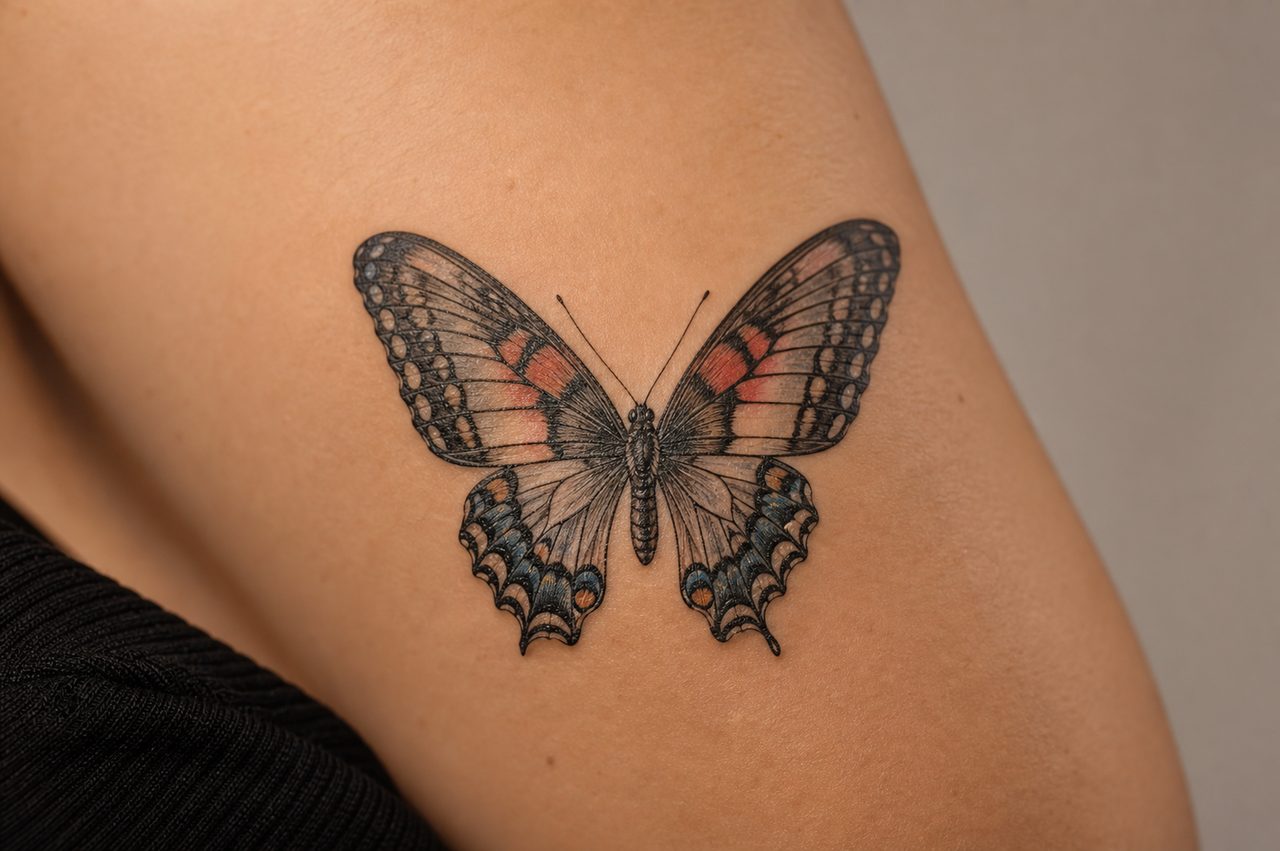
A butterfly tattoo most commonly represents transformation, freedom, and the fleeting nature of life. The meaning draws from the insect’s literal metamorphosis, caterpillar to chrysalis to winged adult, making it one of the most straightforward visual metaphors in tattoo culture. Beyond change, it carries associations with joy, lightness, and the courage to leave behind what no longer serves you.
Mythology & Folklore
Butterfly symbolism stretches across cultures with surprising consistency, though the specifics vary.
Aztec and Mesoamerican Beliefs
Aztec tradition often linked butterflies to fire and the souls of warriors. The fire god Xiuhtecuhtli and the spirits of fallen soldiers were both associated with these creatures, suggesting a connection between transformation and sacrifice. The Itzpapalotl, or “Obsidian Butterfly,” was a fearsome skeletal goddess, not the gentle figure modern audiences might expect. This duality, beauty and danger, still surfaces in tattoo designs that pair butterflies with skulls or dark imagery.
Japanese and Chinese Traditions
In Japanese culture, butterflies commonly symbolize the soul, particularly the souls of the living or recently departed. Two butterflies together traditionally represented marital happiness. Chinese folklore similarly associates them with love, specifically the famous Butterfly Lovers legend, often compared to Romeo and Juliet, where lovers transform into butterflies to escape separation. These associations make paired butterflies a subtle choice for commitment tattoos without the obviousness of hearts or names.
European Folk Beliefs
Some trace the butterfly’s connection to death and rebirth to European folk traditions where a butterfly entering the home signaled a visiting soul. Irish folklore held that butterflies could carry messages from the dead. These threads explain why butterfly memorial tattoos feel intuitively right even when the wearer doesn’t consciously reference them.
Design Tips & Pairings
Specific butterfly species carry distinct connotations that careful designers leverage.
Species Matter
- Monarchs: migration endurance, Mexican Day of the Dead connections, personal journeys
- Swallowtails: grace with defensive edge, their tail projections evolved to confuse predators
- Morphos: iridescent blue shifts with viewing angle, making them technically challenging but visually striking
- Black and grey swallowtails: mourning, subtlety, classic Americana compatibility
Line weight decisions significantly impact longevity. Fine-line butterfly tattoos photograph beautifully fresh but often blur within 5-10 years as the thin wing veins spread. Bold traditional outlines with limited shading hold crisper definition on high-movement areas like wrists and ankles where skin flexes constantly.
Common Pairings and Their Effects
Butterfly plus skull: mortality within beauty, memento mori tradition, addiction recovery narratives
Butterfly plus flowers: specific seasonal or birth-month connections, femininity without fragility
Butterfly emerging from chrysalis: explicit transformation narrative, popular after major life changes
Dagger through butterfly: betrayal, lost innocence, or protection of vulnerability depending on context
Color saturation affects symbolism too. All-black butterflies read as edgier, more gothic. Watercolor-style splashes without black outlines trended heavily in 2010s Instagram culture but age poorly, colors muddy and boundaries dissolve. Solid traditional color blocking remains the safest bet for longevity.
Personal & Modern Meanings
Contemporary wearers often layer personal significance onto traditional symbolism without contradicting it.
Gender Transition and Identity
The butterfly has become a widely recognized, non-medical symbol for gender transition, metamorphosis made literal. This usage spans decades and predates social media visibility, rooted in the same intuitive logic that makes the symbol work for any major identity shift. Placement choices here often carry additional weight: visible locations like forearms signal openness; hidden placements maintain personal significance without public explanation.
Mental Health and Recovery
Self-harm recovery communities adopted the butterfly as a grounding symbol, drawing one on skin instead of cutting, or tattooing one over scars. The Semicolon Project’s butterfly variations extended this into permanent marking. These personal narratives don’t require elaborate explanation; the image communicates enough to those who recognize it.
Post-breakup butterflies appear regularly in shops, marking the end of constraining relationships rather than mourning them. The emphasis shifts from loss to liberation, wings spread rather than folded.
Religious & Spiritual Angles
Christian tradition sometimes associates butterflies with resurrection, the three life stages mapping onto death, burial, and rising. This symbolism appears in medieval art and persists in Easter imagery. Tattooed crosses integrated into butterfly designs draw on this directly, though the combination risks visual clutter unless simplified significantly.
Buddhist and Hindu interpretations emphasize the butterfly’s impermanence, anicca in Buddhist terms. The creature’s short adult lifespan, often just weeks, underscores non-attachment rather than sorrow. Tattoos reflecting this angle tend toward minimalism: single butterflies, muted palettes, negative space suggesting dissolution.
New Age spirituality frequently connects butterflies to angelic presence or departed loved ones sending signs. This interpretive framework makes butterfly tattoos popular memorial choices, sometimes incorporating dates, initials, or small personal symbols into wing patterns where they don’t dominate the composition.
Who Chooses This Tattoo
Demographic patterns in butterfly selection have shifted notably. What read as overwhelmingly feminine in 1990s American tattoo culture now attracts broader gender distribution, partly through stylistic evolution, darker palettes, heavier blackwork, integration with biomechanical or geometric elements.
Age patterns show two peaks: early twenties marking independence from family or hometown, and forties-fifties marking divorce, career pivots, or empty-nest transitions. The latter group often specifically requests designs that avoid “teenage butterfly” aesthetics, more realistic rendering, subdued color, strategic placement for professional concealment.
First-timers choose butterflies frequently for their recognizability and relatively quick execution. Experienced collectors sometimes return to the motif after years of heavier work, appreciating its graphic clarity and the technical challenge of getting wing symmetry right.
Best Placements
Butterfly anatomy dictates natural placement logic. Wings spread flat suit broad, relatively stable surfaces; folded wings work on curves and narrower zones.
High-Visibility Options
- Upper back/shoulder blades: classic for spread-wing display, accommodates detail, concealable with standard workwear
- Forearms: daily visibility, conversation starter, works at small and medium scales
- Behind ear: micro-butterfly territory, high pain area due to thin skin and bone proximity
Intimate and Concealed Placements
Ribs and hip bones follow natural body curves, making three-quarter view folded-wing designs read naturally. These areas hurt significantly more than fleshy zones, thin skin over bone, plus the breathing motion during healing. Sternum placement between breasts creates a natural focal point but requires careful sizing; too small and details blur, too large and the design fights the sternum’s natural divide.
Ankles and feet remain popular despite poor ink retention. The constant friction from socks and shoes, plus thinner skin, means touch-ups are almost guaranteed. Artists typically advise against fine detail here.
Hand and finger butterflies trend periodically but fade fastest of all placements. The near-constant skin regeneration and sun exposure in this area means even bold designs soften within 2-3 years.
Key Takeaways
Butterfly tattoo symbolism centers on transformation but extends into love, death, identity, and resilience depending on design choices. Species selection, color approach, and pairing elements shift meaning substantially. The motif works across aesthetic styles from delicate fine-line to heavy traditional, though bold outlines and limited color palettes age most gracefully. Placement should account for both visibility goals and the technical reality of how ink holds on different body areas. Most importantly, the butterfly’s enduring popularity means finding a distinctive execution matters, generic clip-art butterflies mark the wearer as uninformed or rushed, while thoughtful custom designs reward the investment.
Frequently Asked Questions
Do butterfly tattoos have to be colorful to look good?
No. Black and grey butterflies hold up exceptionally well over time and carry a more subdued, sometimes edgier tone. Color adds vibrancy but isn’t necessary for impact.
How much detail can a small butterfly tattoo hold?
Less than most people expect. Wing veins thinner than a needle’s width blur into solid color within a few years. Small butterflies need simplified shapes to age recognizably.
Can a butterfly tattoo cover or incorporate existing scars?
Yes, though scar tissue takes ink differently, sometimes rejecting it entirely, sometimes holding it more densely. Experienced artists assess scar age and texture before designing around or over them.
What’s the difference between a butterfly and a moth tattoo symbolically?
Butterflies generally carry positive transformation associations; moths more often represent nocturnal persistence, attraction to flame, or vulnerability. Moth tattoos trend darker in both palette and narrative tone.