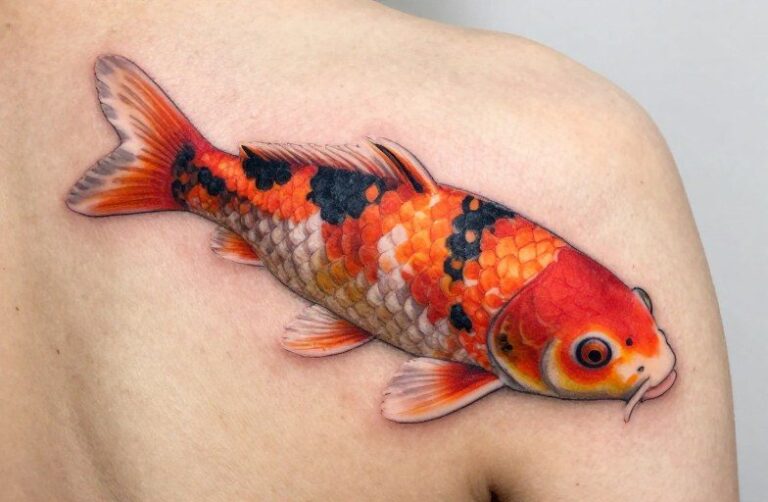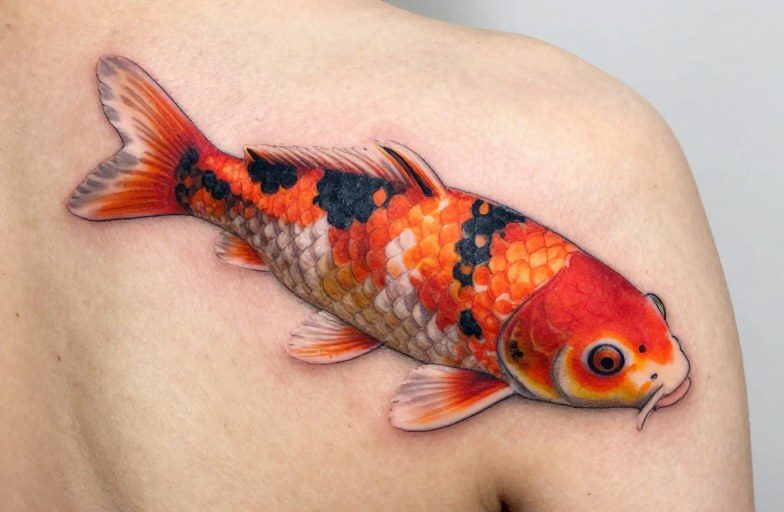
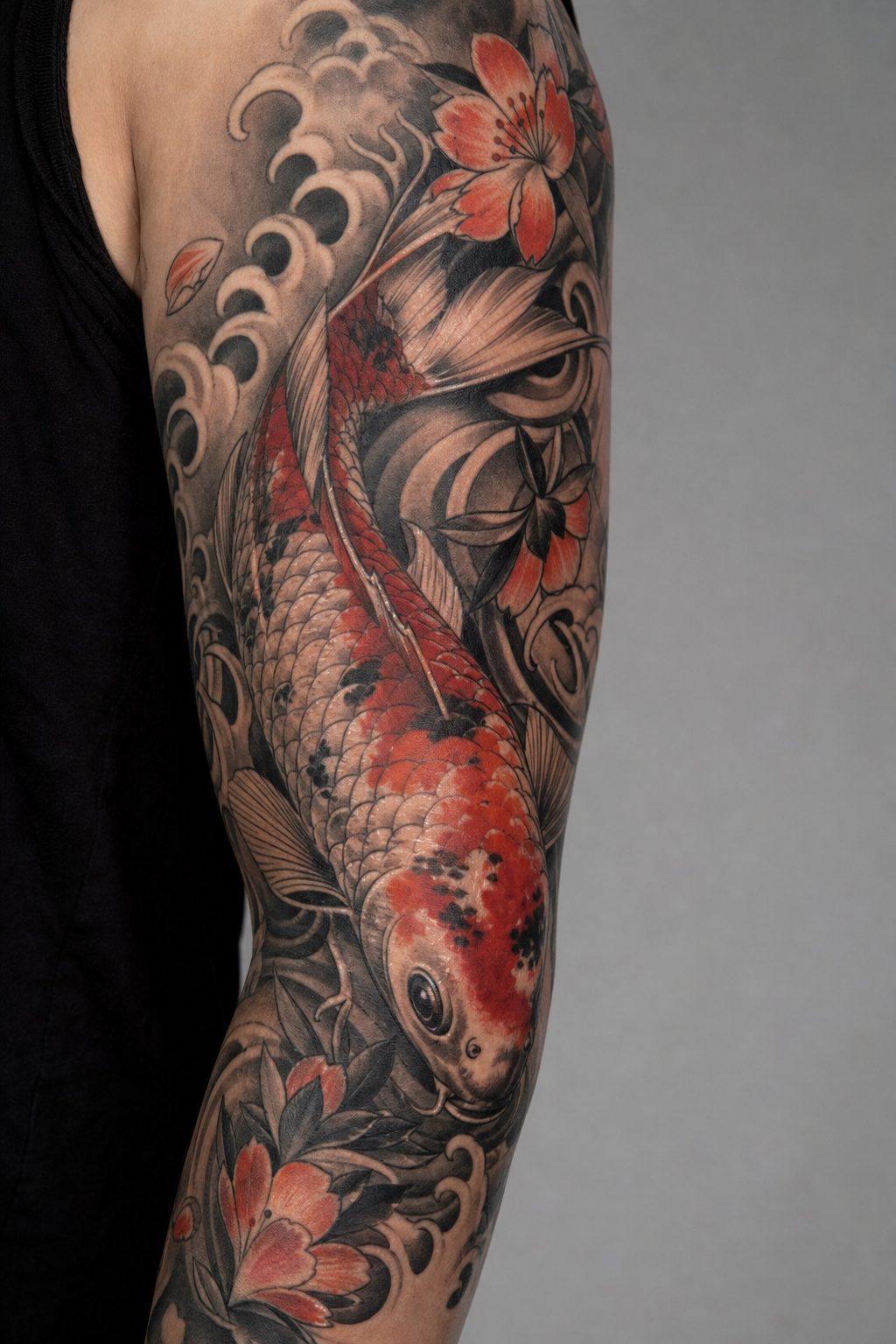
A koi fish tattoo primarily symbolizes perseverance, strength, and good fortune. The image draws from the Japanese legend of koi swimming upstream and transforming into dragons, an arc of struggle rewarded with transcendence. Color and direction matter enormously here: a koi swimming upstream typically represents active struggle, while downstream suggests you’ve already overcome the obstacle.
Symbolism & Core Meaning
The Upstream Legend
The core myth runs through Japanese and broader East Asian folklore. Koi that battle the current to reach the Dragon Gate waterfall transform into powerful dragons. In tattoo form, this translates to personal endurance, surviving hardship, outlasting grief, pushing through illness or addiction. The fish becomes a visual commitment to not giving up when the current runs against you.
Direction carries weight. Upstream koi face head-on into difficulty; downstream koi celebrate victory already earned. Some wearers choose pairs, one up, one down, to mark the full cycle. The waterfall itself sometimes appears as background detail, reinforcing the transformation threshold.
Color Symbolism That Actually Holds Up
Color in koi tattoos isn’t decorative filler, it shifts the meaning concretely:
- Red/orange: courage, intense love, motherhood
- Black: overcoming adversity, surviving depression or major loss
- White with red spots: career success, wealth (the Kohaku pattern)
- Gold/yellow: prosperity, sometimes specifically business fortune
- Blue: tranquility, but also the son in a family lineage
- White with black: the yin-yang balance, major life transitions
A single-color koi reads cleaner from distance; multi-color work demands more skin real estate to avoid muddling. Black koi specifically resonate with people marking recovery from something that nearly broke them.
Common Variations & Styles
Traditional Japanese (Irezumi)
Full traditional sleeves or back pieces place koi among waves, cherry blossoms, or maple leaves. The fish curves dynamically, mouth open, fins spread. Bold black outlines hold over decades; limited color palette (red, black, muted green) ages gracefully. This style demands commitment, half a koi looks like a mistake, and the surrounding elements need space to breathe.
Water background in irezumi isn’t generic blue filler. The wave patterns follow specific conventions: turbulent water around the fish suggests active struggle; calm pools indicate peace achieved. Cherry blossoms falling around the koi add transience, beauty that doesn’t last, making the perseverance more poignant.
Contemporary Adaptations
Modern approaches strip the ornamentation. Single-needle koi, geometric abstractions, or watercolor splashes behind a simplified silhouette, each trades traditional legibility for personal expression. Blackwork koi reduce the image to pure form and movement, losing color symbolism but gaining graphic punch. These lighter styles suit smaller placements and quicker sessions, though fine lines blur faster on high-movement areas.
Some combine koi with unrelated imagery, clock faces, compasses, script, to hybridize the symbolism. This works when the elements genuinely connect to your specific narrative; otherwise it becomes visual noise.
Who Chooses This Tattoo
The koi attracts people who’ve actually been through something, not just aspirational toughness. Common contexts include: surviving cancer or major surgery, getting sober, outlasting abusive relationships, immigrating against obstacles, or rebuilding after financial collapse. It’s also chosen by parents marking a child’s survival of early medical crisis, the fish swimming for someone too small to swim alone.
Second koi tattoos happen. Someone gets one at 25 for a breakup, another at 40 for a parent’s death. The motif accommodates accumulation without contradiction. Unlike trend pieces that date embarrassingly, koi carry enough cultural weight to sustain multiple interpretations across a lifetime.
Men and women both choose koi, though placement patterns diverge. Men more often go full back or sleeve; women frequently choose rib, thigh, or shoulder placements that allow concealment. These aren’t rules, just shop frequency observations.
Best Placements
Where the Movement Works
Koi need curve and flow. The body offers natural channels:
- Forearm: the muscle curve shapes the fish’s arc; visible daily reminder
- Rib cage: follows the bone structure, painful but dramatic for larger work
- Thigh: substantial canvas, accommodates traditional water and flower backgrounds
- Back: full scene potential, the fish can actually “swim” across shoulder blade to hip
- Calf: the muscle bulge creates natural body for the fish; heals relatively easily
Avoid flat planes without contour, sternum center, flat bicep front, unless stylizing geometrically. The koi’s power lives in implied motion; rigid placement kills it.
Scale Reality
Small koi tattoos fail. Below three inches, fins blur together, color blocks merge, and the whole thing reads as a colorful blob within five years. Minimum effective size depends on complexity: a simple black silhouette can live at 3 inches; a traditional color piece needs 5-6 inches minimum to hold detail. Finger koi are essentially temporary, fine line there degrades within months from washing and movement.
Personal & Modern Meanings
Beyond the traditional legend, wearers layer individual significance. A koi might represent: swimming against family expectations to choose your own career; persisting through fertility struggles; the slow grind of building a business; or simply refusing to become cynical when circumstances invite it.
Some pair koi with lotus flowers, both emerge from murky water into beauty, doubling the emergence theme. Others add children’s names in water ripples, or dates of survival milestones worked into scale patterns. These integrations succeed when subtle; heavy-handed literalism (“STRENGTH” banner underneath) undermines the symbol’s inherent eloquence.
The tattoo also functions as private accountability. Visible on your forearm, the koi becomes a question from strangers that you answer or deflect, a recurring choice about whether to narrate your struggle. Some find this useful; others place the koi where only they see it, making the meaning genuinely private.
History & Cultural Roots
East Asian Origins
The koi’s symbolic weight developed across China and Japan over centuries. Chinese origins often linked the fish to scholarly success, the Dragon Gate legend served as metaphor for passing imperial examinations. Japanese adaptation, commonly associated with samurai culture, emphasized the warrior virtues of endurance and death-before-surrender. The specific color varieties now standard in tattooing derive from Japanese breeding programs that formalized in the 19th and early 20th centuries.
Western adoption accelerated post-WWII and surged again in the 1990s and 2000s as Japanese tattooing gained global visibility. Some trace the koi specifically to Edo-period woodblock prints where the fish appeared as decorative elements before becoming standalone tattoo subjects.
Contemporary Cultural Considerations
Wearing koi without Japanese heritage isn’t automatically appropriation, but lazy execution can read as tourist consumption. The distinction lies in engagement: understanding what you’re wearing, choosing an artist who respects the tradition, avoiding chopstick-font lettering or random Japanese characters that misspell concepts. The koi itself has traveled far enough from pure national symbol to become genuinely international, like the dragon or the rose, but the surrounding visual language (specific wave patterns, certain flower pairings) still carries cultural specificity worth honoring.
Final Thoughts
The koi fish tattoo endures because its meaning operates on multiple frequencies simultaneously: cultural legend, personal survival, aesthetic pleasure. It rewards large scale and patient execution; rushed or miniature work wastes the symbol’s capacity. Choose direction and color deliberately, they’re not decorative choices but narrative ones. And expect the tattoo to gather meaning as you age: the fish you got at 25 for one specific struggle will likely come to represent something broader by 45, which is exactly how lasting symbols function. The best koi tattoos don’t just commemorate survival; they prepare you for the next current you’ll need to swim against.
Frequently Asked Questions
Does a koi fish tattoo have to be Japanese-style to be authentic?
No. The koi symbol has traveled globally enough that contemporary, blackwork, or watercolor approaches carry legitimate meaning. What matters is understanding the core symbolism you’re invoking, not replicating a specific aesthetic tradition.
How much does a full koi sleeve typically cost?
Quality traditional koi sleeves run multiple sessions and significant investment, often thousands over months. The complexity of water backgrounds, color saturation, and the sheer coverage required makes this a major commitment in both money and healing time.
Can I get a koi tattoo if I haven’t faced major adversity?
The symbol works for anticipated struggle too, major career changes, approaching parenthood, or committing to difficult growth. But the koi specifically resonates with aftermath. Consider whether another symbol better fits your current position if you’re choosing aspirationally.
Why do some koi tattoos include lotus flowers?
Both lotus and koi rise from murky conditions into beauty, creating parallel symbolism. The pairing reinforces themes of emergence and transformation, though it also risks visual cliché if executed without personal relevance.