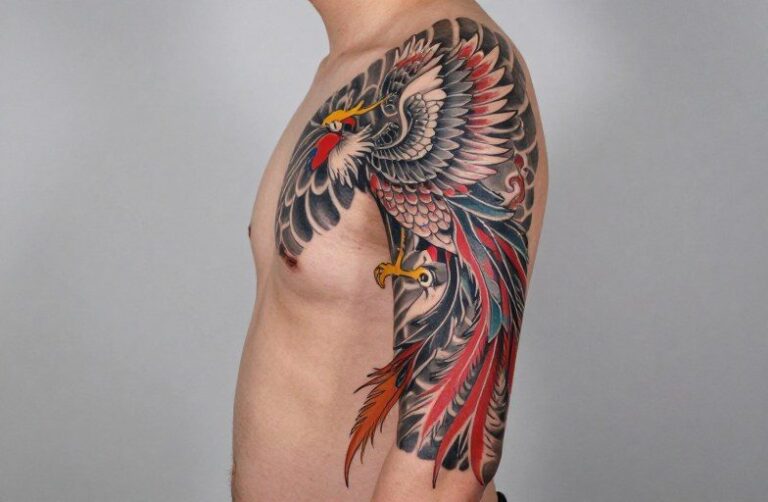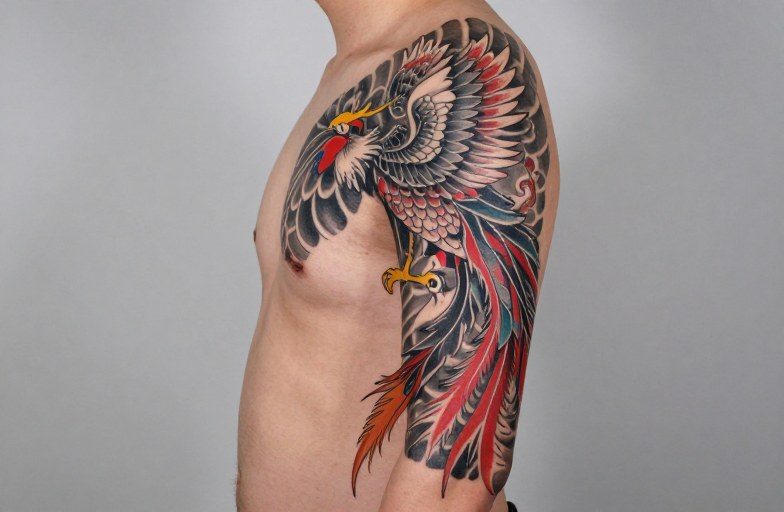
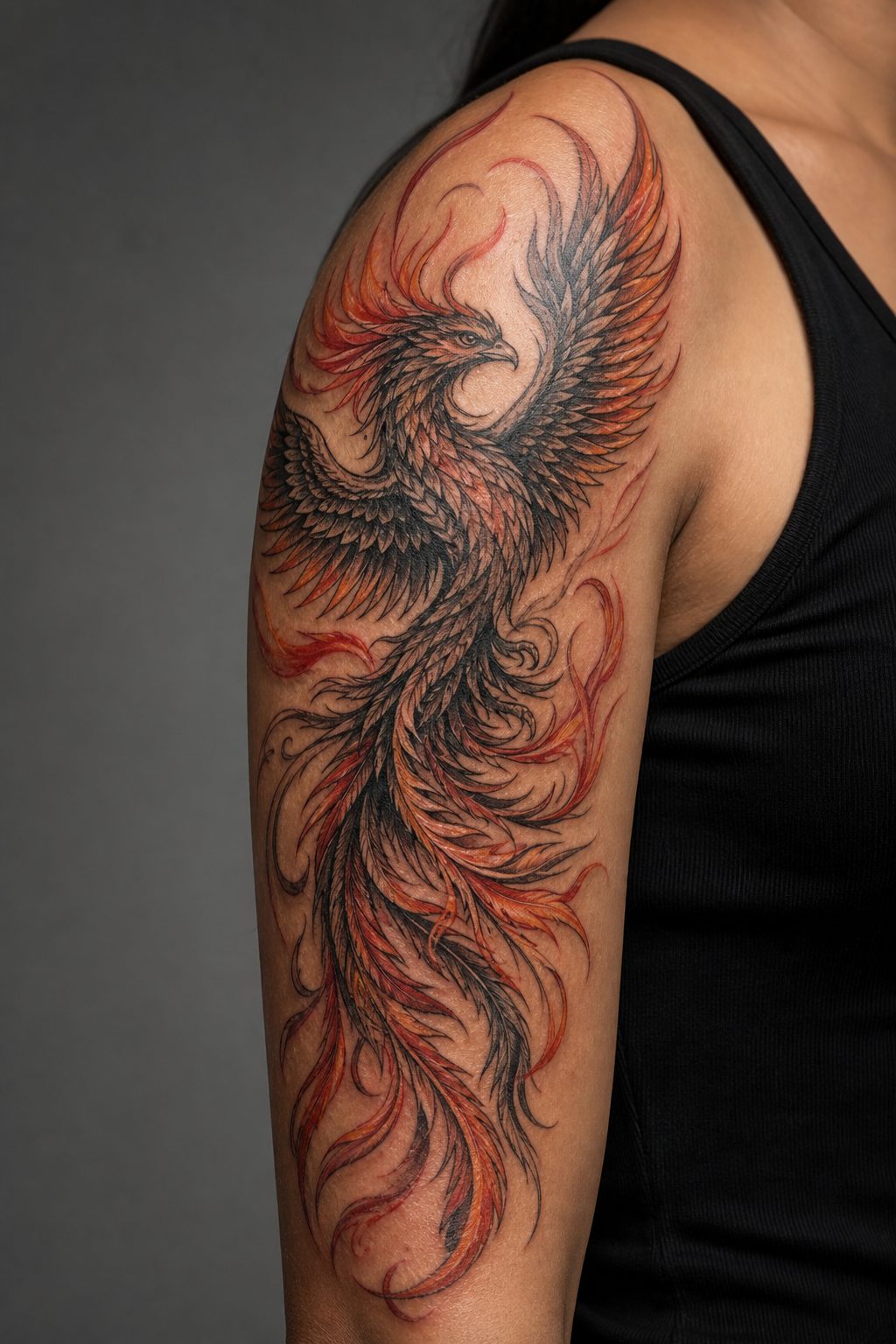
A phoenix tattoo most directly represents rising from destruction, literal rebirth through fire. The mythical bird burns to ash and returns, making it one of the most enduring symbols of resilience, second chances, and transformation that doesn’t erase what came before. People choose it after divorce, recovery, career collapse, or any personal ground-zero where something new had to grow from what was lost.
Color vs Black and Grey
What Color Actually Does Here
Traditional phoenix color work leans hard into flame logic: cadmium orange, scarlet, touches of gold near the head. Watercolor-style backgrounds can suggest smoke and ember drift without outlining every feather. The catch: warm colors (reds, oranges, yellows) fade fastest in sunlight. A bright phoenix on a forearm or calf, constantly exposed, will look muddy in five to seven years without touch-ups. Plan for maintenance, or move it somewhere covered.
Color also changes the symbolic read. A jewel-toned phoenix, emerald, sapphire, violet, shifts toward fantasy and personal mythology rather than classical fire rebirth. That’s valid, but know what you’re choosing. Full saturation across large wings reads as triumphant; limited color on a black bird (red eyes only, flame at the wingtips) suggests controlled, barely contained power.
Black and Grey: Ash and Smoke
Black and grey phoenixes carry a different weight. Without color forcing the fire narrative, the bird becomes more anatomical, more skeletal, more about the structure of survival than the drama of it. Heavy black wash can suggest char, smoke, the moment before or after ignition. Fine-line grey wash feathers age poorly if too delicate, lines blur, details mud together, so build contrast through weight variation, not microscopic detail.
Single-needle and fine-line styles have made black phoenixes popular for smaller scales: behind ears, along collarbones, inner forearms. The tradeoff is real. Those feathers need room to breathe. Below three inches, a phoenix becomes a bird-shaped blob within a decade.
How It Ages on Skin
The Feather Problem
Feather tattoos age notoriously badly. Individual barbs soften into solid shapes; negative space between feathers closes up. Phoenix designs compound this because the wing spread demands so many fine elements. The fix is structural: design for the aged version, not the fresh photo. Bold separations between wing sections. Simplified primary feathers with strong silhouettes. Background elements (flame, smoke, geometric framing) that hold shape even when detail dissolves.
- Line weight matters more than detail density: thick outline anchors, thin interior lines fade
- White highlight ink rarely lasts; design as if it won’t
- Stippled flame textures age better than smooth gradients in black and grey
- Large scale ages more gracefully than small; a palm-sized phoenix is a five-year commitment, not a lifetime piece
Placement and Sun Exposure
Upper arms, ribs, upper backs, areas that see clothing coverage, preserve color and line better than hands, forearms, or calves. The phoenix’s upward wing posture also means certain placements fight anatomy: a back piece with wings spread across shoulder blades reads beautifully, but wings that wrap too far onto the upper arms distort when the wearer moves. Chest placements face inward, which changes the bird’s orientation from ascending to frontal confrontation. Neither is wrong, but the emotional register shifts.
Similar & Related Symbols
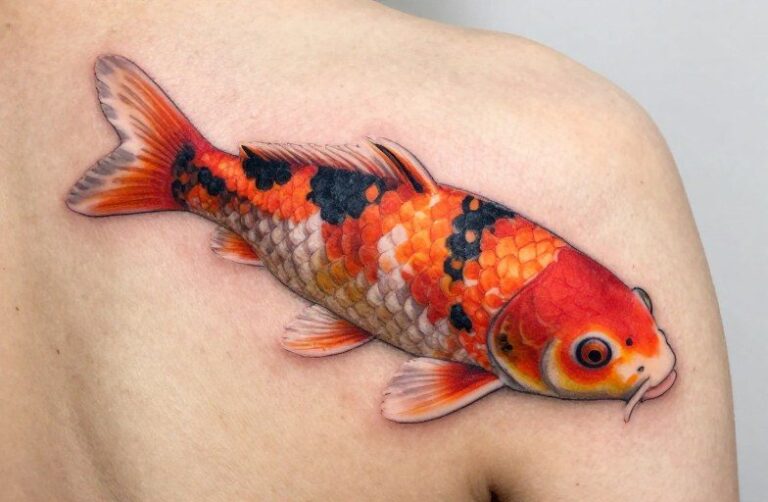
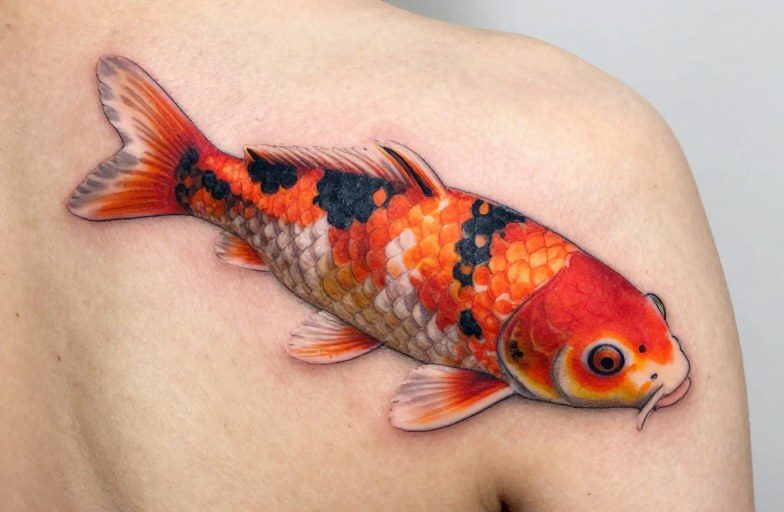
Phoenixes get requested alongside or instead of several related images, and the distinctions matter. The ouroboros (snake consuming itself) cycles without destruction, eternal return rather than death and rebirth. The lotus rises from mud, not fire; gentler, more organic, less violent transformation. Koi swimming upstream become dragons in Japanese lore; perseverance rewarded, not annihilation survived.
Some people combine phoenix with dragon, particularly in Chinese-inspired compositions. Dragon and phoenix together traditionally represent yin-yang balance, emperor and empress, cosmic order. Solo phoenix emphasizes individual survival; paired, it enters relationship and harmony territory. Know which conversation you’re entering. A phoenix rising alone from a bed of actual lotus flowers (not just generic flowers) can suggest multiple layers of emergence, fire and water, violence and nurture.
Personal & Modern Meanings
Beyond the Obvious
Rebirth is the headline, but people live the specifics differently. Someone might mark surviving a house fire literally, or a startup burning through their savings, or a faith community that turned toxic. The phoenix doesn’t require catastrophic loss; sometimes it’s about chosen transformation, leaving a stable identity that no longer fit. A parent after children leave home. A veteran after discharge. Someone who transitioned gender and wants to mark the death of a former self without dishonoring who that self was.
Modern iterations increasingly play with the form: phoenix as mechanical bird, circuit-board feathers, cyberpunk resurrection. Others go minimal, a single flame contour containing a bird silhouette, or just the ash spiral suggesting what preceded. The core remains: something ended, something began, and the second thing carries the memory of the first.
What Actually Works in Consultation
Good artists ask what burned, not just that something did. The answer shapes design: sharp, angular flames suggest sudden violence; soft, rolling smoke suggests gradual dissolution. A phoenix looking backward carries different weight than one ascending face-forward. These choices aren’t universal symbols; they’re personal grammar. The best pieces come from specific conversation, not catalog selection.
History & Cultural Roots
The phoenix myth is often linked to Egyptian bennu bird traditions, though direct continuity is debated. Greek sources (Herodotus, Pliny) describe the Arabian phoenix cycling every 500 to 1,461 years, burning on a nest of aromatic wood. Chinese fenghuang is commonly associated with imperial virtue and prosperity, distinct from the Western fire-bird though frequently conflated in modern tattooing. Japanese hou-ou blends Buddhist and native traditions, appearing in temple art as a guardian of the law.
Medieval European Christianity adopted the phoenix as resurrection symbol, which still shapes how some wearers understand the image today. The 19th century saw occult and alchemical revivals that connected phoenix to powerful processes, purification through fire, the philosopher’s stone’s promise. None of this requires historical accuracy in your personal choice, but knowing the layers helps you avoid unintended associations. A Chinese-style fenghuang with Western flame elements reads as fusion, not error, if you own the fusion.
Best Placements
Working With the Bird’s Posture
Phoenixes want vertical or diagonal space. The ascending posture, wings spread, tail trailing fire, this composition fights horizontal bands like ankle bracelets or wrist cuffs. Full back pieces allow the full wingspan and trailing tail. Ribs give vertical ascent but hurt significantly and distort with breathing. Thighs offer large canvas with less bone proximity, though the muscle movement can warp wing lines over time.
- Upper back/shoulder blades: classic, room for detail, moderate sun exposure
- Outer thigh: large scale, less pain, easy to conceal, some movement distortion
- Side ribcage: dramatic vertical, very painful, significant breathing movement
- Inner forearm: visible, limited scale, high sun exposure, frequent touch-ups needed
- Chest (sternum-centered): confrontational, symmetrical, painful over bone
Scale and Visibility Choices
Visible phoenixes (forearms, hands, neck) commit you to public narrative. People will ask. Some wearers want that accountability; others prefer the rib piece that only partners and doctors see. There’s no correct choice, but placement is part of meaning. A hidden phoenix is private transformation. A visible one is public declaration. Know which you’re building.
Final Word
The phoenix endures because it accommodates real pain without requiring neat resolution. Fire destroys; the bird returns; the return is not the same as never burning. That’s honest symbolism in a medium that too often sells easy redemption. Choose your technical approach, color or black, large or small, visible or hidden, with the same honesty. The image will age with you, blur and soften, need refreshment. So does the story it marks. The tattoo doesn’t need to stay pristine to stay true.
Frequently Asked Questions
Does a phoenix tattoo always have to include flames?
No. Smoke, ash, or even geometric deconstruction can suggest the fire without literal flame. Some designs use empty negative space where fire would be, letting the skin itself suggest what burned. The symbol works as long as transformation is implied, not every element illustrated.
How big does a phoenix tattoo need to be to hold detail?
For recognizable feather structure and clean flame elements, plan for at least six to eight inches in the longest dimension. Smaller can work if radically simplified, silhouette, single-line contour, but detail density below that scale won’t survive five years of normal aging.
Can a phoenix tattoo work with other elements or does it need to stand alone?
It combines well, but choose companions that share thematic logic. Clocks, hourglasses, or calendars emphasize time and cycles. Mountains or trees suggest what grows after destruction. Avoid random filler; every element should participate in the rebirth narrative or the composition feels cluttered.
Is there a difference between a phoenix and a fenghuang tattoo?
Yes, though modern tattooing often blends them. Traditional fenghuang represents virtue, harmony, and prosperity, with specific color associations (red head, yellow body, etc.) and no fire-destruction element. Western phoenix emphasizes cyclical rebirth through flame. Know which tradition you’re drawing from, or deliberately fuse them with intention.