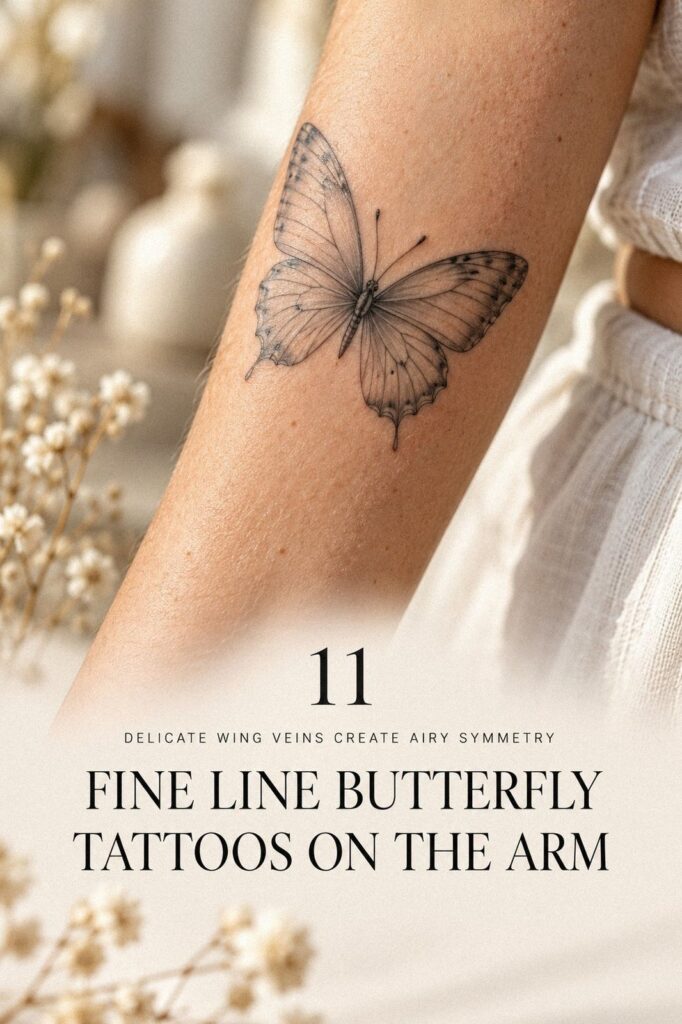
A fine line butterfly tattoo on the arm can often fit one sitting, especially on the outer forearm. I once chose detail before placement and regretted how quickly the lines crowded together. Your best design starts with skin, movement, and healing in mind. These ideas keep the result delicate, personal, and readable.
- ✓ Start With a Small Fine Line Butterfly
- ✓ Which Fine Line Butterfly Arm Idea Fits You?
- ✓ Build Your Signature Into the Wing Structure
The right choice isn’t about copying a striking reference. It’s about finding a meaningful shape that suits your body. Your budget, pain tolerance, and artist’s healed work matter just as much as the butterfly itself.
- Start With a Small Fine Line Butterfly
- Which Fine Line Butterfly Arm Idea Fits You?
- Build Your Signature Into the Wing Structure
- Is Delicate Wrist Linework Right for You?
- Keep a Minimal Forearm Butterfly Clear
- Let the Shoulder Carry an Ornate Butterfly
- Upper Arm vs. Wrist: Follow the Curve
- Add Handwriting Without Crowding the Butterfly
- Give Twin Butterflies One Meaning
- Can Botanical Details Stay Crisp?
- Anchor the Fine Line Design With Blackwork
1Start With a Small Fine Line Butterfly
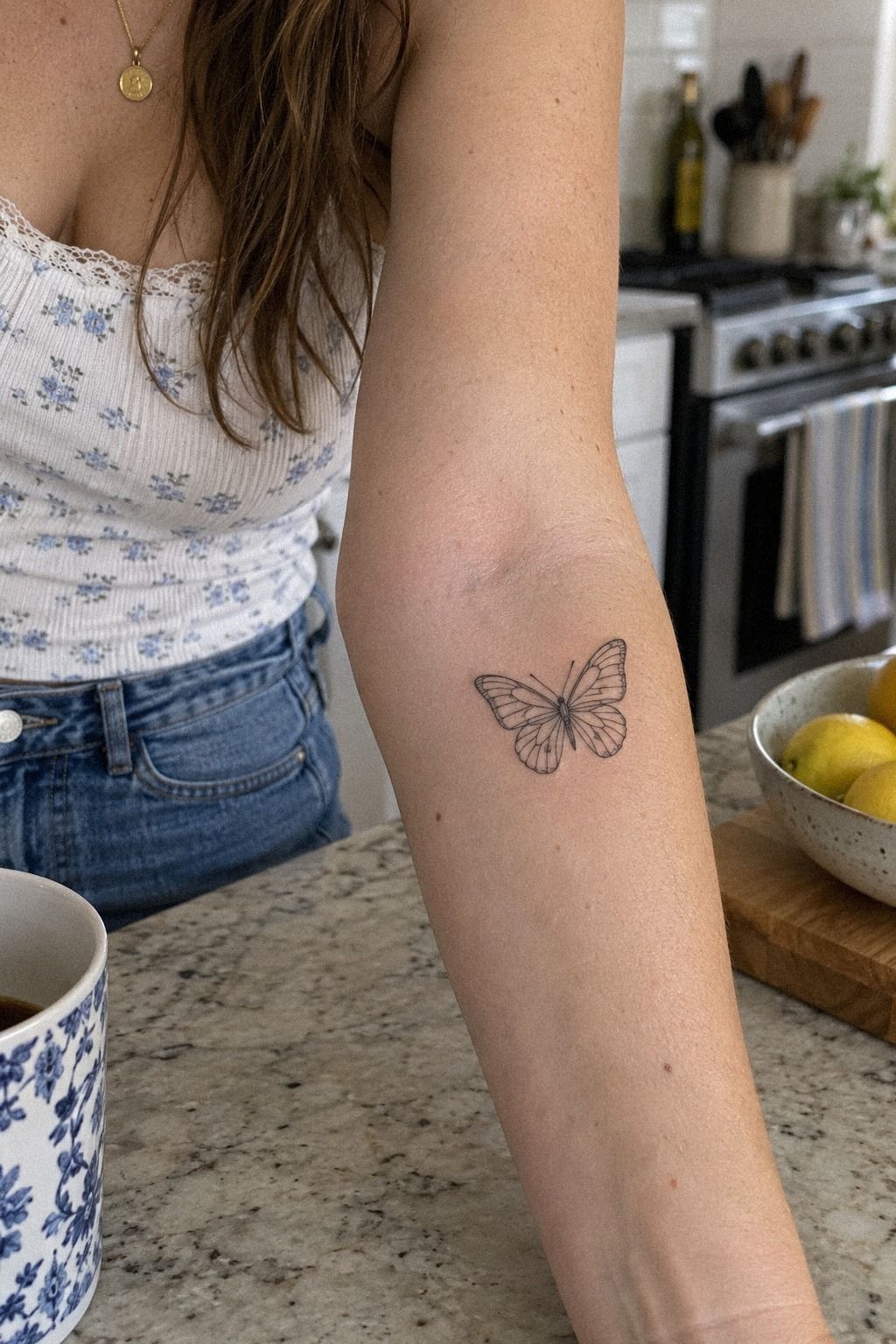
A small fine line butterfly works best when the wings have enough breathing room to stay crisp. On warm skin, terracotta, stone-gray, and muted olive accents can look striking without becoming loud. I’d keep the butterfly centered on the outer forearm, where you can see it easily and your artist can work on a relatively tolerable area.
Your artist should leave tiny gaps between the stone-gray wing veins. They don’t need to trace every possible detail. A 1- to 2-inch design may fit one sitting, but your exact time will depend on the artist’s pace and the amount of detail.
That spacing is worth the cost because it helps the result stay delicate and readable. It also gives the skin space to settle. A crowded butterfly may look intricate on the stencil, yet lose its sharpness later!
The wing shape matters more than extra flourishes. Clean single-needle linework, fine terracotta ink, and a crisp central body are usually enough. If you’re comparing proportions, this small fine line butterfly tattoo guide gives you a useful reference.
I’d skip an ultra-tiny butterfly with six crowded veins. It may look dainty on the stencil, but those details can soften as the skin heals. Your best version is understated now and still recognizable later.
A small butterfly can feel minimal without looking plain. Keep the central shape bold enough to read, then let the open skin create the elegance.
2Which Fine Line Butterfly Arm Idea Fits You?
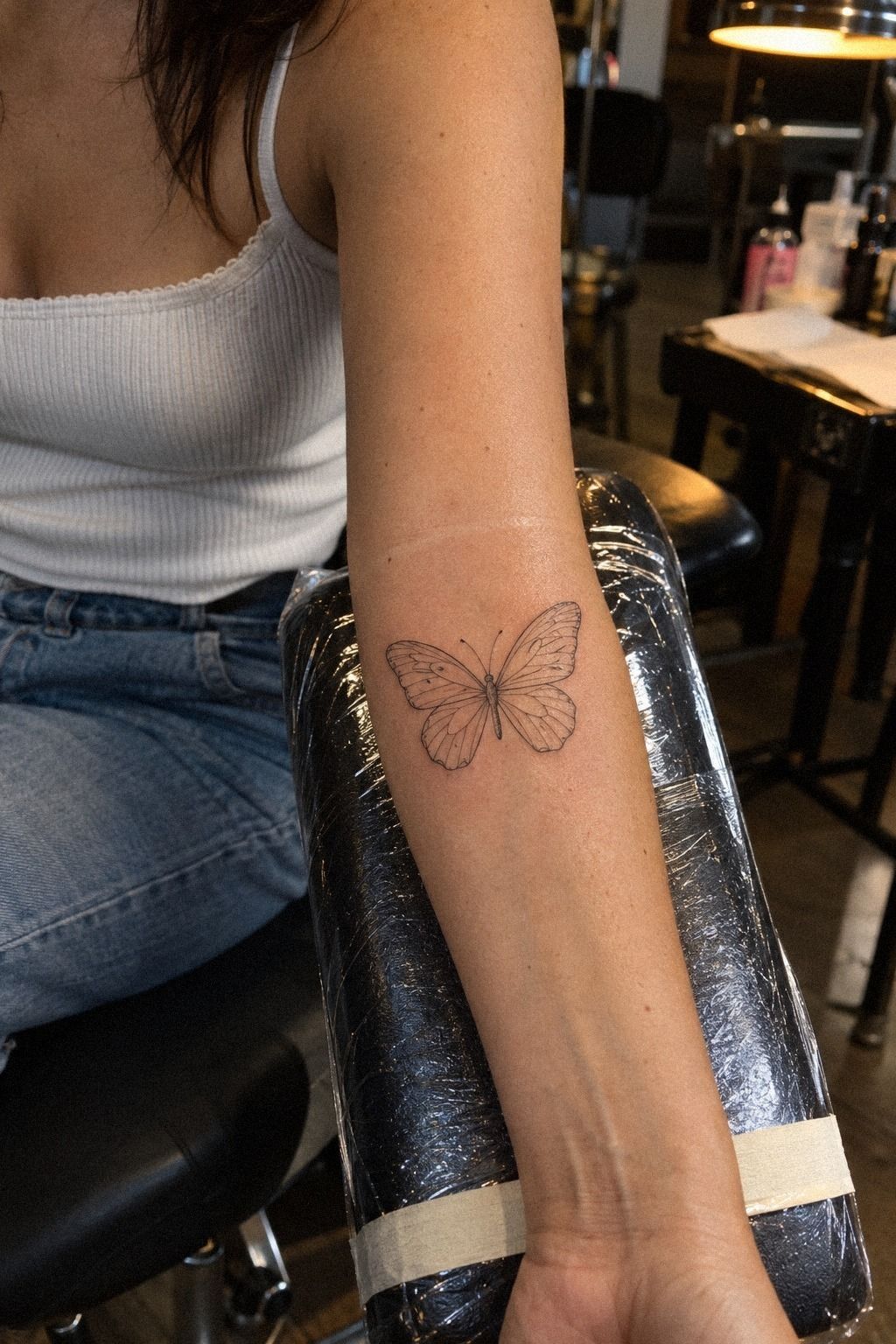
Fine line butterfly arm ideas don’t need to look identical, even when the basic silhouette stays familiar.
3Build Your Signature Into the Wing Structure
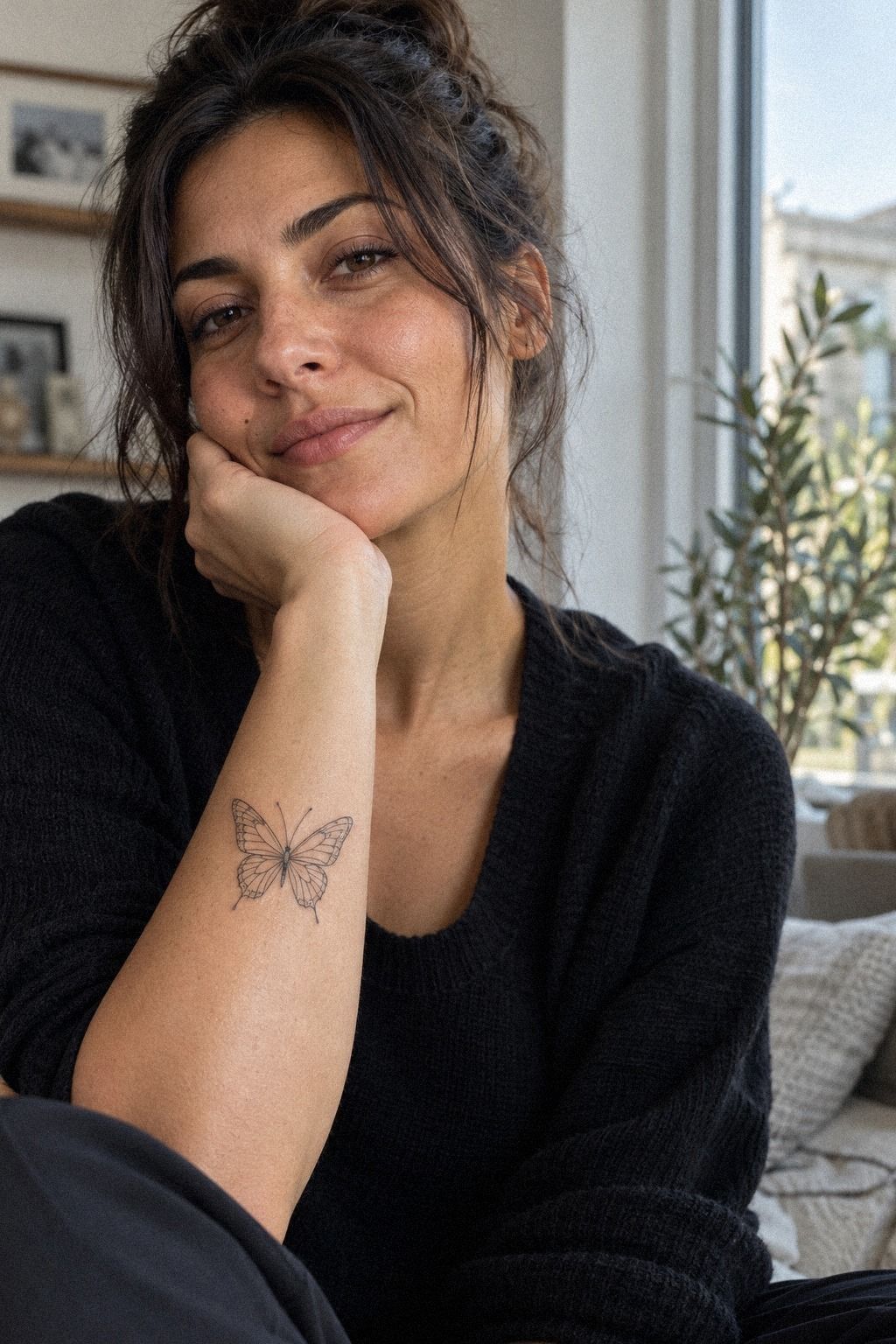
A unique fine line butterfly arm design can come from the wing structure rather than an unusual subject. One asymmetric wing, a broken vein pattern, or a slightly lifted lower wing can make the piece feel expressive without becoming overly ornate.
I like using negative space as the main creative decision. A clean gap can look more iconic than another decorative mark. It also gives your tattoo space to breathe as the skin settles.
If you want a more distinctive direction, compare this fine line butterfly tattoo guide with a simple fine line butterfly tattoo stencil. Your personal reference should show the feeling you want, not force your artist to copy every line.
The strongest unique designs still have a clear silhouette. If someone can’t recognize the butterfly from a few feet away, the concept may be too complicated for the scale.
A daring detail can make the piece feel special. It shouldn’t make the main shape harder to read.
4Is Delicate Wrist Linework Right for You?
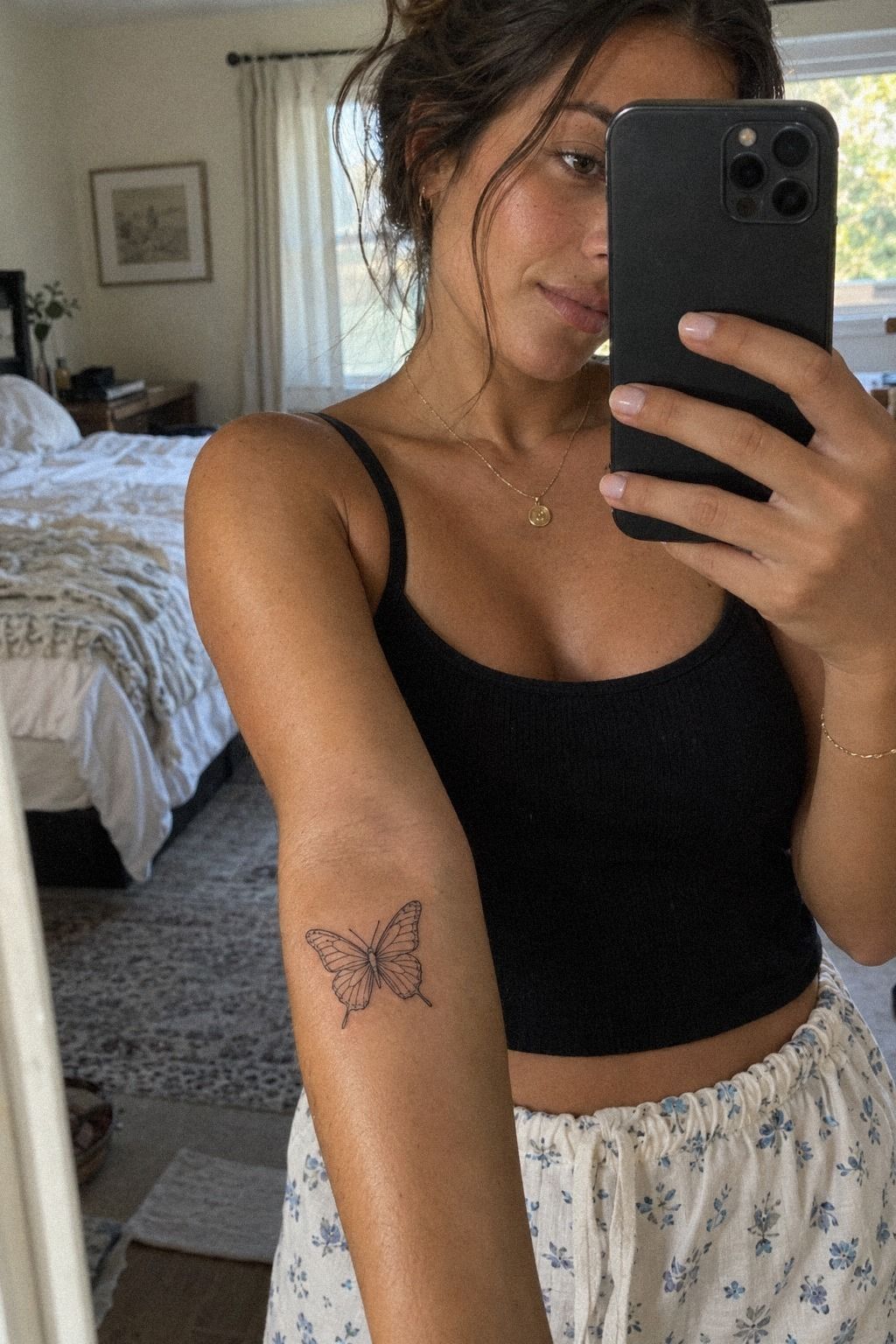
Delicate wrist linework needs more planning than forearm placement because the wrist bends, folds, and catches sunlight. On golden tan skin, deep navy linework with restrained ivory accents can look vibrant against a warm undertone, especially when the artist uses clean lines instead of pale shading.
I’d avoid placing the lowest wing tips directly in the strongest wrist crease. That area moves constantly, and the design may lose its crisp appearance sooner. Leave a small margin so the butterfly feels intentional when your hand is relaxed or lifted.
The wrist can be more sensitive than the outer forearm. You’ll want a calm artist and a short appointment plan. A delicate design may take less time than a dense one, but comfort still varies from person to person.
You can ask for a brief pause if your skin feels overwhelmed. A good artist won’t rush you. They’ll help you keep the appointment manageable!
A slightly horizontal butterfly looks playful and dainty here. A narrow vertical version feels more polished. Compare the healed details in this delicate fine line butterfly tattoo reference before you choose your final angle.
Wrist placement can be worth it when visibility matters to you, but it may not offer the easiest healing routine. Your daily movement should be part of the decision.
5Keep a Minimal Forearm Butterfly Clear
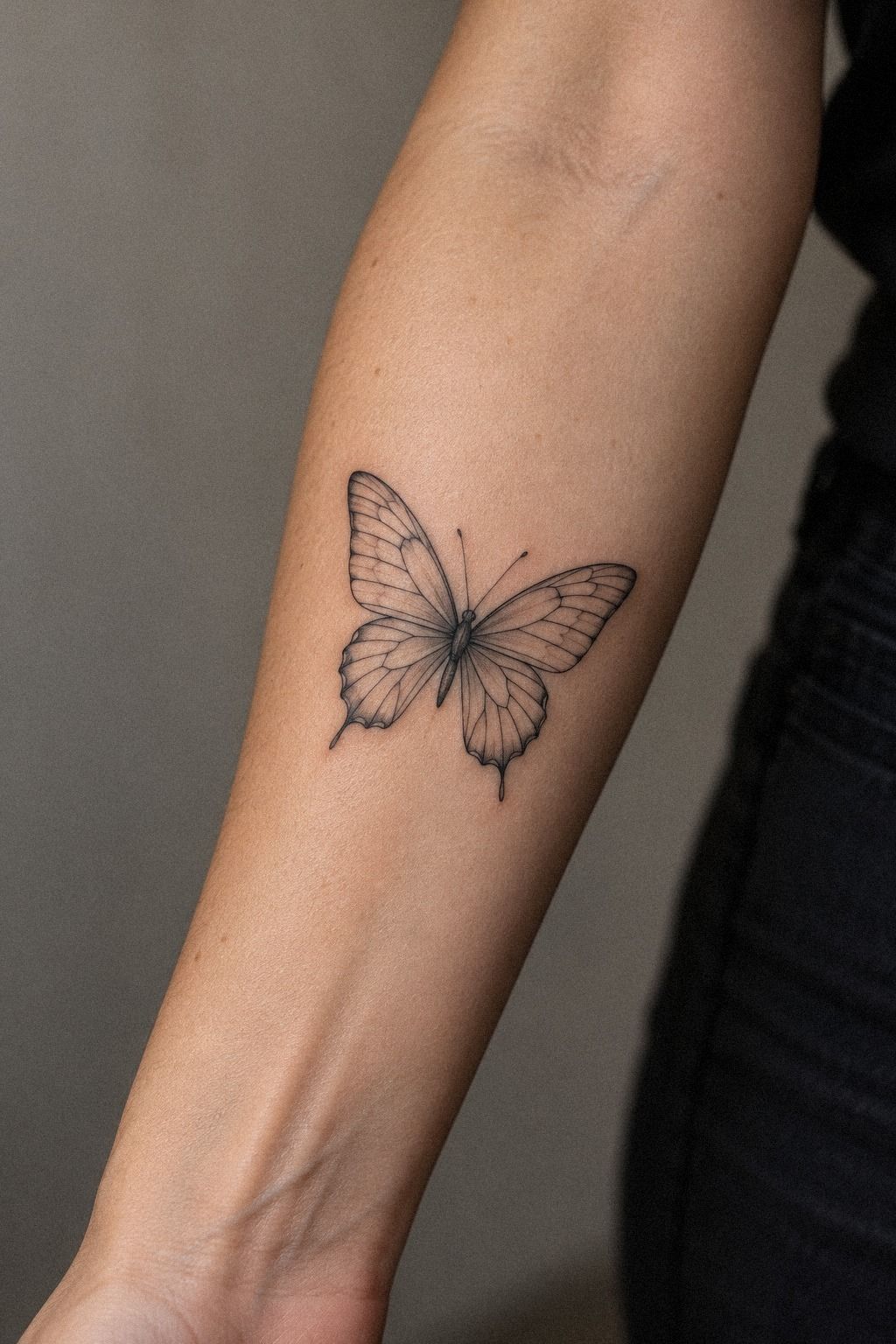
A minimal forearm butterfly often begins with a simple flash sheet approach. That lets you compare several silhouettes before choosing one. Your favorite may be the plainest option because its shape reads immediately.
Look for crisp wing symmetry, an open center, and a body that isn’t too thick. The strongest minimal design usually has fewer lines than you expect.
I’ve seen people add flowers, stars, dates, and script until the butterfly loses its visual authority. Don’t let a reference sheet pressure you into choosing every detail. One clean decision can feel more elegant than five competing ones.
A flash option can also help you discuss scale during an artist consultation. You’ll see whether the wing tips feel too sharp, whether the body looks too long, and whether the design still feels right for your taste.
There’s no rule that a butterfly has to look soft. A sleek outline can feel powerful. A sharp angle can feel edgy.
If you want more options, browse this fine line butterfly tattoo stencil page. A stencil lets you test placement before the needle begins, so your final choice feels deliberate rather than rushed.
Minimal designs often provide the clearest value because every line has a job. If a detail doesn’t improve the silhouette or meaning, remove it. That restraint matters!
6Let the Shoulder Carry an Ornate Butterfly
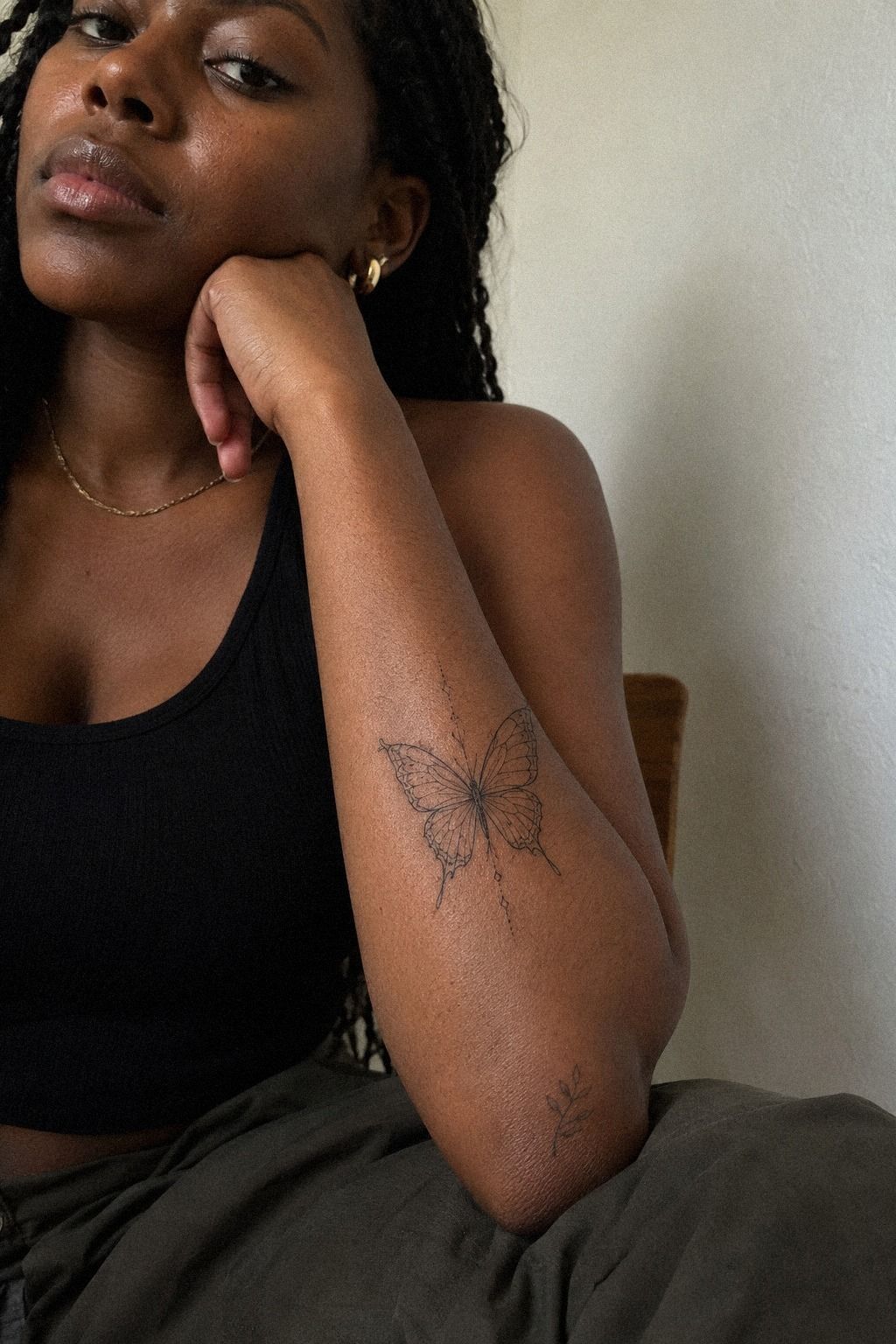
An ornate shoulder butterfly can look powerful on deep ebony skin when the artist uses confident forest-green contours with restrained rust accents and enough open skin to separate the wings. The result may feel bold and graceful at once.
Your artist should show healed work on similar skin tones before you book. Fresh contrast can be misleading, especially when a design depends on tiny veins.
I’d keep the ornate quality in the wing pattern, not in heavy fill. Fine ornamental veins, tiny scalloped edges, and a sharp central body can create an intricate image without turning the butterfly into a solid block.
Shoulder placement gives you more space than the wrist, but the design can still shift visually when your arm moves. Angle the butterfly so the body follows the shoulder’s natural curve.
A slightly upward-facing design can feel empowering. A downward-facing one may seem quieter and more intimate. Both can work if the angle matches your intention.
Forest-green ink with restrained rust accents can provide a distinctive alternative to solid black, especially when you want the wing details to remain visible. You can study this fine line black butterfly tattoo reference before deciding how much contrast your version needs.
A skilled shoulder specialist can be worth the higher price if the piece uses layered detail. Ask what can realistically hold its shape before you approve the final stencil.
7Upper Arm vs. Wrist: Follow the Curve
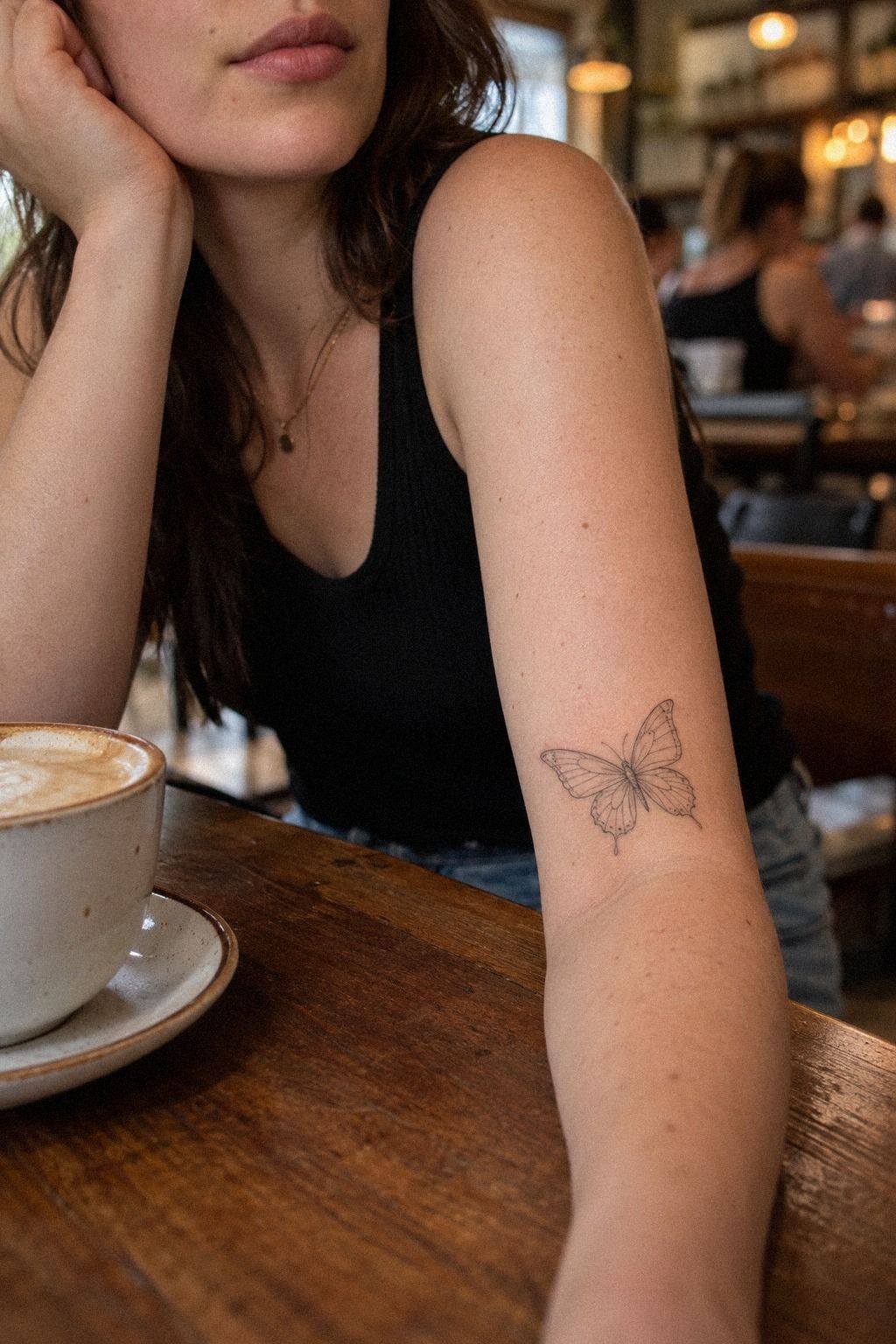
A flowing upper arm butterfly should follow the body instead of sitting like a sticker on top of it.
8Add Handwriting Without Crowding the Butterfly
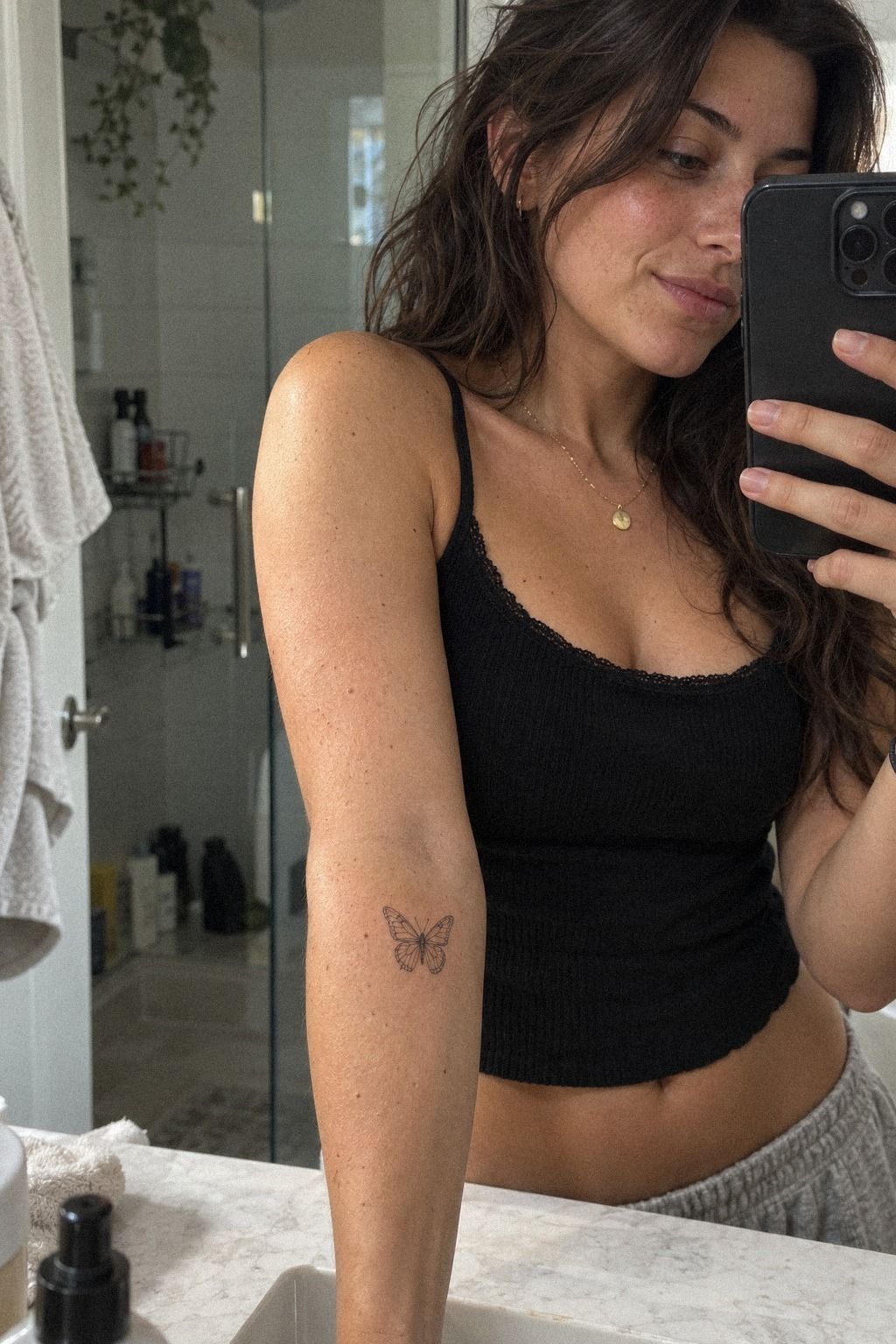
Tiny handwritten butterfly ink has a personal, almost secretive quality when the design includes a short handwritten lettering mark. On medium warm ivory skin, the butterfly can stay crisp and sleek with black accents and a restrained camel detail.
Your artist should use handwritten lettering that remains legible at the chosen size. Tiny script can blur faster than a simple initial or short word.
I’d place the handwritten mark beneath the butterfly rather than weaving it through the wings. The open space makes both elements easier to read. You won’t need dense lines to connect them.
A name, initial, or single short word can feel meaningful without explaining itself to everyone. That understated quality often feels more timeless than a long quote.
Bring the original handwriting if the mark belongs to someone important. A scanned note or photographed card gives your artist a more personal reference than a typed font.
You’ll want to check every letter on the stencil before the appointment begins. If one shape feels awkward, change it then. Don’t assume it’ll look better once tattooed.
Tiny details need realistic expectations. Fine lines may widen slightly with age, and UV exposure can soften contrast. Keep sunscreen in your routine once the tattoo has fully healed.
Choose a central outline bold enough so the butterfly won’t disappear. A tiny design can be romantic and understated, but it still needs enough spacing.
Compare this small fine line butterfly reference before you decide whether the chosen size is genuinely practical.
9Give Twin Butterflies One Meaning
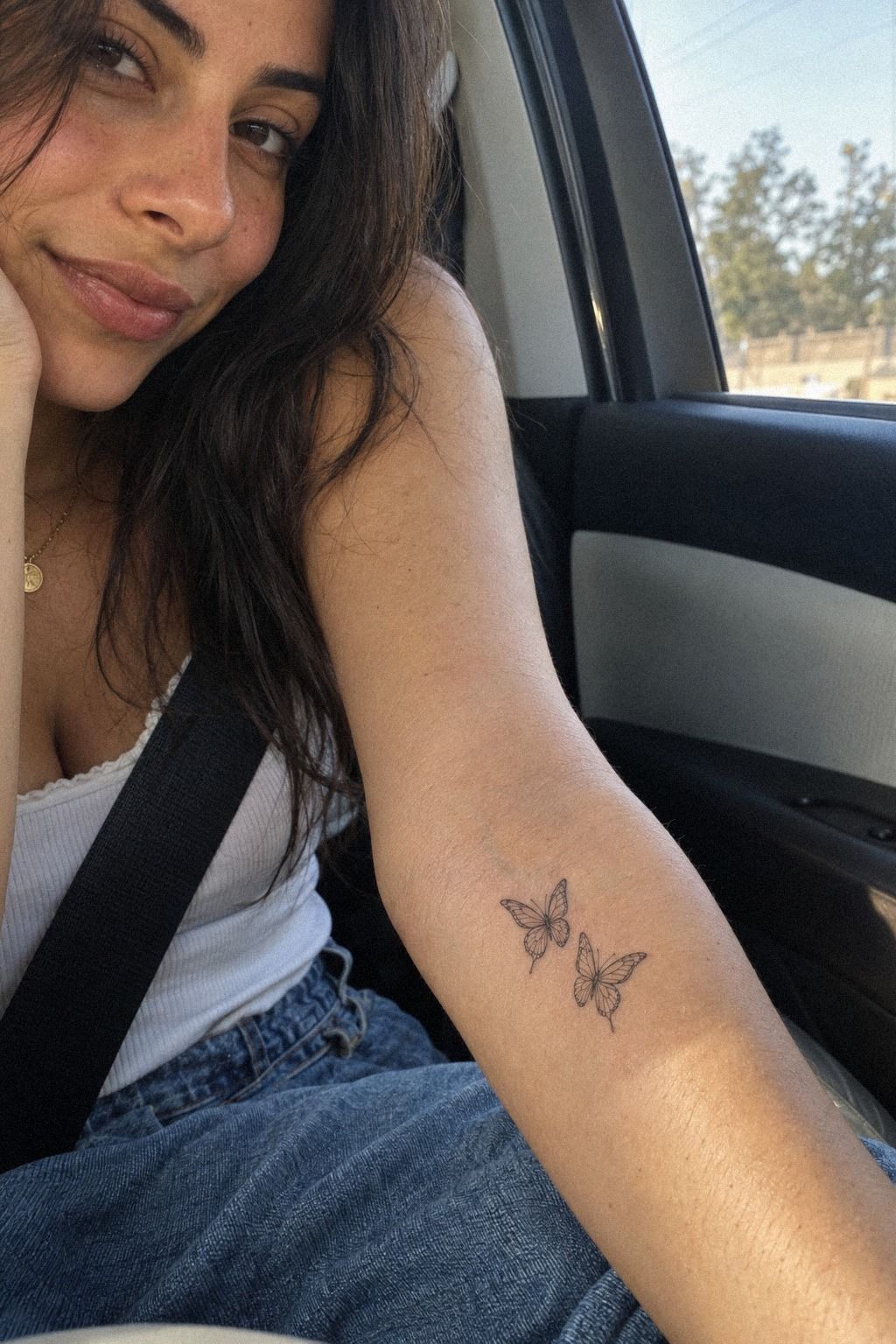
Symbolic twin butterflies can represent two people, two seasons of life, or the version of yourself you’re leaving behind. For medium olive skin, midnight-blue linework with tiny copper and ivory accents creates an expressive pair, while small differences keep the butterflies from looking mechanically duplicated.
I’d place the butterflies one above the other with a narrow gap between them. That vertical spacing gives each shape room to breathe and lets the meaning stay subtle.
A tiny size change can suggest movement, but your artist should avoid making the lower butterfly so small that its veins blur. Similar doesn’t have to mean identical.
Twin designs can become overly ornate quickly. Keep one butterfly crisp and minimal, then give the second a slightly different wing edge or center detail.
That contrast feels personal and expressive. You don’t need two completely different insects to tell a layered story.
Before you book, explain the meaning in plain language and let your artist translate it visually. You’ll get a more timeless result when you describe the feeling rather than dictating every line.
The tiny fine line butterfly tattoo reference may help you compare close-set proportions. The symbolism should guide the composition, not overwhelm it.
A sacred idea can still use a sharp outline. Meaning doesn’t require visual clutter.
10Can Botanical Details Stay Crisp?
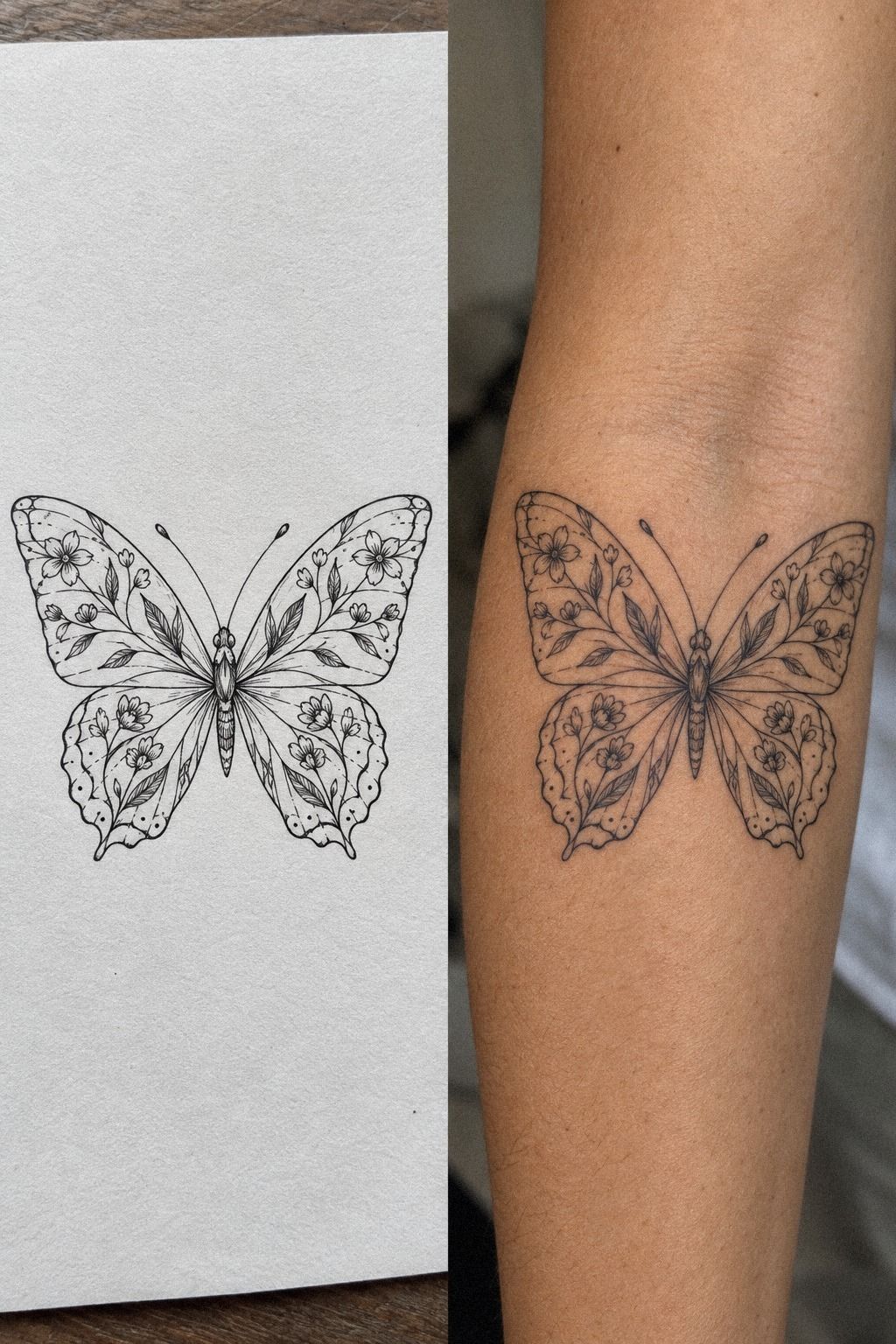
A botanical butterfly arm tattoo benefits from restraint.
11Anchor the Fine Line Design With Blackwork
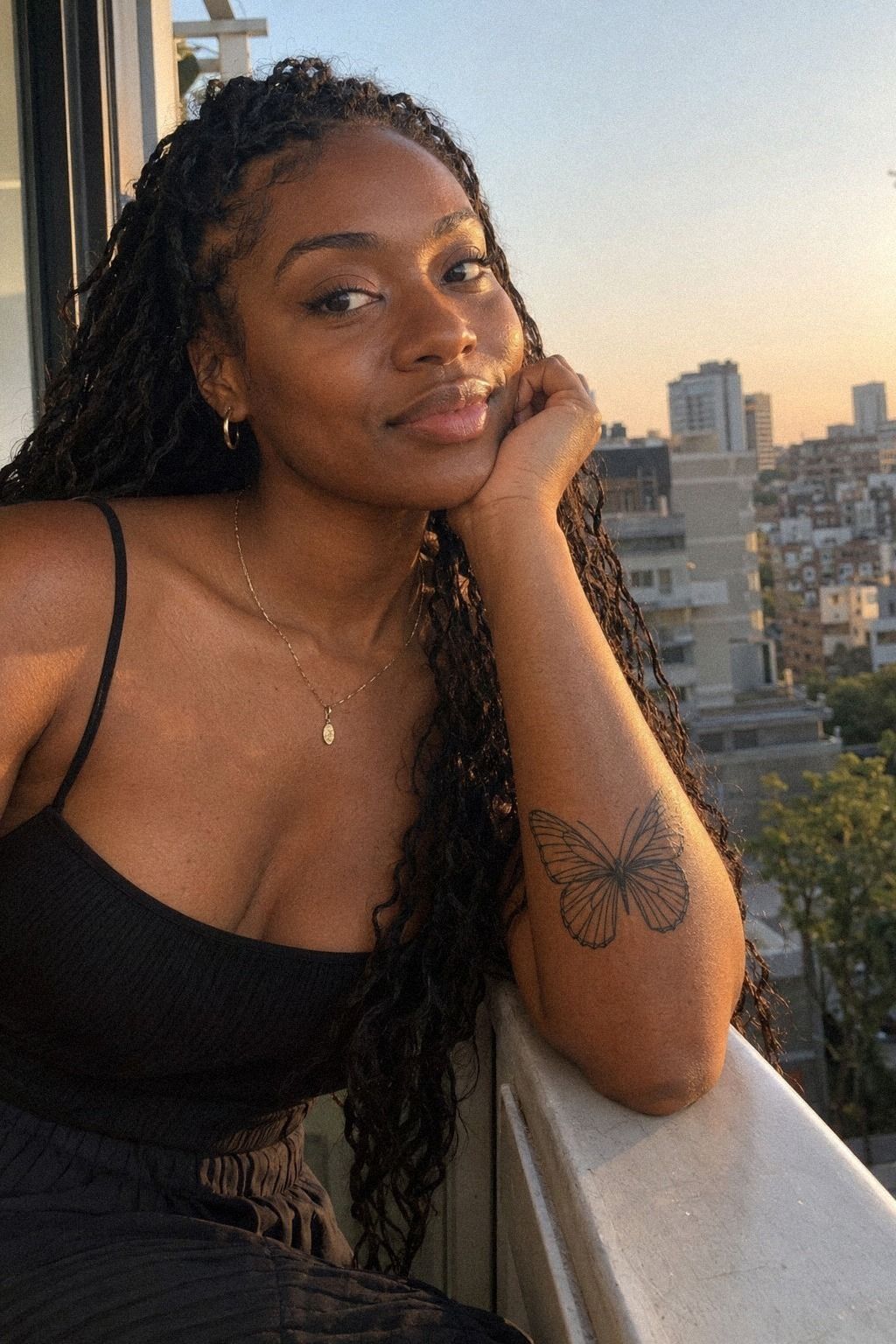
A bold blackwork butterfly uses a stronger central body or selected wing sections to anchor the delicate outline. On deep brown skin with a warm undertone, a black center with terracotta, stone, and muted olive accents can look sharp, striking, and timeless.
Your artist should understand how black pigment reads on your skin. They shouldn’t rely only on photographs of pale skin.
I’d keep the solid black limited to the body or two small wing accents. Filling every section can erase the fine line character you wanted in the first place.
A crisp blackwork anchor paired with open negative space gives the butterfly a fierce but still elegant profile. The contrast can feel dramatic without becoming heavy.
This style often ages better than extremely pale shading because solid black maintains contrast. That doesn’t mean it’s immune to change. Lines can soften, and sunlight can affect the appearance.
A healed portfolio matters more than a fresh social-media post. Ask for examples several months after the appointment. You’ll learn whether the artist’s crisp linework stays readable.
If you want another comparison, review the fine line black butterfly tattoo ideas. A bold accent can offer excellent value when it improves readability without expanding the entire design. That difference matters!
What Does Fine Line Placement Change?
Placement changes comfort, visibility, movement, and how your lines may look over time. The outer forearm is usually more tolerable than bony areas such as the ribs, feet, hands, or sternum.
Your shoulder, upper arm, and thigh can also be easier choices for a first tattoo. Everyone’s pain response is different, though. Don’t treat a general placement guide as a promise.
I’ve found that people focus too much on the butterfly and not enough on the skin beneath it. Your artist needs to see the actual curve, hair pattern, and movement of your arm anatomy before finalizing the stencil.
A striking design in the wrong position can feel awkward every time you look down. The stencil should work when your arm is relaxed, bent, and moving.
The best placement fits your daily visibility preference. Outer forearm means you’ll see it often.
Inner forearm feels more private. Upper arm gives you more control over when other people see it.
If your priority is the least painful spot, start with the outer forearm and discuss the exact area in person. A bony placement may be less tolerable, even when the design itself is small.
That conversation can protect your budget by preventing a rushed redesign. There’s no universally correct answer. Choose the location you’ll still enjoy when the trend fades, not just the one that photographs well today.
What’s the Honest Cost and Healing Timeline?
Typical US pricing depends on the artist, region, shop minimum, design complexity, and appointment length. A shop minimum may apply even when the butterfly is tiny, so ask about the full cost before booking.
A common hourly rate ranges from about $100 to $250. A small fine line butterfly may total about $100 to $300. These are planning figures, not a quote.
Your final price depends on the artist and the approved design. A more intricate wing pattern may take longer, even when the butterfly itself remains small.
Your tattoo should be washed gently, moisturized lightly, and protected from direct sun while it heals. Avoid swimming until the surface has closed, even if it looks calm after a few days.
That aftercare protects the crisp linework you paid for. Follow your artist’s instructions if they differ from general advice.
The surface healing timeline is usually two to three weeks. Complete settling can take two to three months. Spending more on an artist with healed examples may be worth it when the design includes many fine veins.
I’d rather choose a polished portfolio than the cheapest available appointment. Ask about your skin tone, exact placement, and whether the design needs a larger scale to hold its details.
Why Are Fine Line Butterflies Still So Popular?
Fine line butterflies remain popular because they can be symbolic without taking over the body. The fine line style feels romantic and empowering, yet it can stay small enough for a first tattoo.
The trend has also shifted toward more expressive designs. Artists are using negative space, uneven wing edges, botanical details, and selective black accents instead of repeating one identical template.
That variety gives you room to choose something meaningful rather than copying the most common image online. A timeless design can still feel current.
I’d avoid chasing novelty for its own sake. A whimsical detail may feel exciting in a reference photo but strange on your skin if it has no connection to you.
Your tattoo should still feel personal after the trend moves on. That’s the real test.
Fine line work isn’t automatically fragile, but extremely small details need realistic spacing. You’ll get the most classic result when your artist protects the main silhouette first.
The tiny details should support the shape, not compete with it. The style offers strong value because it can be expressive without requiring a large session.
The Artist’s Decision I’d Make First
I’d choose the artist before choosing the final butterfly. Their healed portfolio will tell you more than a list of style labels. Look for crisp outlines, balanced wings, clean stencil placement, and photographs taken after the skin has settled.
Ask how they approach fine lines on different skin tones. Ask whether they recommend a minimum size. A meaningful tattoo deserves a direct conversation about what will age well.
Bring references, but don’t arrive with ten disconnected instructions. Show the wing shape, placement, line weight, and one or two details you care about most.
You’ll get a more polished result when the artist can make informed adjustments to your design brief. Their judgment is part of what you’re paying for.
The studio should also explain its hygiene practices clearly. A calm consultation, clean studio, and honest answer about limitations are all good signs.
My strongest preference is an artist who knows when to remove a detail. That restraint creates an understated, elegant piece that still has personality. More lines don’t automatically make a tattoo more intricate!
For another comparison before you book, review this black butterfly tattoo reference and ask your artist what would need to change for your arm.
What I’d Change After Seeing Healed Fine Line Work
Fresh tattoos can look almost impossibly crisp. Fresh ink shows the immediate contrast, while healed tattoos reveal the real result, including softened edges and settled pigment.
Healed tattoos show the amount of space left between details. Your artist should be comfortable showing both stages because you deserve to know what the design may become.
A photograph taken after several months is more useful than a perfect appointment-day image. That’s where you’ll see the real line weight.
I once assumed the smallest possible butterfly would be the most delicate choice. It wasn’t. The version with slightly wider wing spacing looked more graceful after healing.
The crowded version lost some of its sharpness. That experience changed how I judge tiny designs.
A healed tattoo may appear less dark than it did on appointment day, and that’s normal. The surface settles as the skin recovers.
You’ll want to wait for the healed result before deciding whether it needs any adjustment. Don’t judge the final look too early.
If your lines soften over the years, a touch-up may restore the original contrast. Prevention still matters, though. Protect healed ink from UV exposure, and choose placement carefully if your arm spends long hours in direct sun.
For a closer comparison, save this tiny fine line butterfly tattoo reference and compare fresh images with healed examples from your chosen artist.
My Editorial Take on the One-Sitting Promise
The one-sitting promise sounds reassuring, but I wouldn’t treat it as the main measure of a good tattoo. A fast appointment matters less than a design that fits your skin, pain tolerance, and long-term taste.
I’d rather leave with a smaller, cleaner butterfly than rush through an oversized composition. The best result may take less time, but it shouldn’t be forced into a schedule.
The best fine line artists make decisions before the needle touches your arm. They check the stencil, examine how the wings sit over movement, and explain where detail may soften.
That preparation can feel slow, especially when you’re excited. It’s where much of the final quality is decided.
I’ve also learned that “minimal” doesn’t mean careless. A minimal tattoo has fewer elements, so each line carries more responsibility.
If the central body is crooked or the wing spacing is uneven, there’s nowhere for visual noise to hide. Precision matters more when the design is simple.
Your artist must be precise. A calm consultation and a clear stencil check can offer more value than another decorative detail. That is the point!
For most people, I’d start with an outer forearm butterfly between small and medium scale, black ink, open wings, and restrained detail.
That outer forearm butterfly is visible enough to enjoy, usually more tolerable than bony placements, and flexible enough to hide when you need to.
Your tattoo can be feminine, masculine, neutral, sacred, playful, or raw. The butterfly doesn’t have to mean one thing.
What matters is that the final shape feels like yours, not like a rushed answer to a trend.
A Few Things Worth Answering
How much does a fine line butterfly tattoo arm usually cost?
A fine line butterfly tattoo arm usually costs about $100 to $300 in the US, depending on the artist, region, size, and detail. Shop minimums may run about $50 to $100, while hourly rates often fall around $100 to $250. Your typical cost depends on the approved design, not just the reference image.
Are fine line butterfly tattoo arm tattoos a good idea for a first tattoo?
Yes, they can be a strong first tattoo because the outer forearm is often more tolerable than ribs, feet, hands, or sternum. A clean, meaningful design can stay readable without taking over your arm. Choose an artist with healed fine line examples.
How do I choose a tattoo artist for fine line butterfly tattoo arm work?
Review healed portfolio photos, ask about linework on your skin tone, and confirm the studio follows clear hygiene practices. Look for crisp outlines, balanced wings, and designs that still read after healing. A calm consultation is a good sign when choosing a tattoo artist.
How much does a fine line butterfly tattoo arm hurt?
Pain varies, but the outer forearm, upper arm, shoulder, and thigh are often more tolerable than the ribs, feet, hands, or sternum. Your appointment may feel irritating rather than unbearable. Pain response usually depends more on placement and personal sensitivity than the butterfly subject.
How long does a fine line butterfly tattoo arm take to heal?
The surface usually heals in about 2 to 3 weeks, while complete settling can take around 2 to 3 months. Wash gently, moisturize lightly, avoid swimming during surface healing, and protect the healed tattoo from direct sun. Your surface healing routine protects crisp lines.
What’s the best placement for a fine line butterfly tattoo arm?
The outer forearm is often the easiest starting point because it’s visible, relatively tolerable, and gives the butterfly a stable area of skin. The inner forearm feels more private, while the upper arm offers more coverage. Your best placement is the one you’ll enjoy seeing and can comfortably care for.
Where I’d Start First
If I had to pick one, I’d start with a small open-wing butterfly on the outer forearm. It’s usually more tolerable than bony placements, and the extra spacing helps fine lines stay readable.
Pin this fine line butterfly tattoo guide for later and take your healed-portfolio shortlist to the consultation.