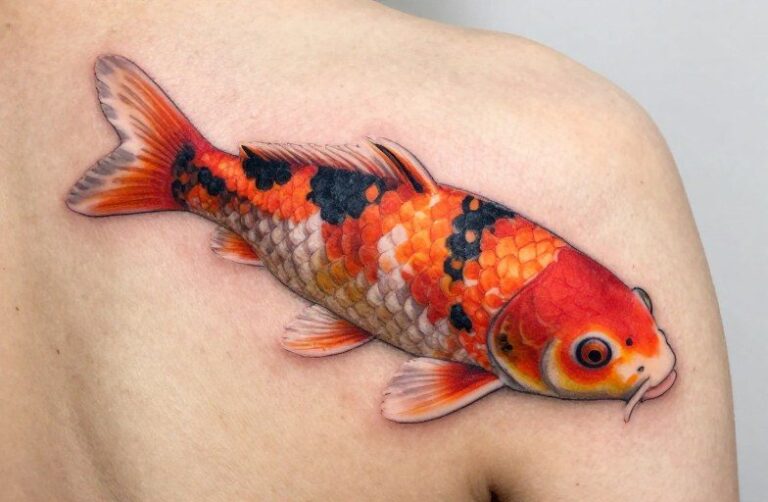
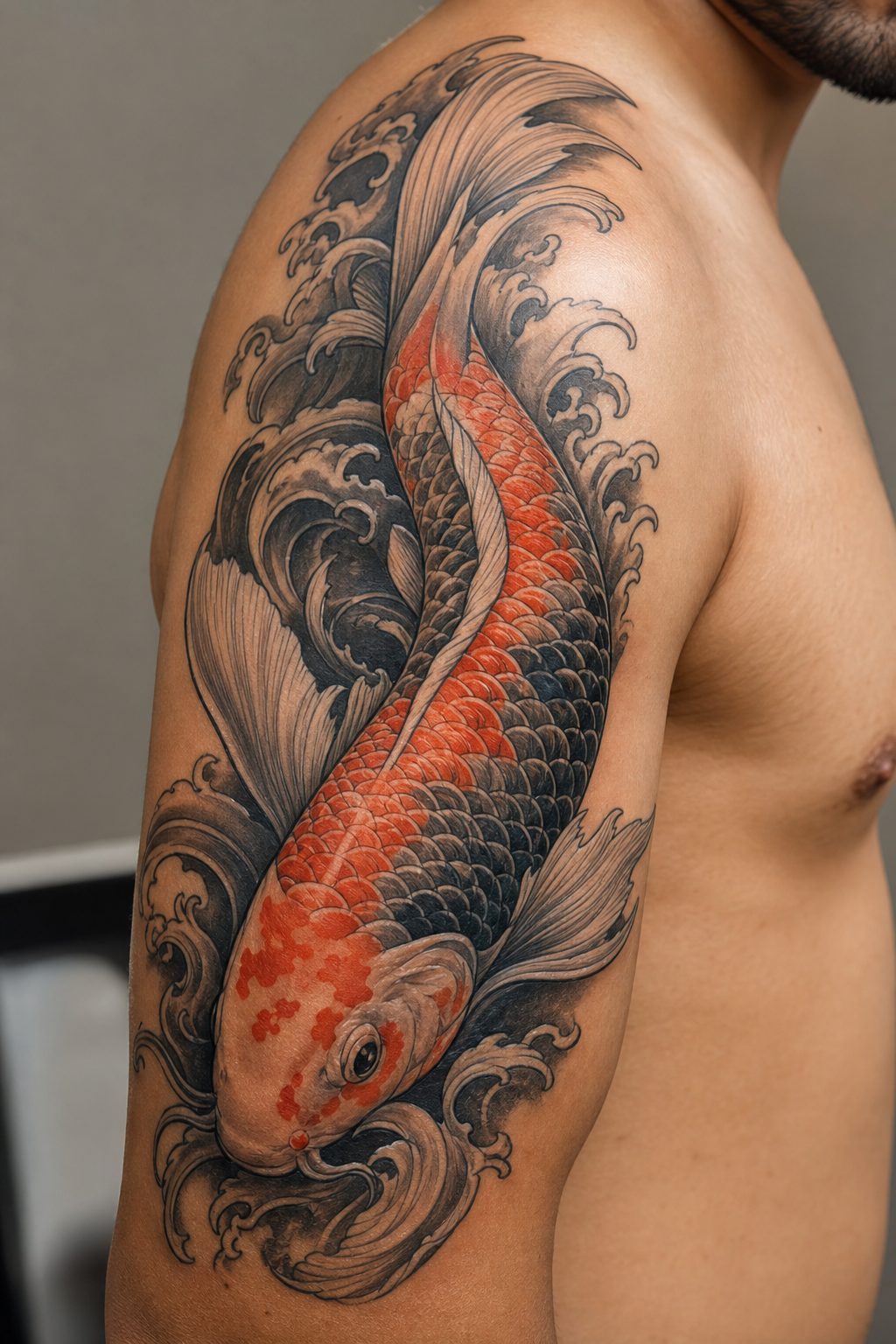
A koi fish tattoo primarily means perseverance through hardship, good luck, and the courage to transform. The image carries weight because of the koi’s legendary swim upstream, against current, against odds, and its association with prosperity in East Asian cultures. Most people choose this design during personal turning points: career changes, recovery from illness, or the end of a significant relationship. The meaning holds because the fish itself is a real creature with documented behavior, not an abstract symbol, which gives the tattoo grounded credibility that lasts decades.
Best Placements
Where you put a koi tattoo changes how the design reads and how well it ages. The fish’s elongated body demands flow and space.
Arm and Leg Sleeves
Full sleeves remain the classic placement for a reason. The koi’s natural S-curve follows the muscle structure of the forearm or calf, creating movement that looks alive when the limb moves. On arms, swimming upward toward the shoulder traditionally represents aspiration and growth; swimming downward toward the wrist can suggest arrival or return. The cylindrical shape of limbs lets the artist wrap background elements, water, lotus, cherry blossom, around the fish without flattening the composition.
Back and Torso
The back offers a flat canvas for larger, more detailed koi, especially paired with a waterfall or dragon gate scene from the legend. Ribs and side panels work but hurt significantly more and limit initial session length, which can affect line quality if the artist rushes. Chest placement over the heart sometimes incorporates the koi transforming into a dragon, symbolizing completed struggle.
- Thigh: Excellent for medium-sized koi with full color; skin stays relatively stable with age and weight change
- Forearm: Highly visible; consider whether bold color or black-and-grey suits your professional environment
- Hand or foot: Koi rarely work well here, the small space forces distortion, and these areas fade fastest due to skin turnover and sun exposure
Who Chooses This Tattoo
The koi attracts a specific kind of client, though the reasons vary. People in recovery, from addiction, bankruptcy, divorce, often gravitate toward the upstream imagery without needing explanation. The tattoo functions as a private marker of survived difficulty rather than a public announcement.
Business owners and people in competitive fields sometimes choose golden koi specifically, drawn to the prosperity association. The color matters here: gold and orange dominate, but a black koi (representing overcome adversity) or a white koi with red spots (career success) shifts the emphasis. People with Japanese heritage or those who have spent significant time in Japan sometimes choose koi as cultural connection, though this requires respectful execution rather than tourist-souvenir treatment.
What unites most recipients is that they’ve usually thought about the design for months, not days. The koi’s complexity and cost demand that deliberation.
Mythology & Folklore
The koi’s symbolic power comes from specific stories, not vague Eastern mysticism. Understanding the actual folklore prevents generic, meaningless designs.
The Dragon Gate Legend
The central story, often linked to Chinese origins and absorbed into Japanese culture, describes koi swimming upstream in the Yellow River. Most turn back or get swept downstream. The few that reach the top at a place called Dragon Gate transform into dragons. This narrative of earned transformation, not given, not easy, drives the tattoo’s enduring appeal. The waterfall imagery in many koi tattoos references this specific legend.
Number Symbolism
Japanese tradition commonly associates certain numbers with koi. A single koi emphasizes individual struggle and self-reliance. Two koi, especially in circular formation, represent harmony and sometimes romantic partnership. Nine koi reference a specific proverb about accumulated fortune. Tattooing these numbers without understanding the tradition produces decoration without meaning, which most serious artists will discuss with you during consultation.
Design Tips & Pairings
A koi tattoo succeeds or fails on technical decisions that aren’t immediately obvious to first-time clients.
Color vs. Black-and-Grey
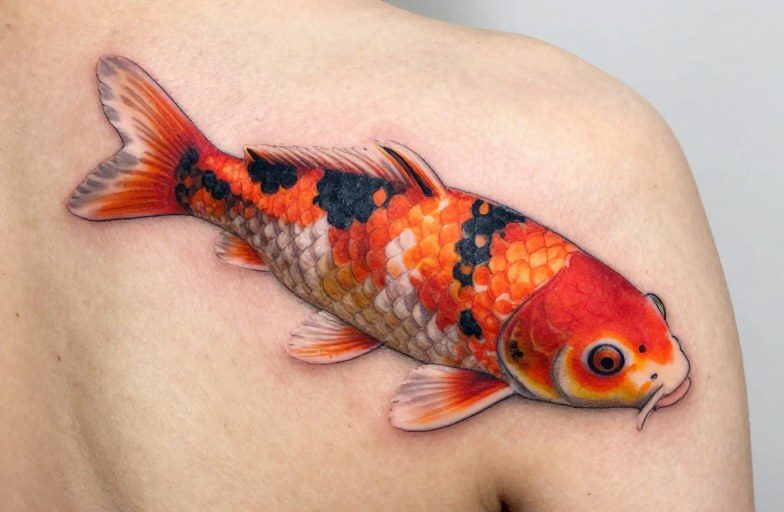
Traditional Japanese koi use bold, limited palettes: orange, red, black, gold, with white negative space. These colors age well because they’re saturated and simple. Watercolor-style koi with scattered, unsaturated color look current for roughly three years, then blur into unrecognizable soft patches. Black-and-grey koi, influenced by Japanese sumi-e ink painting, age the most gracefully but require exceptional shading skill to read as fish rather than abstract shape.
Companion Elements
Pairings carry specific significance. Lotus flowers bloom from mud, reinforcing the triumph-over-adversity theme. Cherry blossoms emphasize life’s transience alongside the koi’s perseverance. Waves and water are non-negotiable contextually, the fish needs its environment. Dragons paired with koi reference the transformation legend directly. Avoid random filler like clocks, roses, or compasses unless they hold genuine personal meaning; the koi’s established symbolism is strong enough to stand alone.
- Line weight: Bold outlines (8-12 needle groupings) hold definition; thin lines disappear within five years on most skin
- Scale detail: Over-rendered scales often muddy with age; suggest scale texture through shading rather than individual line work
- Direction: Upstream swimming is standard; downstream requires explicit narrative justification to avoid reading as defeat
Similar & Related Symbols
Understanding adjacent imagery helps clarify whether koi is your best choice or if another symbol serves your intention more precisely.
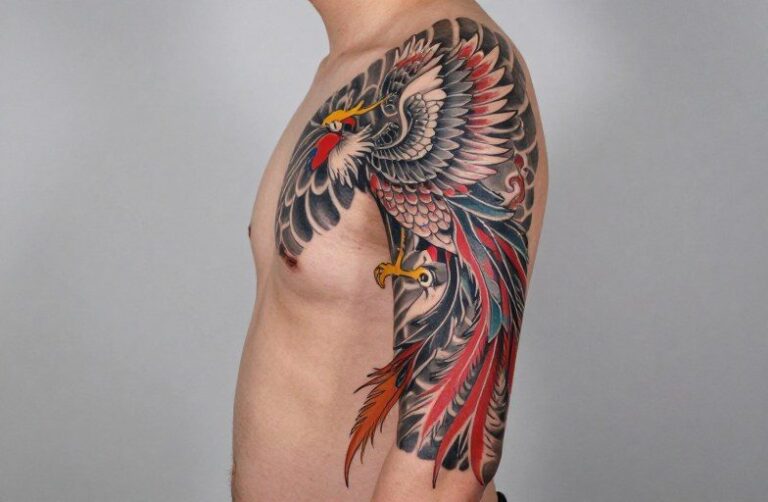
Phoenix tattoos share the transformation theme but emphasize rebirth from destruction rather than gradual struggle. Dragon tattoos represent power already achieved; koi represent the process of achieving it. Salmon, particularly in Pacific Northwest indigenous traditions, also swim upstream to spawn and die, but carry entirely different cultural weight, using salmon as “koi substitute” without that context is appropriative and artistically weak.
Goldfish, visually similar, symbolize prosperity and luck in Chinese culture but lack the perseverance narrative. The koi’s specific value is the earned transformation, not the gift of fortune. If your story is about luck rather than effort, goldfish or maneki-neko might communicate more accurately.
How It Ages on Skin
Koi tattoos present specific aging challenges that affect design choices from the first session.
Color Fading and Blur
Red and orange pigments, central to most koi, fade faster than black on sun-exposed skin. The white highlights, which create the fish’s dimension, disappear almost entirely within ten years, becoming the color of your natural skin tone. Artists compensate by over-saturating initial white areas slightly, knowing they’ll settle. Yellow-gold holds poorly on darker skin tones and may require reinforcement sessions.
Line Spread and Scale Detail
Intricate scale patterns drawn with single needles blur into solid texture after fifteen to twenty years. The best long-term koi tattoos rely on large color fields with minimal fine detail, letting the fish’s silhouette and major color blocks carry recognition. Small koi, under four inches, lose all definition. For longevity, palm-sized minimum on limbs, significantly larger on back or torso.
Moisturizing and sun protection matter more for color tattoos than black-and-grey, but the koi’s traditional palette makes some fading inevitable. Plan for a touch-up at year ten to fifteen, not as failure but as maintenance.
What to Remember
The koi fish tattoo carries genuine symbolic weight because it’s anchored in specific stories and observable animal behavior. That weight can be yours, but it requires honest alignment between your actual life experience and the imagery’s meaning. A koi chosen for aesthetic alone, without the struggle-to-transformation narrative, ages poorly in more ways than physical.
Choose an artist with demonstrated Japanese or neo-Japanese portfolio work. The style’s conventions, wave rendering, background treatment, color saturation, are technical specializations. Generalist tattooers can copy reference images but miss the compositional logic that makes these tattoos hold together over decades. Expect multiple sessions for anything substantial. The koi’s complexity isn’t a flaw; it’s the point. The fish doesn’t reach the gate quickly, and your tattoo shouldn’t be rushed either.
Frequently Asked Questions
Does the direction the koi swims actually matter?
Yes, traditionally upstream means ongoing struggle and aspiration, while downstream suggests completed transformation. Most artists will ask your preference and adjust the composition accordingly.
Can I get a realistic koi instead of traditional Japanese style?
You can, but realistic koi often lose symbolic readability and age poorly without bold outlines. Photorealistic fish tattoos blur faster than stylized versions with strong silhouettes.
Is it culturally appropriative for non-Asian people to get koi tattoos?
The koi symbol has spread globally through tattoo culture, but respectful execution matters, avoid random Japanese characters, research the actual folklore, and choose an artist who understands the tradition rather than treating it as exotic decoration.
How much should I expect to pay for a quality koi tattoo?
Full-color koi sleeves typically require 15-30 hours at established rates, often totaling several thousand dollars. Single koi pieces run smaller but still demand skilled color packing; unusually cheap quotes usually indicate rushed work or inexperience with the style.