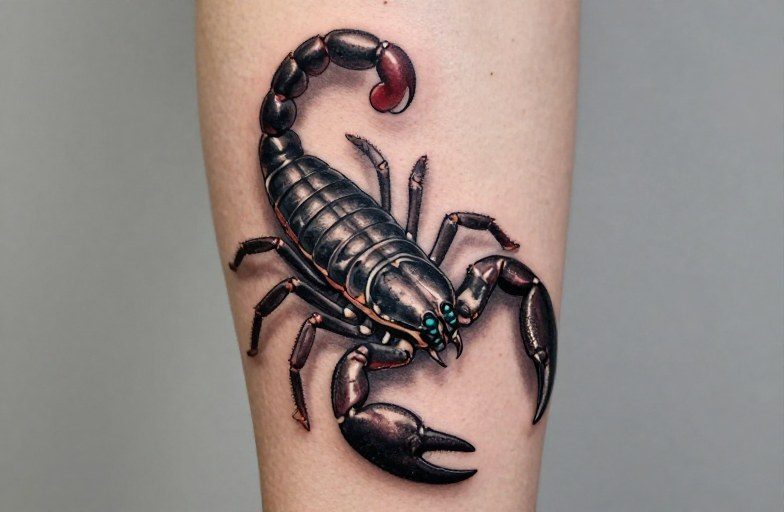
The Scorpion Mortal Kombat tattoo carries a layered weight beyond fan tribute. it channels vengeance, resurrection, and the refusal to stay dead, literally, in the lore, and metaphorically for the wearer. The yellow-and-black palette, the spear, the skull face: these elements compress into a symbol of someone who came back from something, or who wants to remember they can.
Who Chooses This Tattoo
Walk into enough shops and patterns emerge. The Scorpion piece tends to pull from specific pools: fighting-game kids who grew up into adults, people who weathered something brutal and want the mark of survival, and those drawn to the aesthetic collision of Japanese ninja mythology and American hyper-violence.
The Nostalgia Factor
Mortal Kombat dropped in 1992, and its first generation of players are now in their thirties and forties. For them, Scorpion isn’t abstract, he’s a childhood fixation, a character who “got over here” before they understood what vengeance meant. Getting him inked is rarely impulsive; it’s usually a decision marinated for decades. The tattoo becomes a time capsule, not of the game, but of who they were when they first pressed those buttons.
The Comeback Narrative
Separate from nostalgia, there’s the demographic who connects to Scorpion’s loop: murdered, resurrected, burning. This isn’t subtle. People who’ve clawed back from addiction, betrayal, physical trauma, or career collapse often gravitate toward the character’s literal undead persistence. The tattoo functions as a private flag, not a conversation piece, but a reminder.
- Forearm and calf placements dominate for visibility; the wearer wants to see it.
- Upper arm and back pieces trend larger, often incorporating the spear or hellfire portal.
- Hands and fingers are rare, too much detail loss over time, but the committed still go there.
Common Variations & Styles
Not every Scorpion tattoo replicates the game sprite. The character’s visual flexibility lets artists interpret across genres, and the choice of style significantly changes what the tattoo communicates.
Neo-Traditional & American Traditional
Bold lines, limited but saturated color, and graphic simplicity. Yellow and black are non-negotiable, but the skull face gets simplified, sometimes to a mask-like abstraction. These age cleaner than photoreal attempts. The spear often curves dynamically, creating movement without clutter. Traditional pieces read as confident, almost swaggering; they’re less about the character’s pain and more about his icon status.
Black-and-Grey Realism
Stripping the yellow changes the emotional temperature. A greyscale Scorpion leans horror, mortality, spectral presence. The skull reads more literal death’s-head, less superhero. These pieces demand skilled shading, smooth gradients on bone structure, texture in the tattered ninja hood. Without color, the fire effects become smoke, ash, negative space. It’s a moodier statement, often chosen by people who want the vengeance narrative without the arcade brightness.
- Full-color new school: exaggerated proportions, graffiti energy, younger clientele.
- Japanese-influenced: integrating Scorpion into irezumi-style backpieces with waves or flames.
- Minimalist line work: just the mask silhouette or spear hook, small, often behind ear or on wrist.
Mythology & Folklore
Scorpion’s character is often linked to Japanese folklore surrounding the ninja, though the game’s version is pure invention. Historical ninjas weren’t undead assassins; they were covert operatives in feudal Japan. The game’s Scorpion borrows the visual language, hood, mask, chain weapons, then grafts on supernatural revenge from whole cloth.
The hellfire element has looser connections. Japanese Buddhist hell imagery, particularly jigoku paintings, depicts sinners consumed by flames. Scorpion’s “Toasty!” fatality and his flaming skull aesthetic tap a similar visual register without direct lineage. Some trace the spear-on-a-chain to the kusarigama or kaginawa, actual ninja tools, though the game’s version is exaggerated for combat spectacle.
The scorpion itself as animal symbolism predates the game across cultures: danger contained, venom as defense, the creature that stings even when burning. The character name compresses this into a single aggressive signifier. Wearers rarely intend the zoological reference, but it hums underneath the gaming layer.
Symbolism & Core Meaning
Strip away the franchise and the tattoo distills to a few recurring themes. How heavily each weighs depends on placement, style, and what the wearer emphasizes in consultation.
Vengeance as Engine
Scorpion’s canonical motivation is the murder of his family and clan. His entire existence becomes retribution. On skin, this translates differently for different people, sometimes righteous anger, sometimes warning, sometimes acknowledgment that vengeance consumed someone worth remembering. The tattoo doesn’t celebrate the outcome; it marks the drive.
Resurrection & Persistence
Death doesn’t stick to Scorpion. In a medium where permanence is literally the point, choosing a character who dies and returns carries specific weight. The tattoo becomes a claim: you can be ended and still function. For people who’ve experienced near-death, psychological collapse, or identity destruction, this resonance is direct and unromantic.
- Fire symbolism: transformation, destruction, purification, uncontrolled rage.
- The mask: concealment, identity fracture, what hides beneath the face.
- The spear: reach, pulling things toward you, aggression at distance.
Religious & Spiritual Angles
The hellfire and undead elements create friction with some religious frameworks, though wearers navigate this personally rather than doctrinally.
Christian collectors sometimes emphasize Scorpion’s resurrection parallel, returning from death with a mission, while downplaying the hell association. Others lean into the demonic aesthetic deliberately, rejecting or playfully inverting religious taboo. There’s no unified stance; the tattoo’s spirituality is wearer-projected.
In some East Asian Buddhist contexts, the flaming hell imagery touches sensitive territory. Japanese or Chinese descent wearers occasionally integrate Scorpion into larger pieces that balance or contextualize the fire, water elements, lotus, or protective symbols. This isn’t appropriation anxiety; it’s compositional harmony and personal meaning negotiation.
Secular wearers predominate. The “spiritual” reading is usually existential rather than theological: meaning forged in suffering, identity rebuilt after destruction, the self as something you fight to keep existing.
How It Ages on Skin
Yellow ink is notorious. It fades faster than black, shifts greenish with sun exposure, and can look muddy if the saturation wasn’t dense enough from the start. A Scorpion piece lives or dies on its yellows.
Line Work vs. Shading Longevity
Bold black outlines hold structure for years. The mask’s eye sockets, the hood’s edge, the spear’s silhouette, these stay readable even as color bleeds. Soft shading and color gradients degrade faster. Photorealistic Scorpion portraits often look bruised and indistinct within five to seven years without touch-ups. Traditional and neo-traditional approaches age more gracefully because they rely on line hierarchy over subtle tone.
Placement Realities
Hands, fingers, and feet shed ink rapidly. A Scorpion hand tattoo sounds aggressive and fitting, but the detail loss is steep, yellow especially. Inner bicep and thigh hold color better but see less sun. The upper arm and calf are the practical compromise: visible, stable, enough real estate for the mask and some flame context.
- Expect touch-ups at 3-5 years for color-heavy pieces.
- Black-and-grey versions age roughly 30% slower with less maintenance.
- SPF is non-negotiable; UV is yellow ink’s primary enemy.
Final Word
The Scorpion Mortal Kombat tattoo endures because it compresses multiple registers, pop culture, personal survival, visual punch, without requiring explanation. It works as fan devotion, as private symbol, as pure aesthetic choice. What separates a lasting piece from a dated one is usually the technical decision: style that respects how ink lives in skin, placement that matches the wearer’s actual life, and enough distance from the source material to let the tattoo become its own thing. The best ones don’t look like screenshots. They look like someone who knows what “get over here” actually costs.
Frequently Asked Questions
Does the yellow ink in Scorpion tattoos fade faster than other colors?
Yes, yellow degrades quickest under UV exposure and can shift toward greenish or brownish tones. Strategic placement away from constant sun, dense saturation during application, and religious SPF use all extend its lifespan significantly.
Is a Scorpion tattoo only for hardcore gamers?
Not anymore. While nostalgia drives many collectors, the character’s visual vocabulary, skull, fire, mask, spear, has detached enough to attract people who connect with the survival and vengeance themes without deep game knowledge.
What’s the most durable style for a Scorpion piece long-term?
Neo-traditional and bold American traditional approaches age best. They rely on strong black outlines and limited, saturated color fields rather than subtle gradients that blur and muddy over time.
Can you combine Scorpion with other Mortal Kombat characters in one tattoo?
Absolutely, though composition gets crowded fast. Sub-Zero as a counterbalance is common, but the two color palettes, yellow and blue, need careful integration so neither overpowers the other or turns visually muddy.

Leave a Reply