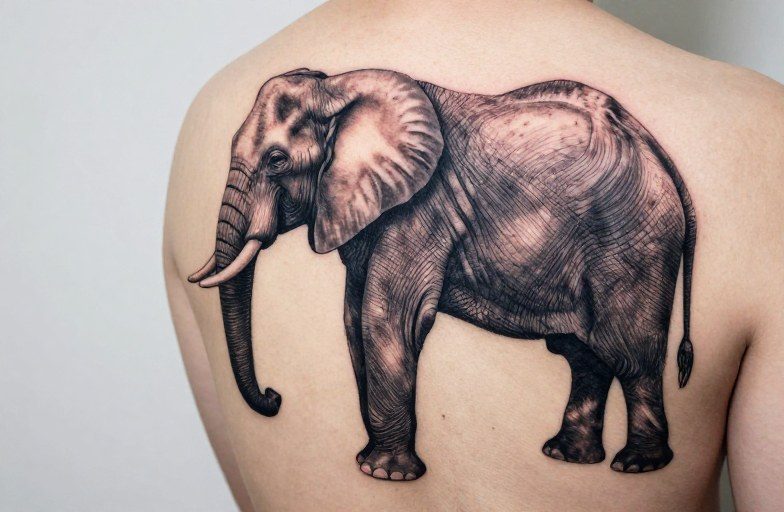
An elephant tattoo most commonly represents strength, memory, family loyalty, and quiet wisdom. The meaning deepens or shifts depending on whether the elephant is depicted with trunk raised, in a family group, or stylized through cultural lenses like Thai or Hindu traditions. For many, it functions as a personal anchor, a reminder of resilience without aggression, of bonds that outlast distance or time.
Symbolism & Core Meaning
The elephant carries weight as a symbol because its actual biology supports the metaphor. Elephants live in matriarchal herds for decades. They return to the bones of their dead. They navigate vast territories using memory maps no human fully understands. This isn’t projection, it’s observable behavior that tattoo wearers connect to their own values.
Trunk Position Matters
A raised trunk, often linked to good fortune in some Southeast Asian traditions, dominates Western elephant tattoo choices. The lowered trunk reads more contemplative, sometimes mourning or protective. Two elephants with trunks intertwined signal partnership or family bond. These aren’t rigid codes, but they do steer interpretation.
The Memory Connection
“An elephant never forgets” isn’t scientifically precise, but the kernel holds. Elephants recognize individuals across years and miles. A tattoo here often marks someone who values long memory, grudges held, love kept, lessons learned. The image works for memorial pieces without requiring explicit death imagery like dates or ashes.
Common Variations & Styles
Style choice reshapes meaning as much as subject does. The same elephant reads entirely different as a geometric outline versus a photorealistic portrait.
Traditional & Neo-Traditional
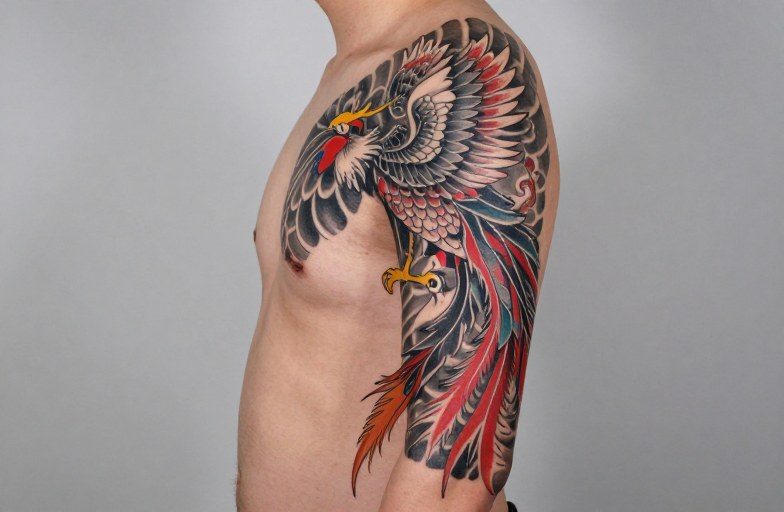
Bold lines, limited color palettes, heavy black. Traditional elephant tattoos often pair the animal with banners, roses, or circus imagery. The circus connection is complicated, historically exploitative, visually striking. Some wearers reclaim it; others avoid it entirely. Neo-traditional allows more color gradation and ornamental framing, sometimes weaving in Southeast Asian decorative patterns.
Geometric & Dotwork
- Geometric elephants break the form into triangles and polygons, emphasizing structure and mathematical precision
- Dotwork builds tone through stippling, creating soft gradients that suit the elephant’s textured skin
- Mandala-backed elephants merge animal and sacred geometry, often linked to Hindu or Buddhist frameworks
These styles age differently. Geometric lines stay crisp longer if line weight is sufficient. Dotwork can blur over time as dots spread slightly; contrast matters more than density.
Realistic & Portrait
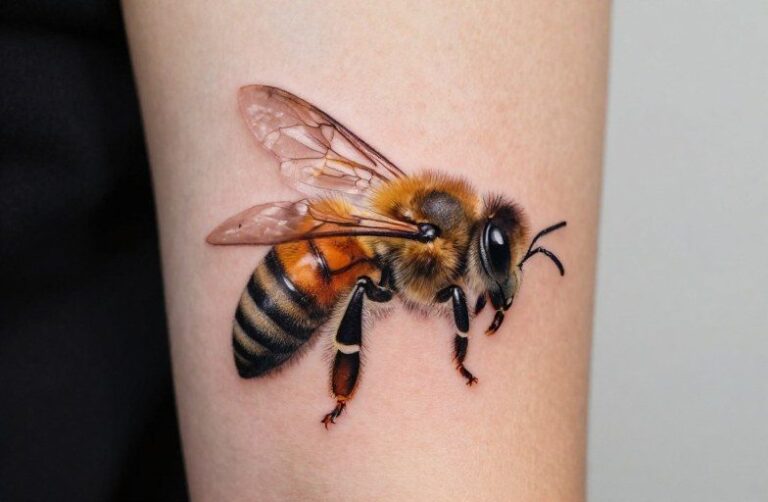
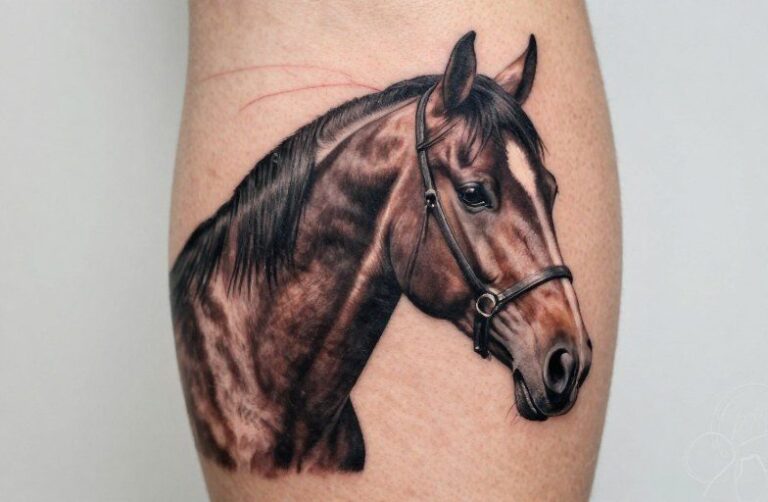
Photorealistic elephant tattoos demand large scale and skilled shading. The skin texture, wrinkles, mud, light on tusks, separates competent from exceptional work. These pieces typically honor a specific elephant, sometimes a zoo animal known to the wearer, or function as pure wildlife appreciation.
Who Chooses This Tattoo
There’s no single demographic, but patterns emerge. Parents, especially mothers, gravitate toward elephant family imagery, the calf sheltered between adult legs. People who’ve lost family members to dementia or Alzheimer’s sometimes choose the memory aspect explicitly. Travelers returning from Thailand, India, or safari trips in Kenya or Tanzania often want permanent marks of those experiences.
The elephant also appeals to those who reject more aggressive strength symbols. A lion or bear proclaims power; an elephant suggests power held in reserve, deployed selectively. This distinction matters to people in caregiving professions, teachers, or anyone whose strength is more endurance than dominance.
Mythology & Folklore
Cultural context is where elephant tattoos get complicated. The image travels across traditions with accumulated meaning, but wearing it requires some awareness of origin.
Hindu & Buddhist Traditions
Ganesha, the elephant-headed deity, removes obstacles and governs beginnings. Tattoos of Ganesha specifically carry religious weight that generic elephants don’t. Some Hindu practitioners find non-Hindu Ganesha tattoos appropriative; others see the image as crossed cultural appreciation. There’s no consensus, but the question is worth sitting with before committing.
In Buddhist tradition, particularly Thai and Sri Lankan, the white elephant is often linked to purity and mental strength. The Buddha’s mother dreamed of a white elephant before his birth. This makes the image deeply sacred in some contexts, decorative in others.
African Folklore
Various African traditions cast the elephant as rain-bringer, ancestor, or chief of animals. Zulu stories feature the elephant as patient negotiator. These threads surface less frequently in Western tattoo shops but inform some contemporary African diaspora work, particularly by artists reconnecting with specific regional iconography.
Best Placements
Elephant tattoos adapt to body contours unusually well because of the trunk’s natural line flow.
- Forearm: Trunk extending toward the wrist creates movement; easy to show or cover
- Upper arm/shoulder: Accommodates larger ears and full head detail; classic placement for traditional styles
- Ribcage: The body’s curve suits the elephant’s rounded back; painful but effective for medium-scale pieces
- Thigh: Ample space for family groupings or full-body elephant profiles
- Ankle/calf: Smaller, simpler designs; trunk can wrap slightly around the leg
Hand and finger elephants exist but struggle with detail at small scale. The trunk becomes a blob, the ear a smear. If you’re committed to hand placement, consider silhouette or minimal line work rather than attempted realism.
Color vs Black and Grey
This choice affects both immediate impact and long-term appearance.
Color Considerations
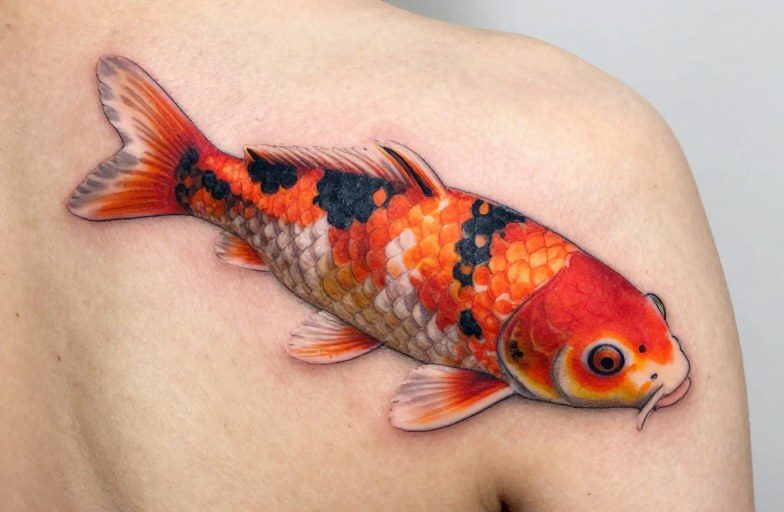
Realistic elephant color requires understanding that elephants aren’t actually grey. Their skin carries brown, purple, and ochre tones from dust, mud, and natural pigmentation. Good color work captures this. Decorative color, jewel tones, unnatural backgrounds, reads more illustrative or fantasy.
Color saturation in elephant tattoos tends to fade faster in sun-exposed areas. The ear edges, if done in pink or light grey, can wash out noticeably within five years without consistent sun protection.
Black and Grey Advantages
Black and grey leverages the elephant’s natural tonal range. Deep blacks in shadowed skin folds, light grey highlights on forehead and trunk. This ages gracefully, there’s no color to shift or disappear, only value contrast to maintain. Touch-ups are simpler, and the timeless quality suits the symbol’s weight.
Some artists combine approaches: black and grey elephant with single accent color in eyes or background. This can be effective but requires restraint. One accent reads intentional; three read busy.
Final Word
The elephant tattoo endures because its subject actually exists, observable, documented, complex. You’re not pinning meaning to a pure abstraction. The animal’s real behaviors (herd loyalty, navigational memory, maternal protection) give the symbol substance that holds up over decades of wearing.
Choose based on what specifically draws you: the trunk position, the family grouping, the cultural thread, the sheer visual presence. Get the style that suits your other work or your planned collection. And give the piece room to breathe, elephants need space for their ears, their texture, their weight. A cramped elephant looks apologetic, and this is one symbol that never should.
Frequently Asked Questions
Does an elephant tattoo with trunk up mean good luck?
This interpretation is often linked to Southeast Asian traditions, particularly Thai culture, but it’s not universal. In Western tattoo contexts, it’s become a common association rather than a strict rule. The raised trunk does read as more energetic and optimistic compared to a lowered, resting position.
How well do detailed elephant tattoos age over time?
Fine detail in ears and skin texture tends to soften after five to ten years, especially on high-movement areas like inner arms or ribs. Starting with slightly bolder line work and adequate contrast helps preserve readability. Black and grey generally ages more predictably than delicate color work.
Is it culturally appropriate to get a Ganesha elephant tattoo if I’m not Hindu?
Opinions vary significantly. Some Hindu practitioners find non-Hindu Ganesha tattoos appropriative or disrespectful, particularly if worn below the waist or without understanding of the deity’s significance. A generic elephant carries less cultural weight than Ganesha specifically. Research and respect matter more than any single answer.
What’s the most painful placement for an elephant tattoo?
Ribcage and sternum rank highest for most people due to thin skin over bone and the breathing motion during work. Elephant designs often need larger scale for detail, which extends session time. Thigh and outer upper arm are generally more manageable for extended sits.