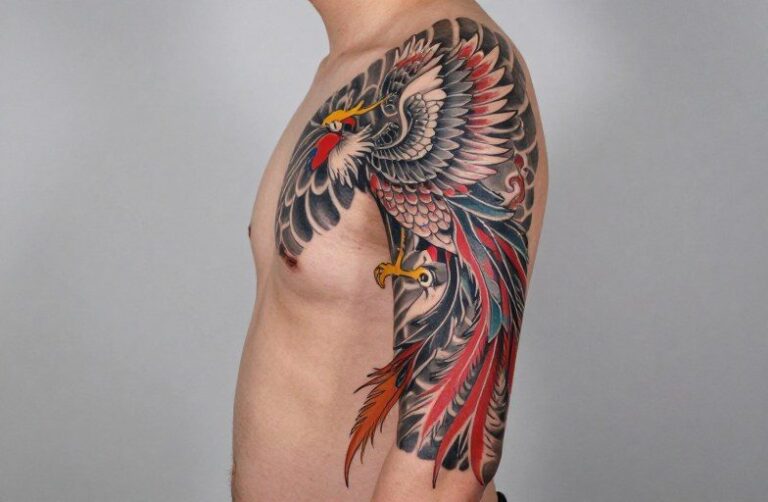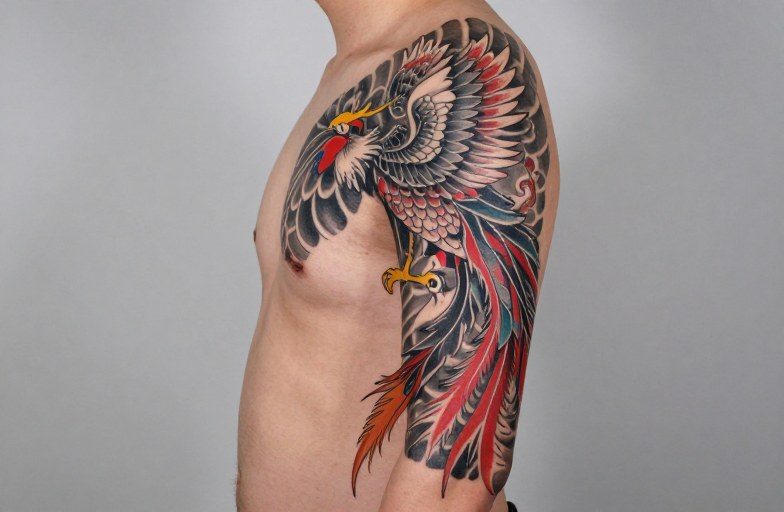
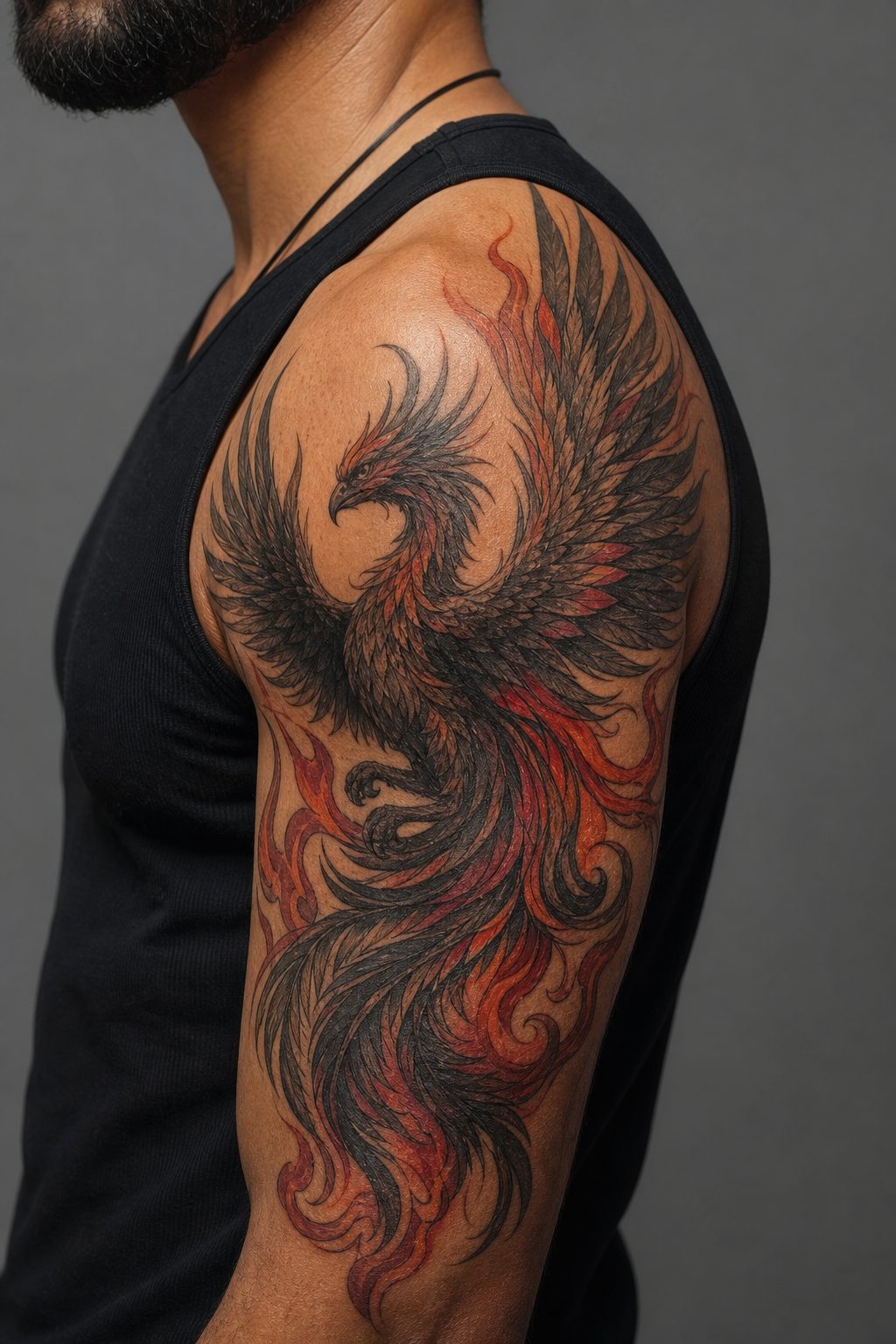
A phoenix tattoo on a man typically signals survival and deliberate transformation. The bird’s cycle, burning, dying, rising from ash, maps onto lived experience: addiction recovery, career collapse and rebuild, prison time, divorce, military discharge, or any crucible that forces someone to become someone else. The meaning isn’t abstract. Men who choose this image usually have a before and after, and they want the after visible.
Who Chooses This Tattoo
The phoenix attracts a specific psychological profile more than a demographic. It’s not a first-timer’s image; it requires enough life behind you to justify the symbolism. You’ll see it heavily on men in recovery communities, veterans processing trauma through civilian identity, entrepreneurs who lost everything and rebuilt, and formerly incarcerated men marking a hard boundary between old and new selves.
Age and Life Stage Matter
Twenty-year-olds occasionally request phoenixes, but the image lands harder at thirty-five plus. The tattoo needs gravitational pull from actual failure, not anticipated struggle. A man who hasn’t yet burned doesn’t wear the ash convincingly. That said, some younger men choose it to commemorate a parent’s death or their own survival of illness, legitimate ashes, just borrowed rather than self-immolated.
Professional Contexts
In corporate environments, the phoenix functions as coded resilience signaling. A half-sleeve or chest piece visible at the gym or beach, hidden under a button-down, lets the owner control disclosure. Men in law, finance, and medicine favor this strategic concealment. The image says “I’ve been through something” without demanding workplace conversation about it.
Color vs Black and Grey
This choice fundamentally changes what the tattoo communicates. Full color, crimson, gold, orange, emphasizes triumph and vitality. The bird emerges glorious, triumphant, almost shouting. Black and grey treatment shifts the tone toward solemnity, mourning, and serious weight. The same bird reads as survivor rather than victor.
Color Realism and Aging
Red ink fades fastest. A bold phoenix chest piece will look substantially different at year five than year one. Yellows muddy into mustard, oranges into dull rust. Touch-ups become maintenance, not enhancement. Men choosing color should budget for this reality, both financially and in acceptance that the tattoo’s emotional peak may precede its visual peak.
Black and Grey Longevity
- Shading holds crisper edges over decades; black pigment particles are largest and most stable
- Skin tone matters more, on darker skin, black and grey requires heavier saturation to read properly, which paradoxically can blur faster if overworked
- Smoke and ash effects, common in monochrome phoenixes, age beautifully; soft gradients mimic natural skin variation
Some men split the difference: black and grey bird with selective red accent in the eye or a single flame lick. This strategic color use draws focus without committing to full spectrum maintenance.
Best Placements
The phoenix demands space. Wingspan requires width; the rising motion needs vertical room. Small phoenixes, wrist, ankle, behind ear, rarely satisfy. The image collapses into indistinguishable bird-shape, losing the fire-ash-resurrection narrative that justifies the choice.
Back and Chest
Full back pieces allow the wings to spread across shoulder blades, tail descending toward the waist, head craned upward. This placement mirrors the actual rising motion. Chest pieces center the bird over the heart, sometimes incorporating scar tissue from surgery or injury into the design, literal damage becoming part of the rebirth imagery. The chest placement also permits easy concealment, which many men prefer.
Arms and Legs
- Half-sleeve from shoulder to elbow: bird ascending, flames wrapping the bicep
- Full sleeve incorporating smoke at wrist transitioning to clear bird at shoulder
- Thigh pieces for men who want substantial size without torso commitment
Forearm placement, increasingly common, makes the tattoo permanently visible. Men choosing this are typically past the career-building phase or work in fields where ink doesn’t matter.
Mythology & Folklore
The phoenix cross-cultures with surprising consistency. Greek sources, often linked to Herodotus and later elaborated by Pliny, describe the Arabian bird that lives 500 years, builds a nest of spices, and ignites. From the ashes, a new phoenix emerges or the old one rejuvenates. Egyptian mythology contains the benu bird, commonly associated with solar cycles and rebirth, though direct continuity to the Greek phoenix remains debated among scholars. Chinese fenghuang and Japanese hō-ō share visual characteristics, flame-colored plumage, majestic bearing, though their symbolic associations differ, emphasizing virtue and grace rather than destruction and return.
For tattoo purposes, most men blend these traditions freely. The Western phoenix dominates imagery: eagle-like body, dramatic wingspan, explicit flames. Asian-influenced versions may incorporate longer tail feathers, more serpentine neck, or companion elements like paulownia trees. The meaning stays stable across variations: what dies returns, changed but continuous.
Common Variations & Styles
Style selection determines whether the tattoo ages as timeless or dated. Neo-traditional phoenixes with bold outlines and limited palette currently dominate. They photograph well, read clearly from distance, and maintain legibility as skin changes. Photorealistic color phoenixes, while technically impressive, often look muddy within a decade as fine detail blurs.
Geometric and Abstract Treatments
Some men fracture the bird into geometric shapes, triangles forming wing structure, hexagonal ash patterns dissolving below. This contemporary approach suits engineers, architects, and men who prefer intellectual distance from literal bird imagery. The symbolism remains intact while the aesthetic departs from traditional tattoo vocabulary.
Trash Polka and Dark Styles
German-inspired trash polka combines realistic phoenix elements with abstract black splatter, red geometric accents, and typographic fragments. The style’s deliberate chaos mirrors the actual experience of collapse and rebuilding better than clean traditional work. Darker neo-Japanese treatments, with heavy black backgrounds and demonic facial expressions on the bird, appeal to men who want the struggle emphasized over the triumph.
Religious & Spiritual Angles
Christian men sometimes hesitate, concerned about pagan associations. The phoenix actually appears in early Christian literature, Clement of Alexandria and Tertullian both used it as resurrection metaphor, some trace it to biblical apocrypha. The imagery predates Christianity but harmonizes with it. Modern Christian tattooers often incorporate crosses emerging from the ash, or position the bird ascending toward light rays interpreted as divine.
Beyond organized religion, the phoenix serves secular spirituality equally well. Men describing themselves as “reborn” without theological framework still find the image articulates experience that language struggles with. The tattoo becomes ritual object, performed pain marking transition, the needle’s fire leaving permanent change. This parallels how many men actually process transformation: not through talk, but through action, endurance, and marking.
The Bottom Line
A phoenix tattoo works when the man beneath it has actually burned. The image fails when chosen aspirationally, hoping to become resilient rather than marking completed resilience. Placement, color versus black and grey, style selection, these are technical decisions that affect satisfaction and longevity. The core question remains: does the symbolism match lived history? When it does, the phoenix becomes armor and testimony both. When it doesn’t, it’s just a pretty bird, and pretty birds don’t carry the weight men need from their ink.
Frequently Asked Questions
Does a phoenix tattoo always have to be large?
Technically no, but practically yes. The wingspan and rising motion need room to read. Under four inches, the detail collapses and the bird becomes generic. Most successful phoenix tattoos start at palm-sized and expand upward.
How painful is a phoenix tattoo on the chest or back?
Chest sternum and spine are among the most painful placements due to thin skin over bone. The upper back, over muscle, is more manageable. The tattoo’s size usually means multiple sessions, so pain distributes across time rather than concentrating in one sitting.
Can a phoenix tattoo cover old tattoos or scars?
Yes, and this application is particularly fitting symbolically. The phoenix rising from damage maps directly onto covering past work or incorporating scar tissue. Darker styles with heavy black work best for cover-ups; the bird’s flames and ash provide natural camouflage.
What’s the typical cost for a quality phoenix tattoo?
A palm-sized black and grey piece from a skilled artist runs $400-800. Full color back pieces from established professionals can reach $3,000-6,000 across multiple sessions. The phoenix requires technical skill in flame rendering and feather texture; bargain hunting here produces disappointing results.