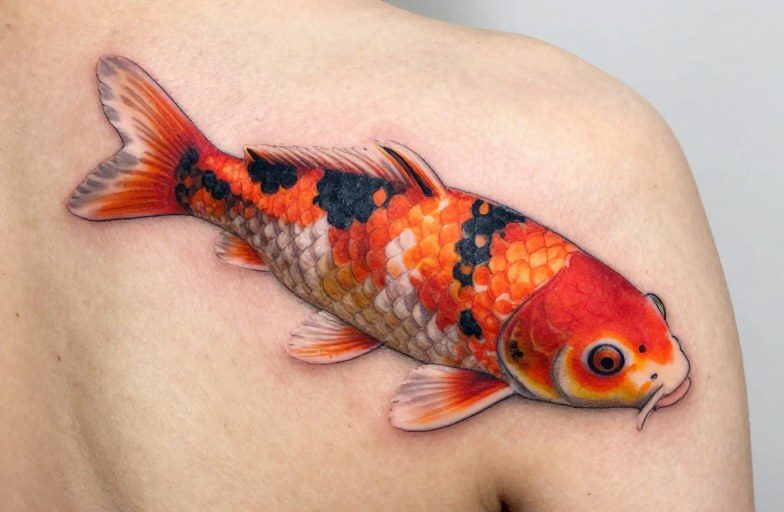
The Japanese koi carp tattoo carries one of the most powerful and specific meanings in tattoo culture: perseverance through hardship and the transformation that follows. Rooted in the legend of koi swimming upstream to become dragons, this design represents the struggle against adversity, the refusal to give up, and the reward of personal evolution. For many, it marks a survived difficulty, a period of persistence that reshaped who they became.
History & Cultural Roots
The Legend of the Dragon Gate
The meaning traces back to Chinese folklore, later absorbed into Japanese culture, where any koi that successfully swam upstream and leaped the Dragon Gate waterfall would transform into a dragon. This isn’t a gentle metaphor. The story emphasizes years of grinding effort, the physical toll of fighting current, and the single decisive leap that changes everything. In tattooing, this narrative gives the design its weight: the koi isn’t decorative, it’s a record of endurance.
From Samurai to Modern Skin
Koi imagery appeared in Japanese woodblock prints and samurai art as early as the 18th century, often linked to masculine strength and unwavering resolve. The motif entered tattooing through the irezumi tradition, where full-body suits frequently featured koi among waves, cherry blossoms, or maple leaves. The Japanese guardian lion design followed similar iconographic roots; see Japan lion tattoo meaning and symbolism for how these motifs interrelate. These weren’t isolated images; they were narrative elements within larger compositions that mapped a person’s values across their skin.
Color vs Black and Grey
What Different Colors Signal
Color choice in koi tattoos isn’t arbitrary. Red or orange koi connect to love, family, and intense courage, the most common choice and the most visually striking against skin. Black koi traditionally mark a overcome obstacle, particularly one involving grief or major life change. Blue koi often represent reproduction and family lineage, while white with red spots (the kohaku pattern) signals career success and material achievement. Gold koi, predictably, tie to wealth and prosperity.
Black and grey koi tattoos strip away the ornamental quality and focus on form and movement. The ink ages differently, black holds sharper edges over decades, while colored koi, especially reds and yellows, tend to soften and muddy faster without strong black outlines to contain them. A well-executed black and grey koi relies on smooth gradation in the scales and contrast in the water around it. The meaning shifts slightly too: less celebratory, more solemn, a quiet acknowledgment rather than a declaration.
Design Tips & Pairings
Complementary Elements That Actually Work
Koi tattoos gain dimension through context. Waves are the most traditional pairing, rendered with finger waves or water splashes that show the fish’s struggle. Cherry blossoms floating downstream suggest the passage of time and the beauty of impermanence. Maple leaves indicate autumn and the maturity that follows hardship. Dragons paired with koi reference the transformation legend directly, often shown mid-metamorphosis or as two separate elements that complete the narrative.
- Flowing water behind the koi: emphasizes movement and resistance
- Lotus flowers: purity emerging from murky conditions
- Bamboo: resilience and flexibility under pressure
- Peonies: wealth and honor, sometimes used to soften the masculine association
Line Work and Shading Priorities
Strong koi tattoos require specific technical decisions. The scales need consistent size and curve that follows the body’s musculature, scales that don’t wrap properly break the illusion of volume. Barbels (the whiskers) demand single, confident lines; wobbly barbells ruin the dignity of the piece. Water elements should use negative space strategically, not filled in solid, to create the sense of liquid around solid form. For longevity, black outlines on the fins and body contour hold the design together as color inevitably fades.
Best Placements
Where the Body Shapes the Story
The koi’s natural curve suits certain anatomies better than others. The outer thigh and calf allow the full body to stretch and swim with natural muscle flow. The upper arm and shoulder can carry a medium-sized koi with room for surrounding water. The side of the torso (ribs to hip) accommodates the most dramatic upstream composition, the fish appearing to climb the body’s landscape.
Smaller koi tattoos struggle. The scales and facial details require minimum size to read clearly, below about five inches, the barbels blur and the expression becomes generic. The forearm works for a single fish if the design is simplified, but traditional Japanese placement favors larger, more visible areas that let the composition breathe. Hands and feet are poor choices; the detail doesn’t hold, and the cultural association of koi with full, committed pieces makes small isolated versions feel disconnected.
Who Chooses This Tattoo
Common Motivations Without the Mythology
People who choose koi tattoos often have experienced something specific: recovery from addiction, surviving a health crisis, military service, immigration, or career reinvention after failure. The design appeals across gender lines more than some Japanese motifs, though the full-back or full-sleeve commitment still skews toward those prepared for extensive sessions. The koi attracts individuals who want their tattoo to reference struggle without being explicit about the details, symbolic enough to share, private enough to keep.
There’s also a subset drawn purely to the aesthetic, particularly the color possibilities and the dynamic movement. This isn’t lesser motivation; the visual power of a well-rendered koi stands independent of personal narrative. The best work serves both camps: beautiful enough to satisfy the eye, structured enough to carry meaning if the wearer wants it.
Similar & Related Symbols
Alternatives and Complementary Choices
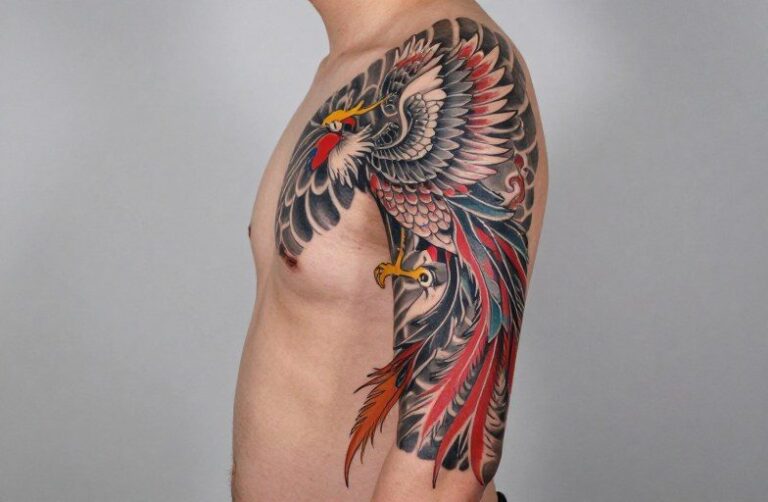
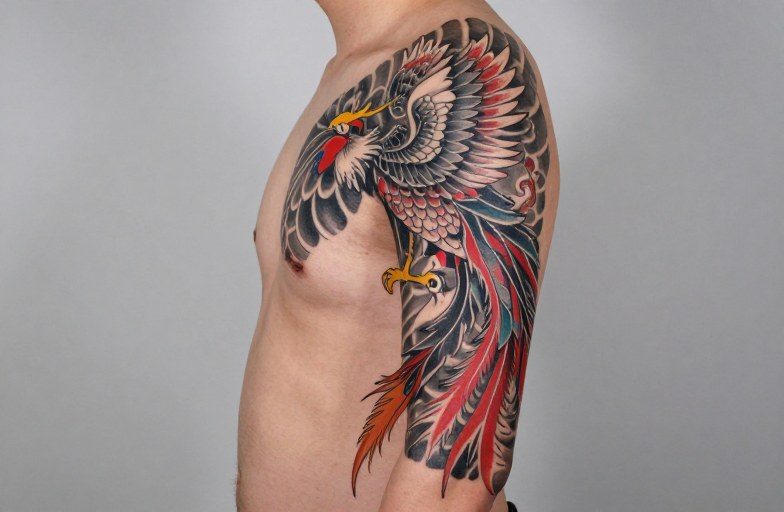
Japanese phoenix tattoos share the transformation theme but emphasize destruction and rebirth rather than gradual effort. Dragon tattoos, especially in Japanese style, connect directly to the koi legend’s endpoint. The tiger represents raw power and courage without the journey element. Cherry blossoms alone address impermanence but lack the active struggle.
Within Japanese tattooing, the koi occupies a middle ground between the aggressive energy of a tiger or dragon and the contemplative quality of a crane or pine tree. It suits people who identify with process more than outcome, who value the years of work over the single moment of success. Someone drawn to koi might also consider a snake (healing, continual renewal) or a wave pattern alone (endurance without the biological form).
Key Takeaways
The Japanese koi carp tattoo means perseverance through genuine difficulty, not minor inconvenience. Its power comes from the specific legend of transformation through effort, not generic positivity. Color choices carry distinct traditional associations that still matter in contemporary work. The design demands technical skill in scale rendering, line confidence, and anatomical flow. Placement should accommodate the size needed for detail and the curvature that makes the fish appear to move. Whether chosen for personal history or visual impact, the koi remains one of tattooing’s most enduring symbols because it connects to something real: the long, hard work of becoming something else.
Frequently Asked Questions
Does a koi swimming upstream versus downstream change the meaning?
Upstream koi represent active struggle and unfinished transformation. Downstream koi traditionally indicate the struggle is complete, the goal achieved. Some artists and wearers disregard this distinction, but the directional choice remains a meaningful detail in traditional Japanese tattooing.
How many sessions does a full koi sleeve typically take?
A full Japanese-style sleeve with koi, water, and background elements usually requires 6-10 sessions of 3-4 hours each, spaced weeks apart for healing. Black and grey work may finish slightly faster than color. The investment reflects both the technical complexity and the skin’s need to recover between sittings.
Can women get koi carp tattoos, or is it strictly masculine imagery?
Koi tattoos carry no gender restriction in modern practice. While historically associated with masculine perseverance in Japanese culture, contemporary tattooing sees women choose koi for the same reasons anyone does: survival, transformation, and the aesthetic appeal. Color choices and accompanying elements can shift the feel without abandoning the core symbol.
How well does koi tattoo ink hold up over 10-15 years?
Black outlines and grey shading age most reliably, maintaining readable form for decades. Red and orange pigments fade faster, especially with sun exposure, though they remain the most popular choices. Strong black contour lines around colored areas prevent the “muddy” look that ruins older koi tattoos. Sun protection significantly extends vibrancy.