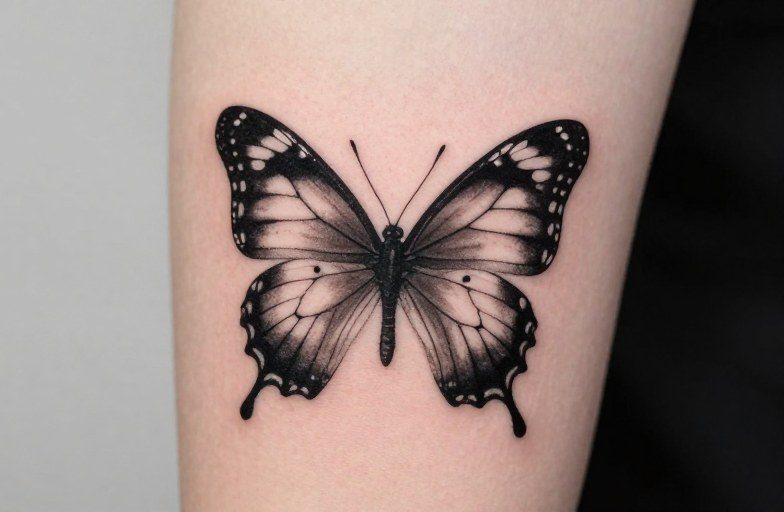
A butterfly tattoo most commonly signals transformation, rebirth, and personal freedom. The meaning draws from the insect’s actual life cycle, crawling caterpillar to winged adult, so it naturally resonates with anyone who has undergone major change, survived hardship, or claimed independence after a confining chapter. Beyond the personal, butterflies carry threads of spiritual hope, fleeting beauty, and the courage to become something entirely new.
Religious and Spiritual Angles
Cross-cultural spiritual associations give this motif layers that go far beyond the pretty surface.
Christian Symbolism
In Christian iconography, the butterfly is often linked to resurrection and the soul’s escape from earthly bounds. The three-stage metamorphosis, caterpillar, chrysalis, butterfly, mirrors death, burial, and rebirth. Gravestones in parts of Europe and America have featured carved butterflies since at least the 1700s, marking belief in life after death. Some wear the image after losing a loved one, others after their own spiritual renewal.
Related reading: monarch butterfly tattoo meaning | butterfly mental health tattoo | realism butterfly tattoo guide | butterfly with flowers tattoo
Eastern and Indigenous Traditions
Japanese culture commonly associates butterflies with the souls of the living and the dead; two butterflies together represent marital happiness. In some Mesoamerican traditions, the monarch’s autumn migration is often linked to returning ancestral spirits. The ancient Greek word for butterfly, psyche, also meant soul, an overlap that still echoes in Western understanding.
Modern Spiritual Use
Today, many choose butterflies without formal religious attachment. The image works as a private emblem of survived change, a quiet prayer for continued growth, or simply a reminder that difficult phases end. The spiritual weight depends on what the wearer brings to it, not any doctrine.
Common Variations and Styles
The butterfly’s shape adapts to nearly every tattoo approach, but specific choices carry their own weight.
Realistic vs. Stylized
Hyper-realistic monarchs or blue morphos, rendered with full color and visible wing veins, emphasize the creature’s actual fragility and scientific beauty. These demand larger skin real estate and skilled color packing to hold. Stylized versions, geometric breakdowns, single-line drawings, or watercolor splashes, prioritize feeling over accuracy. A single needle outline butterfly reads delicate and contemporary; thick black neo-traditional wings with bold red accents hit harder and age more forgivingly.
Specific Species and Added Elements
- Monarch: migration, endurance, often linked to lost loved ones or Día de los Muertos observance
- Black swallowtail: protection, warning coloration, understated strength
- Luna moth: nocturnal transformation, pale green ghostliness, attraction to light
- Butterfly with dagger or skull: memento mori, beauty’s proximity to death
- Butterfly emerging from chrysalis: process emphasized over result
- Multiple butterflies in flight: freedom, forward motion, sometimes representing children or siblings
Scale and Composition
A tiny butterfly loses legibility; an oversized one can feel like a sticker rather than integrated skin art. The best butterfly tattoos use the body’s natural curves, wing angles following shoulder slope, body aligned with bone structure, rather than fighting them. Bring reference photos of actual butterflies, not other tattoos. Real wing patterns, color gradients, and body proportions will serve you better than recycled tattoo imagery that has already been simplified once.
Placement and Practical Concerns
Where you put it changes how the symbol reads and how well it survives.
Strong Placement Options
The shoulder blade and upper back offer natural wing-shaped canvas space; symmetrical spreads look balanced here. The forearm, especially outer wrist to inner forearm, keeps the image visible without being aggressive; a medium-sized piece here works for professionals who want meaning without loud coverage. Behind the ear and along the collarbone favor small, single-needle designs that feel intimate and slightly hidden. The ribcage and sternum allow vertical compositions, butterfly with trailing flowers, or ascending from lower to upper ribs, but these spots hurt more and see more movement during healing, which can affect fine detail.
Problem Placements
Ankle and foot placements are popular but problematic: thin skin, constant friction from shoes, and sun exposure mean fading within a few years. If you must, keep it bold and simple, not intricate. Hand and finger placements face similar issues with added complication: frequent washing, faster cell turnover, and near-guaranteed need for touch-ups.
How Butterflies Age on Skin
Butterfly tattoos face specific aging challenges because of their structure.
Line Weight and Detail Loss
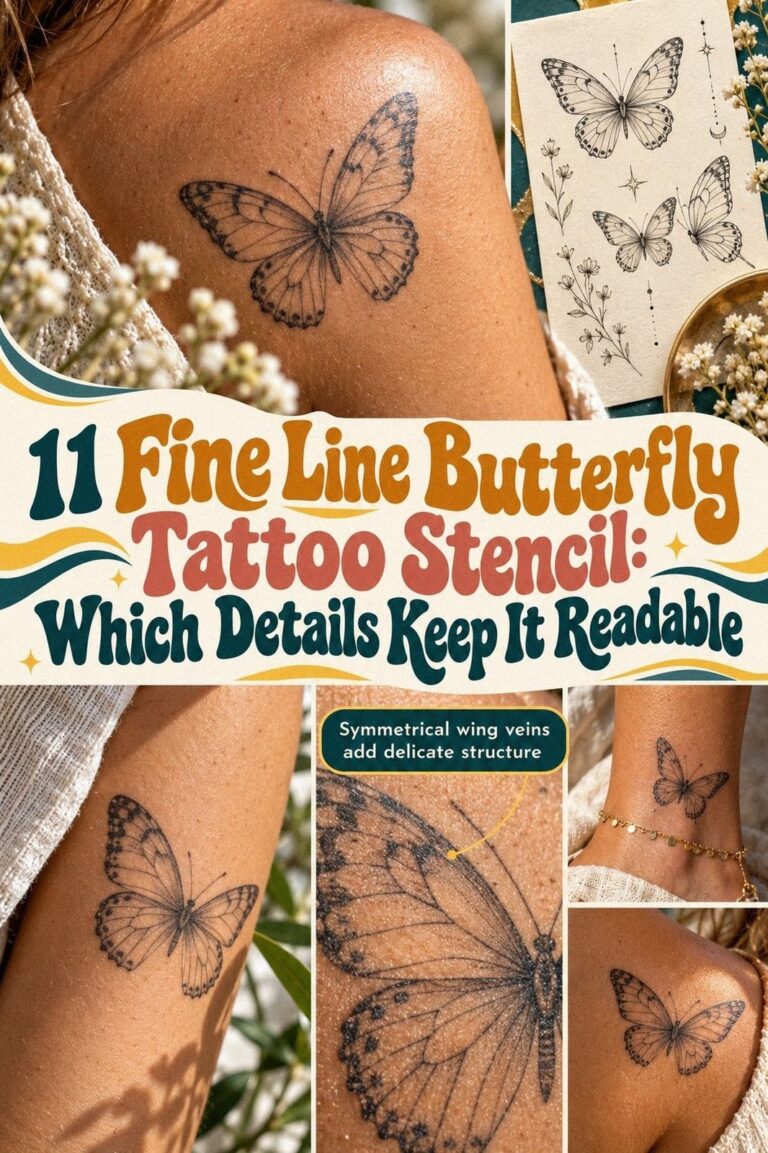
Thin wing veins, tiny white highlights, and delicate antennae blur fastest. What looks crisp at month three can soften into vague shapes by year eight. The solution is intentional line weight variation: thick outer contours hold, while interior details should be spaced generously enough that minor spread doesn’t turn them to mud. Color butterflies need solid saturation; washed-out pastels age to grayed ghosts.
Black and Gray vs. Color Longevity
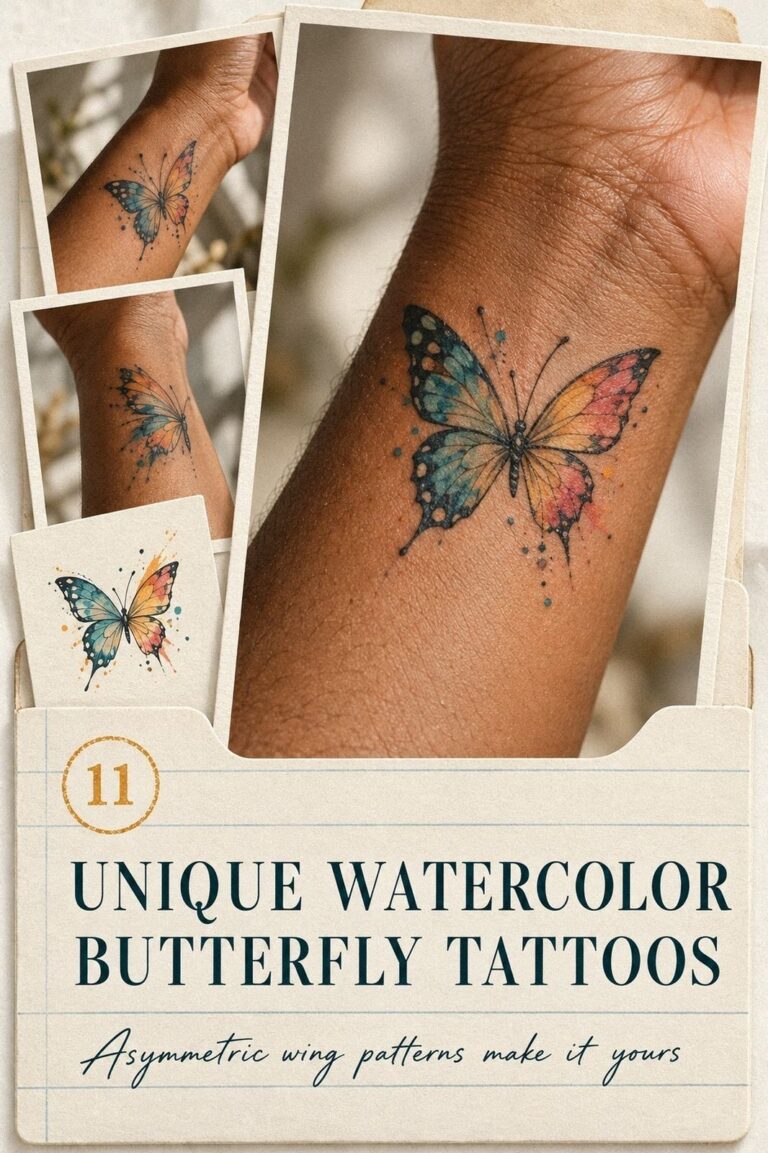
Black and gray butterflies with strong contrast last cleaner longer. Color versions, especially yellows, light oranges, and pale blues, require touch-ups sooner. The monarch’s orange and black pattern actually ages well because the contrast is inherent to the design, not dependent on subtle shading. Watercolor-style butterflies without black outlines are the fastest to degrade; they rely on soft edges that time turns to indistinct, muddled patches.
Touch-Up Realities
Plan for maintenance. A butterfly you love at twenty-five may need refreshing by thirty-five, especially if color-heavy or in a high-friction area. Budget for this, or choose a simpler, bolder design from the start that accepts aging gracefully rather than fighting it.
Who Chooses This Tattoo
Certain life moments drive this choice more than others.
Transformation and Survival
People marking recovery, addiction, abuse, illness, incarceration, often gravitate to the transformation narrative. The butterfly becomes a self-chosen badge of survived change, not a label imposed by others. Parents who lost children sometimes choose butterflies for their association with souls, fragility, and brief beauty. Others come to it simply after leaving restrictive relationships, careers, or hometowns, wanting a permanent note of self-determination.
Gender and Identity
The design also attracts those who want visible art without aggressive imagery. A butterfly signals softness without weakness, which appeals across gender expressions more than overtly masculine or feminine symbols. In recent years, the butterfly has become a quiet signal in trans and non-binary communities: literal metamorphosis, chosen identity, emergence on one’s own terms. Scale, placement, and accompanying elements shift the tone significantly. Large black and gray versions on chest or thigh, or butterflies paired with skulls, daggers, or moths, carry weight without reading delicate.
When It Reads as Generic
The butterfly’s cultural saturation means it can read as generic unless your specific version carries personal detail, species choice, added elements, or deliberate stylistic departure. This is not a reason to avoid it, but a reason to invest in making it yours.
Similar and Related Symbols
If the butterfly doesn’t quite fit, adjacent symbols offer neighboring meanings.
- Moth: night, attraction to flame, shadow transformation, less celebrated but arguably more honest about struggle
- Phoenix: rebirth through fire, more dramatic, larger scale, often more masculine-coded in traditional tattooing
- Dragonfly: change, adaptability, water connection, less romanticized than butterfly
- Koi fish: perseverance, upstream struggle, Japanese traditional context
- Snake shedding skin: renewal, rawer, less pretty, more dangerous energy
- Caterpillar or chrysalis alone: process before result, patience, potential unrealized
The Moth Alternative
The moth deserves particular consideration. Where butterfly tattoos celebrate arrival, moths acknowledge the messier, less visible work of transformation, drawn to light that burns, active in darkness. Some choose moth specifically to reject the butterfly’s pressure to be beautiful in transformation. Others pair both, honoring the full cycle: ugly work and graceful result.
Before You Decide
Ask yourself what stage you’re honoring: the crawling, the cocoon, or the flight? Many default to the winged final form without considering whether the chrysalis or caterpillar resonates more honestly. If transformation is your theme, think about whether you want the moment of change frozen, or the completed form. Both are valid, but they ask different things of you and your artist.
Consider also whether you want the butterfly to read clearly to others, or to remain private. A realistic monarch on the forearm invites conversation; a stylized single-line version behind the ear keeps the meaning closer. Neither is better, but the choice should be intentional.
Finally, research your artist’s actual healed work, not just fresh photos. Butterflies test technical skill: smooth color gradients, fine lines that hold, symmetrical wing pairs that don’t distort with movement. An artist whose healed butterflies look as intended a year later is worth waiting for.
What to Remember
The butterfly tattoo endures because the underlying metaphor is genuine: creatures do transform, and humans do too. Its popularity is not a flaw; it is evidence that the symbol works. Your task is not to avoid cliché but to inhabit it specifically. Choose the species that matters to you, the style that matches your other work or your intended aesthetic, the placement that fits your life and your pain tolerance. Bring real references, not Pinterest boards of other tattoos. Ask your artist how they will handle the thin lines, the color saturation, the symmetry. Plan for the possibility of touch-ups, or choose bold simplicity that ages without them.
A butterfly done well is not a generic decoration. It is a record of change you chose to mark, visible to others or kept close, scientific or stylized, celebratory or somber. The meaning is not in the insect but in what you were before you wore it, and what you believe you have become.
Frequently Asked Questions
Does a butterfly tattoo always mean someone went through trauma?
Not at all. While many choose it after hardship, others connect to spiritual rebirth, natural beauty, or simply appreciate the visual form. The meaning depends on the wearer’s intent, not automatic assumption.
What’s the best style for a butterfly tattoo that won’t look blurry in ten years?
Bold black outlines with solid color fills or strong black and gray contrast age best. Avoid all-watercolor or extremely fine single-needle details in small sizes, as these blur fastest.
Can a butterfly tattoo be masculine?
Absolutely. Scale, placement, and accompanying elements shift the tone. Large black and gray versions on chest or thigh, or butterflies paired with skulls, daggers, or moths, carry weight without reading delicate.
Is there a difference between a monarch and other butterfly species in tattoo meaning?
Monarchs carry specific associations with migration, endurance, and Día de los Muertos observance due to their famous seasonal journeys. Other species carry different weights: luna moths suggest nocturnal transformation, swallowtails suggest protection through warning coloration. The species choice matters if you want your tattoo to communicate something specific.
Are watercolor butterfly tattoos a bad idea?
Not necessarily bad, but high maintenance. Without black outlines to hold structure, watercolor butterflies degrade into soft, indistinct patches over time. If you love the look, commit to touch-ups every few years, or choose a hybrid style with some outlining to anchor the color.
Leave a Reply