
Small eagle tattoos are easiest to get right when you solve the shape before the detail. I’ve seen fine-line designs lose their identity because the wings were squeezed too tightly or the meaning came second. This guide gives you an actionable order, from first silhouette to healed ink. Keep it crisp, personal, and bold!
- Start With Small Eagle Tattoo Style
- Which Eagle Silhouette Carries Your Meaning?
- Sketch Unique Small Eagle Linework
- Open Wings or Folded Flight?
- Place Small Eagle Ink On Your Wrist
- Keep Feather Details Crisp And Delicate
- Minimal Lines, Bold Read
- Match Eagle Symbolism To Your Story
- Add Intricate Details Without Losing Clarity
- Consider Healing Around Fine Linework
- Private Symbol, Visible Flair
1Start With Small Eagle Tattoo Style
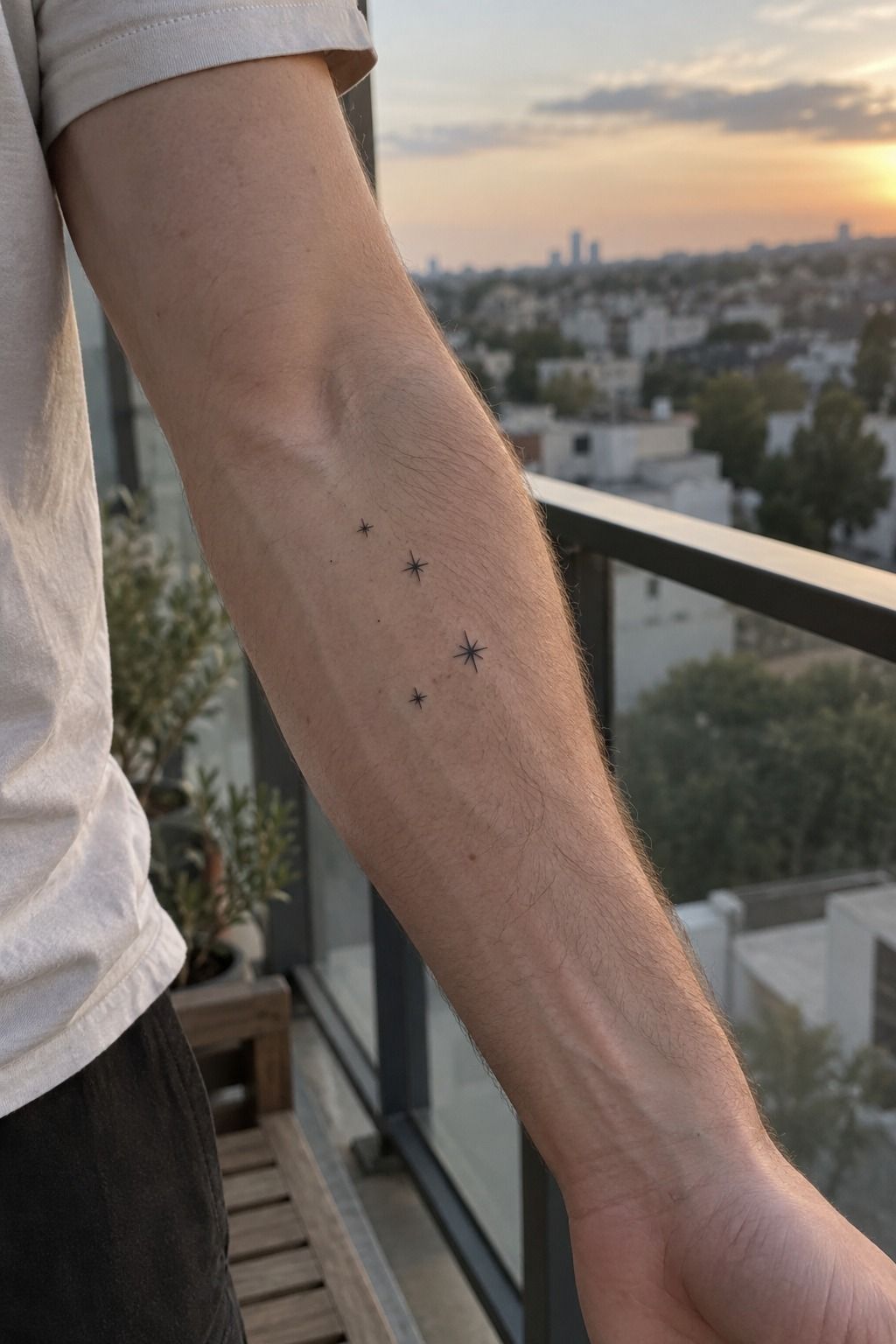
Begin by choosing the visual language before you sketch an eagle. Your first decision is whether the tattoo should feel minimal and open or more intricate and graphic. If you’re drawn to small bird tattoos, compare how strong silhouettes read at a distance with these small bird tattoo ideas.
For this style, I’d choose thin black lines, a small eagle profile, and stars with different sizes instead of identical dots. That uneven rhythm feels more personal. You don’t need every feather described.
You need one clear head, one wing gesture, and enough negative skin to keep the image sharp.
Use a clean paper sketch first. A fine-tip pen can show whether your silhouette stays readable when it’s reduced. The best designs usually have one dominant gesture rather than many competing marks.
The stars can be symbolic, but keep them secondary. Three small points around the eagle may suggest direction, protection, or a private constellation without crowding the forearm. I’d skip a full galaxy background because it would compete with the bird’s flight.
Your style can also be fierce, understated, or slightly vintage. The choice matters because the same eagle can feel delicate in one treatment and gritty in another. Decide what emotional register is worth the cost before you book.
Check the style in natural light before you commit. Your artist can tell you whether single-needle linework will hold the intended detail in that placement, and you’ll leave with a design that feels deliberate rather than merely tiny.
2Which Eagle Silhouette Carries Your Meaning?

Choose the silhouette that carries your story before you choose the feather texture. A curved profile or lifted wing can give your tattoo a graceful and powerful identity, while a forward-facing eagle can feel more direct.
You might prefer an eagle facing forward, in profile, or with its wings raised. I’d choose the profile if your meaning is independence, because the beak and eye create a strong direction. If you want resilience or rebirth, a rising silhouette usually reads more empowering.
Write one sentence about what the eagle means to you. Don’t write a paragraph. “I kept moving after a difficult year” gives your artist more useful direction than a list of generic symbols.
A good reference is this eagle tattoo meaning guide, especially if you’re weighing freedom against strength. Your chosen silhouette should still feel personal after you remove every decorative detail.
The shoulder gives you room for a flowing curve, but you shouldn’t stretch the eagle until it looks like a logo. I’d reject a stiff, symmetrical pose here. A slight angle through the neck or wing makes the ink feel alive without adding visual noise.
If the design feels elegant but emotionally empty, keep working. The best value comes from a shape you’ll still recognize as yours years from now.
3Sketch Unique Small Eagle Linework

Sketch the outer contour first, then build the interior lines around it. Your drawing should have a steady edge, even ink density, and no nervous crosshatching. That outer contour carries most of the tattoo’s identity.
Try three versions: a side profile, a downward wing, and a lifted wing. Keep the body compact in each one. The most expressive version isn’t always the most detailed; it’s the one your eye understands in a second.
I made the mistake of adding feather marks before checking the body shape. The result looked busy, and I had to erase half the sketch. You won’t need that cleanup if you decide the head, breast, and wing arc before adding texture.
A black ink outline can remain delicate while still giving the artist a dependable map. Ask to see the stencil at the intended scale, and look for a clear eye, beak, and wing edge. If those vanish on paper, they’ll be harder to protect during healing.
You can compare your drawing with small unique butterfly tattoos for an exercise in compact linework. The subject changes, but the lesson holds: one confident contour often feels more iconic than ten decorative marks.
A sketch is also where you test value. If two versions cost the same, choose the one with the clearer gesture, not the one with twice as many lines.
4Open Wings or Folded Flight?
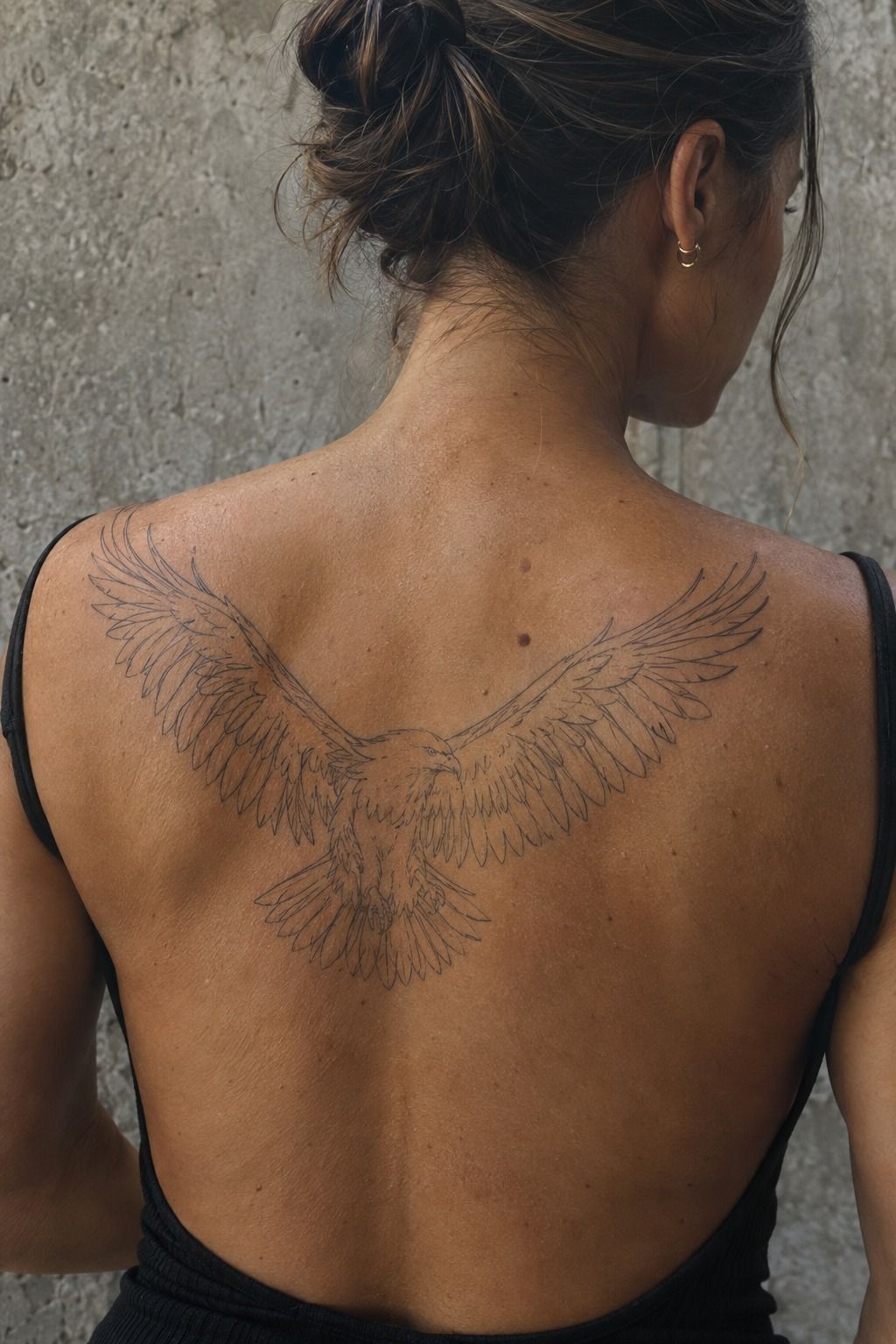
Choose the wing position by thinking about movement, not just anatomy.
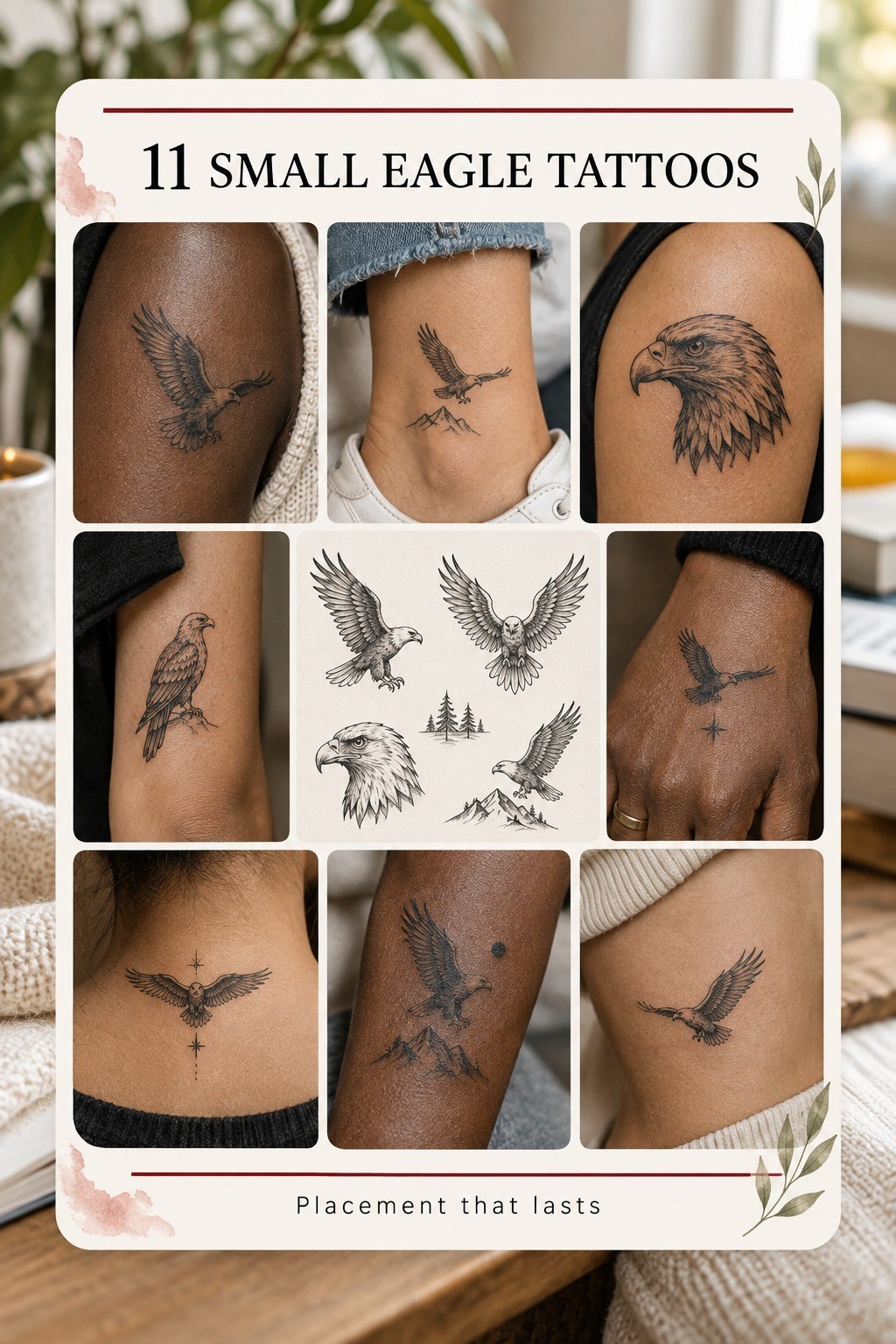
5Place Small Eagle Ink On Your Wrist
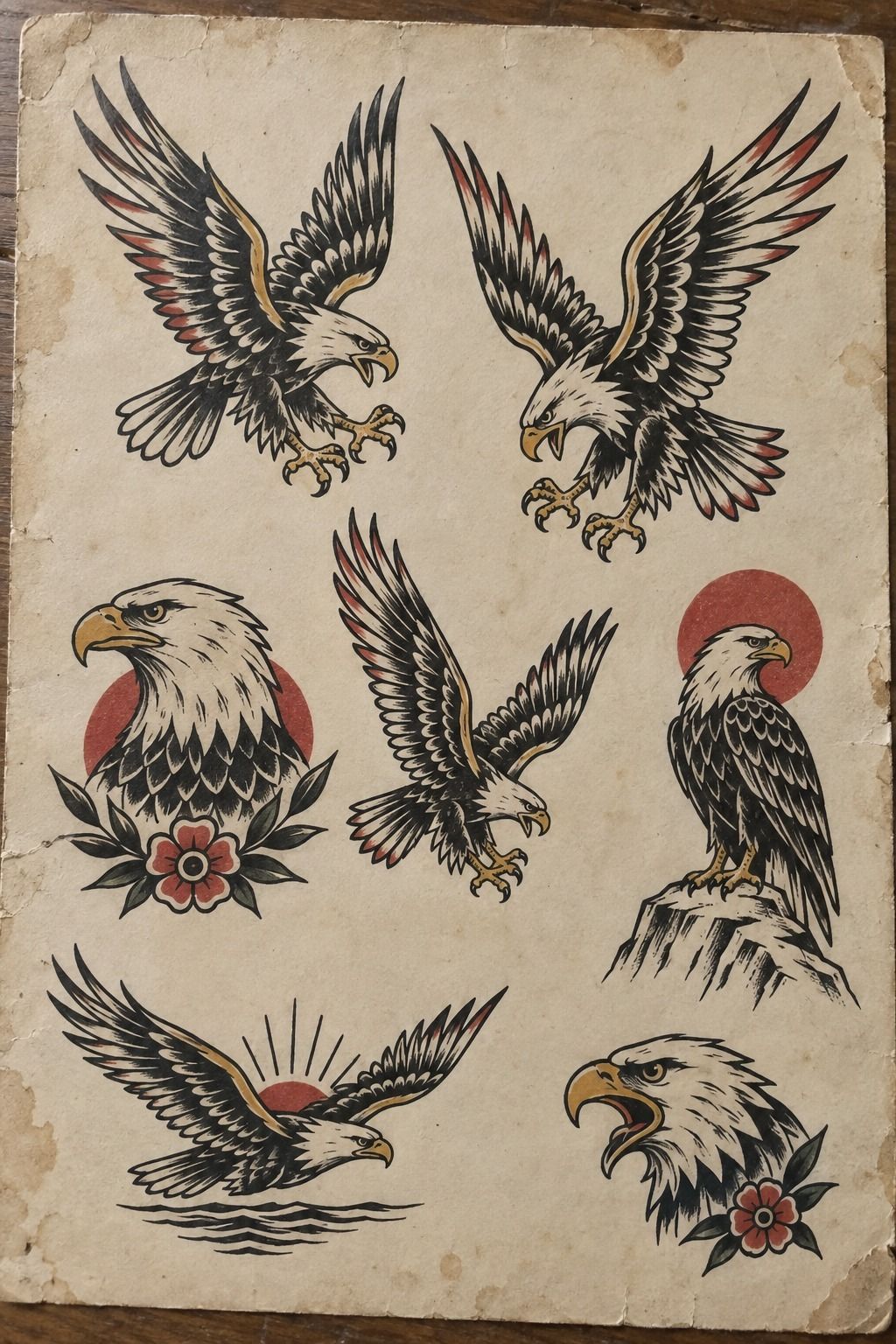
Treat the wrist as a small canvas with constant motion, visibility, and friction. A wrist eagle should have a readable silhouette without relying on tiny interior marks. You’ll see it often, so choose a sleek profile or a small open-wing shape that still looks intentional from a few steps away.
I’d avoid putting the smallest feather lines directly across the wrist crease. That area bends, rubs, and sees more movement than the center of the forearm. Ask your artist whether the design should sit slightly above the crease for stronger long-term clarity.
A traditional tattoo flash sheet can help you compare proportions quickly. Circle the design that still looks recognizable when viewed upside down, because your tattoo will be seen from different angles throughout the day.
If you’re unsure about visibility, look through tiny butterfly tattoo placements for similar scale decisions. Your wrist eagle can be dainty without becoming faint, but it needs a strong outer shape and a placement your artist can execute cleanly.
Think about movement, sleeves, and daily exposure before you decide. A visible placement may be worth it if you enjoy seeing the tattoo, but a less exposed location can offer better long-term value.
How Placement Affects Cost and Visibility
Placement affects more than pain. It can change the design’s scale, the artist’s working time, and the final studio cost. A tiny eagle may still take longer than expected if the skin is difficult to stretch or the position requires careful breaks.
Ask whether the placement supports the shape you want. A design that works beautifully on a forearm may become cramped on a finger or distorted near a joint. The cheapest appointment isn’t always the best value if the location forces unnecessary compromises.
Visibility matters emotionally, too. Some people want an empowering reminder they can see every morning.
Others prefer a meaningful mark that stays mostly private. Neither choice is more correct.
6Keep Feather Details Crisp And Delicate
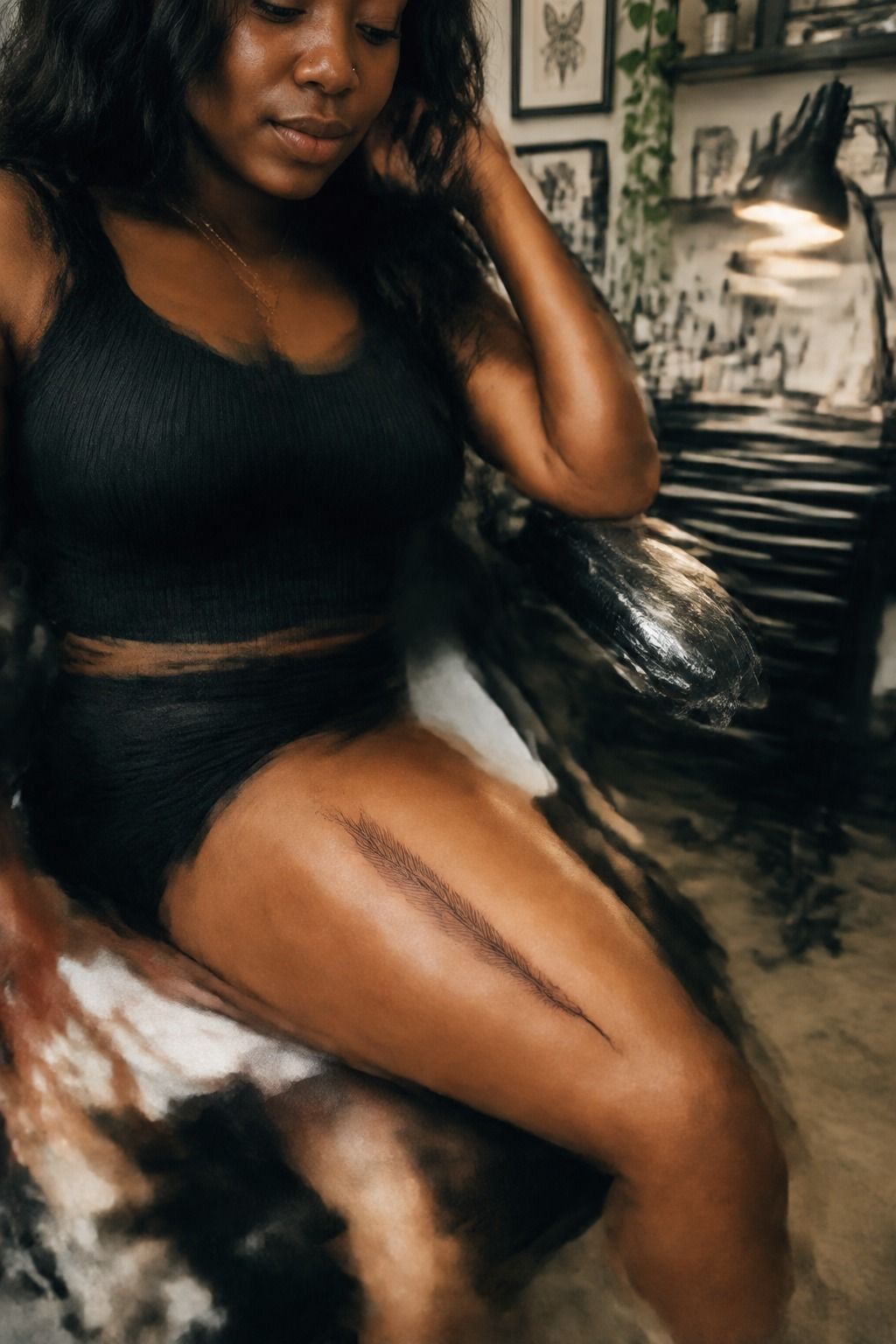
Use fewer feather marks than you think you need. Start with the central shaft, then add only the barbs that explain the feather’s direction. You don’t have to draw every strand.
If you’re requesting a tiny eagle, the same rule applies to its wings: describe the rhythm instead of recording every feather. That restraint keeps the tattoo delicate without making it weak.
Ask your artist how the line weight will be adjusted for your skin and placement. A single-needle tattoo can look airy on paper, but the healed result depends on depth, spacing, aftercare, and how your skin accepts the ink.
I’d skip extremely crowded hatching. It may look ornate during the appointment, but the marks can visually merge as the tattoo settles. Your best version will probably have fewer lines and more controlled skin breaks.
The feather test is simple. If each barb remains separate in the stencil, you’ll have a better chance of preserving that crisp spacing after healing. For more fine-line comparison, browse small fine line butterfly tattoos and study the distance between repeated marks.
If your artist recommends removing a few details, listen carefully. That advice protects the tattoo’s value rather than reducing it.
7Minimal Lines, Bold Read
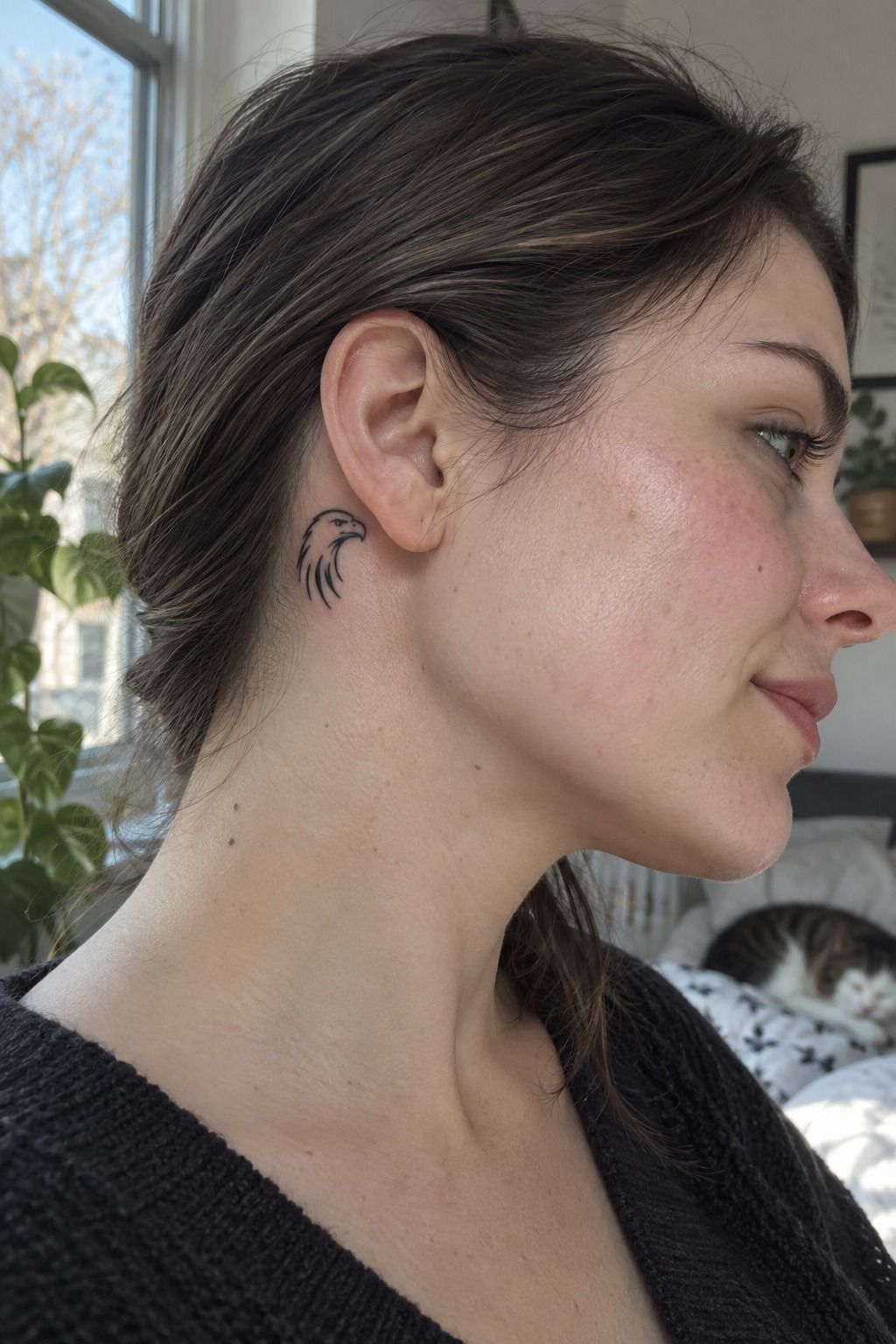
Plan the smallest number of strokes that can still make the eagle unmistakable. A few deliberate marks can make the design feel bold despite its restrained scale.
Behind the ear, you’re working with a curved, visible placement and limited room for correction. Your artist may simplify the eye, beak, and wing into three or four key gestures. That isn’t losing the idea; it’s giving the idea a stronger structure.
A minimalist tattoo should have one visual priority. Choose the wing, the head, or the flight angle. I’d make the wing the priority because it tells the viewer how the eagle is moving, while the head confirms the subject.
You can test the drawing with a temporary marker, but you shouldn’t treat that as a final prediction. Skin texture and movement change the impression. You’ll want your artist to approve the scale and explain which detail may need to be removed.
A restrained eagle can feel more edgy than an elaborate one when the negative space is intentional. Compare it with small dragonfly tattoo designs if you’re studying how a few lines can imply motion without filling the whole shape.
If you’re deciding between a busy version and a sharper one, the cleaner design is usually worth it. Small tattoos need clarity more than spectacle.
8Match Eagle Symbolism To Your Story
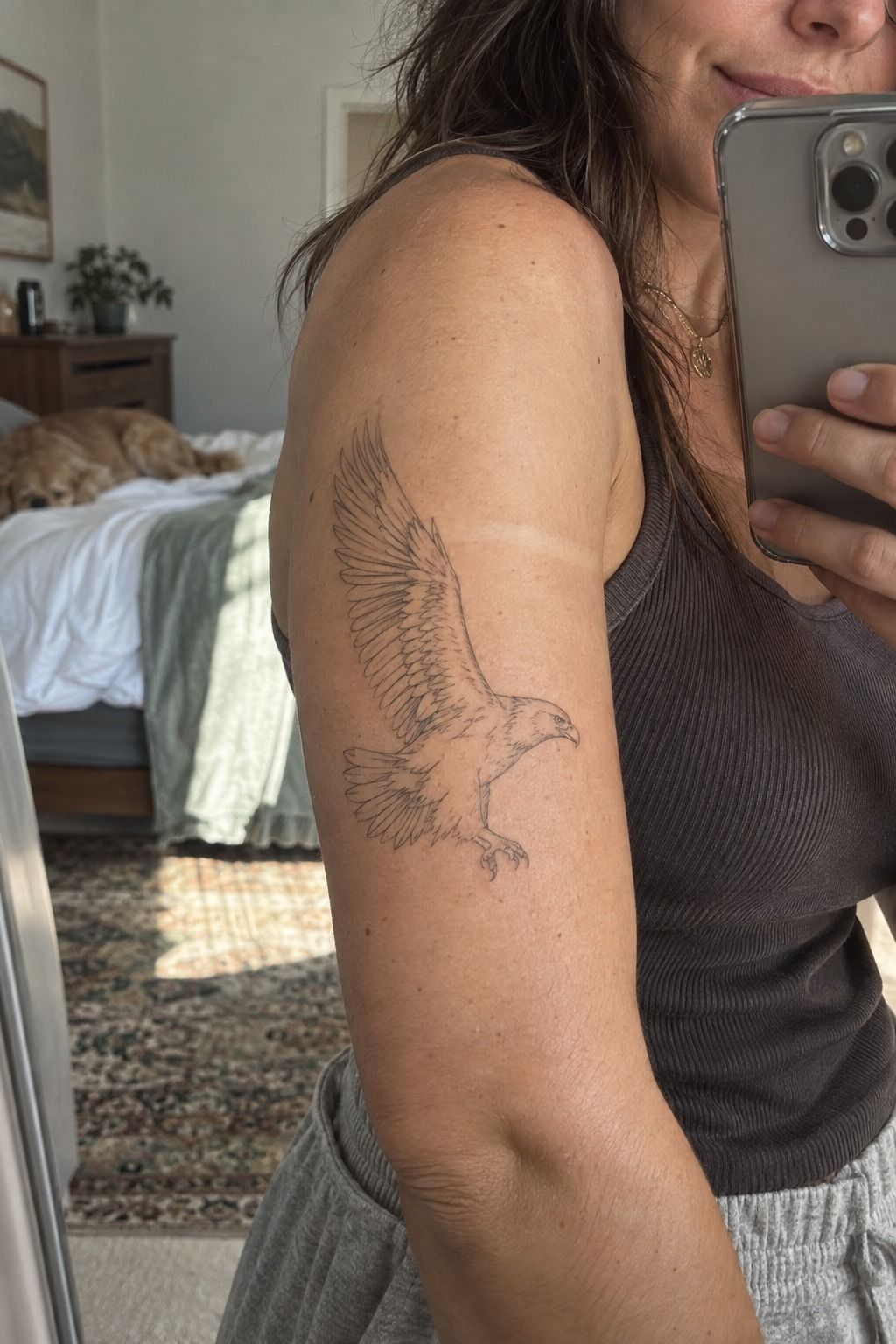
Match the symbol to a memory, decision, or person instead of choosing a meaning because it sounds impressive. Freedom, courage, family protection, spiritual focus, and new beginnings can all work, but your reason should feel meaningful when nobody else is reading it.
If your story is about survival, a steady eagle may feel more honest than a dramatic dive. If your story is about leaving, an angled wing can suggest movement. You’re choosing a visual verb, not just a bird.
A personal tattoo doesn’t have to include initials, dates, or a long quote. Those additions can make a small design crowded. I’d rather see one unusual wing shape or a discreet star than five symbols competing for attention.
You might want the tattoo to feel sacred, romantic, or even haunting. Those moods can come from the pose and spacing alone. You don’t need to spell out every layer of meaning.
If you want to compare symbolic animal imagery, small butterfly tattoo ideas can show how transformation is communicated with very little ink. Your eagle should still feel sacred or romantic to you, even if the meaning stays private.
That private connection is part of the tattoo’s value. A design can be visually simple and still carry an entire chapter of your life.
Where Detail Stops Helping
Detail stops helping when it competes with the eagle’s outline. You’ll know you’ve crossed the line when the eye notices texture before it recognizes the bird.
Ask your artist to show you the design at actual tattoo size. A full-scale stencil reveals problems that disappear on a phone screen, including cramped feathers, muddy stars, and an eye that’s too small to survive healing.
I’d rather remove three marks than add a dark patch that changes the character. The final tattoo can feel understated and still be memorable.
9Add Intricate Details Without Losing Clarity

Add detail in layers, and stop as soon as the eagle reads clearly.
What Healed Work Reveals
Fresh ink can look darker and sharper than the final result. That’s why you should ask for healed examples from the same artist, especially when you’re considering fine-line work.
Look for lines that remain distinct, open areas that still look intentional, and faces that haven’t blurred into dots. Healed work gives you a more honest sense of quality and long-term value.
Don’t judge an artist only by dramatic fresh photographs. A polished portfolio should include tattoos several months old. If those examples still feel sharp and expressive, you’ve found a stronger reason to book.
10Consider Healing Around Fine Linework
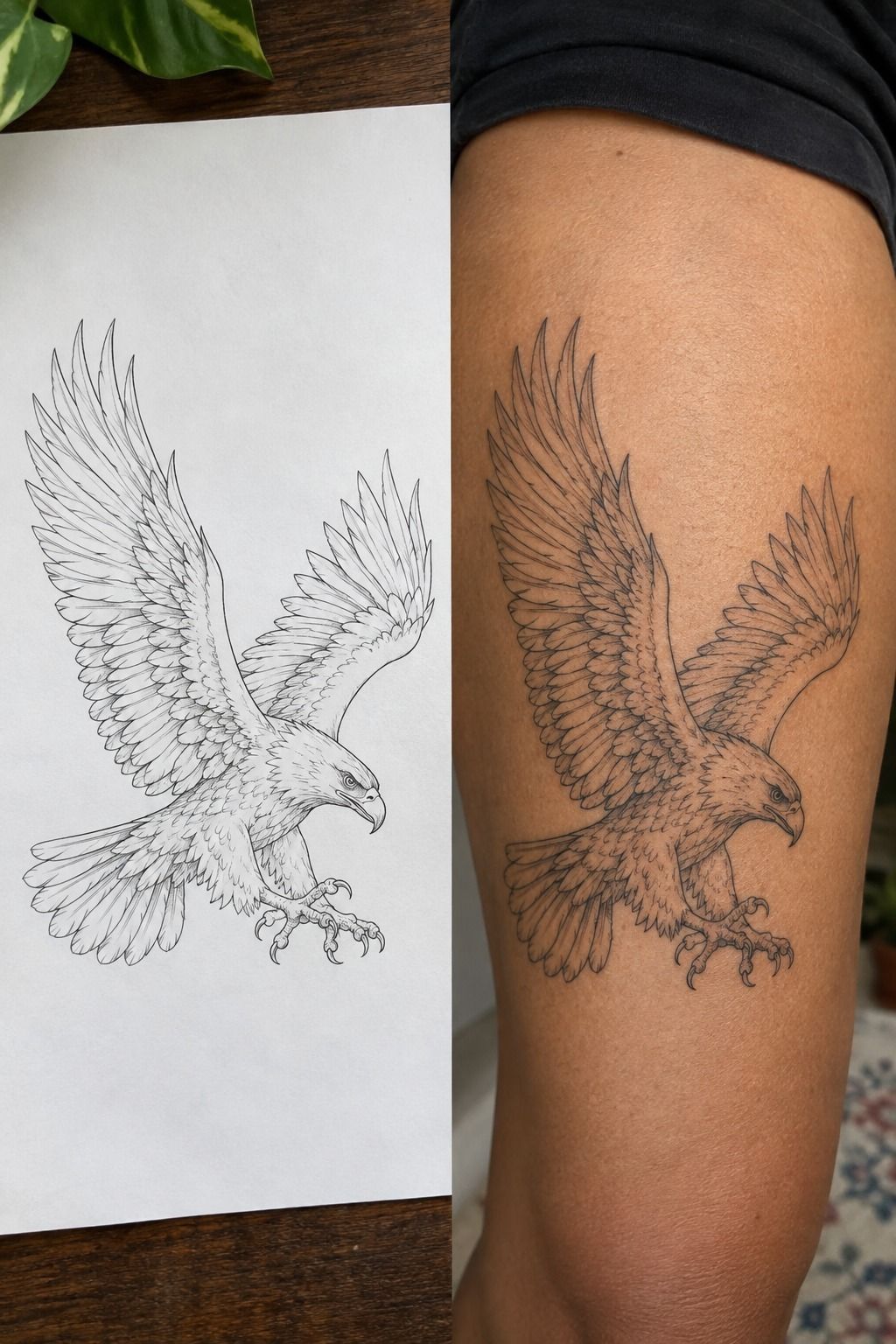
Plan the healed version before you approve the fresh stencil. Surface healing typically takes about 2 to 3 weeks, while complete healing can take around 2 to 3 months.
You’ll need gentle washing, light moisturizing, and protection from sun and swimming during the early stage. Follow your artist’s instructions instead of improvising with heavy products or aggressive cleaning.
Fine lines can widen over time, especially when placement, sun exposure, or ink depth works against them. A healed tattoo may look softer than the appointment photo, so leave enough space between feather marks.
I’d ask your artist for healed portfolio photos, not only fresh close-ups. You’re looking for line stability, readable negative space, and a design that still feels timeless after the initial redness disappears.
If you’re comparing how small designs age, small moth tattoo examples can help you study open versus crowded linework. The reference won’t copy your eagle, but it can teach you what spacing does over time.
Good aftercare protects the money you’ve spent. It also gives the tattoo the best chance of keeping its original character.
11Private Symbol, Visible Flair

Showcase the finished tattoo through the detail that makes it yours.
How I’d Decide Before Booking
I’d book only after I had chosen the silhouette, placement, and level of detail in that order. Your artist needs to know whether you want fine-line eagle ink, a sketch-like outline, or a more solid black interpretation before discussing the final stencil.
Bring two or three references, but don’t ask an artist to copy someone else’s tattoo exactly. You’ll get better work when you explain what you like about each image: the wing angle, the open spacing, the compact body, or the way the eagle faces.
Use this simple preparation list:
– Clear silhouette with one dominant gesture. – Placement tested while your body moves. – Healed portfolio photos from the artist. – Gentle cleanser and moisturizer for aftercare. – A budget that covers the studio minimum or hourly rate.
A typical US studio minimum may run about $50 to $100, while hourly tattoo rates commonly fall around $100 to $250. The total varies by artist, region, placement, and complexity, so ask for an estimate before your appointment.
A clear tattoo budget is worth setting before you fall in love with a design that needs more time. Ask what’s included, whether the studio has a minimum, and whether a consultation fee applies.
You’ll also want to think about pain. Ribs, feet, hands, and sternum are often more painful, while the forearm, thigh, and shoulder are usually more tolerable. I’d choose the placement that supports the design, not only the placement that sounds easiest.
Why I’d Choose Meaning Before Detail
I’ve changed my mind about small eagle tattoos more than once. At first, I wanted the most detailed version, with every feather, claw, and line of the wing included. Then I saw how quickly a crowded sketch lost its movement.
The tattoo looked technically busy but emotionally flat.
The strongest eagle I’ve seen wasn’t the largest or most ornate. It had a compact body, one angled wing, and enough clean skin around it to let the shape speak. That kind of classic restraint feels more iconic than a miniature illustration packed into a space that can’t support it.
I’d also be careful with the word “fine-line.” It describes a technique, not a guarantee. Your results depend on the artist, skin, placement, sun exposure, and aftercare. A tiny tattoo can be daring and raw without being fragile, but only when the design respects the limits of scale.
If you’re deciding between a meaningful silhouette and extra detail, choose the silhouette. If you’re deciding between a painful placement and a more tolerable one, ask whether the location makes the tattoo easier for you to live with.
And if you’re stuck between two artists, choose the one who shows healed work and explains what they’d simplify. That approach may cost slightly more, but the value is in the result you’ll keep wearing.
A personal eagle tattoo should still look like an eagle when the ink has softened. You’ll feel better knowing every line had a reason.
A Few Things Worth Answering
How much do small eagle tattoos usually cost?
Small eagle tattoos often cost about $50 to $100 at a studio minimum or around $100 to $250 per hour in the US. The final price depends on the artist, region, placement, and detail level, so request an estimate before booking for clear pricing.
Are small eagle tattoos a good idea for a first tattoo?
Yes, small eagle tattoos can suit a first tattoo because the forearm, shoulder, and thigh are often more tolerable placements. A clean silhouette also helps you choose a meaningful design without committing to a large session.
How do I choose a tattoo artist for small eagle tattoos?
Choose an artist with clean linework, healed portfolio photos, strong hygiene practices, and experience with your preferred style. Your best comparison is healed detail, not only fresh ink, because it shows how the artist’s lines settle.
How much do small eagle tattoos hurt?
Pain varies by placement and your own tolerance. Ribs, feet, hands, and sternum are often more painful, while the forearm, thigh, and shoulder are usually more tolerable. Ask your artist about placement comfort before you finalize the stencil.
How long do small eagle tattoos take to heal?
The surface usually heals in about 2 to 3 weeks, while complete healing can take around 2 to 3 months. Gentle washing, light moisturizing, and avoiding sun and swimming early on support healthy healing.
What’s the best placement for small eagle tattoos?
The forearm, shoulder, and thigh are practical choices because they’re often more tolerable and give the artist room for readable linework. Your best placement depends on visibility, movement, pain, and how much space the silhouette needs.
Where I’d Start First With Clean Linework Over Crowded Detail
If I had to pick one step, I’d start with the silhouette. A clear wing and head will survive softening better than crowded feather marks, and you can’t repair a confused outline with extra ink.
Save your strongest reference, show it to your artist, and let the negative space do its work. If the design still feels clear at actual size, the appointment is probably worth it.
Start there!

2 responses to “How to Create Small Eagle Tattoos in One Sitting – 11 Ideas”
[…] while the clean outline keeps the mark stylish. If you’re collecting compact pieces, our guide to small eagle tattoos gives you more placement references.Not sure […]
[…] to buy a kit or copy a design exactly. For more creature symbolism, compare tiny eagle tattoos and small snake tattoos before you […]