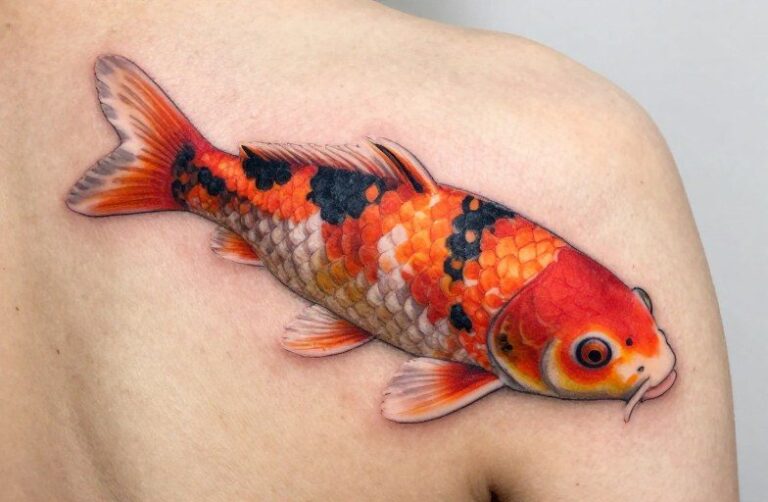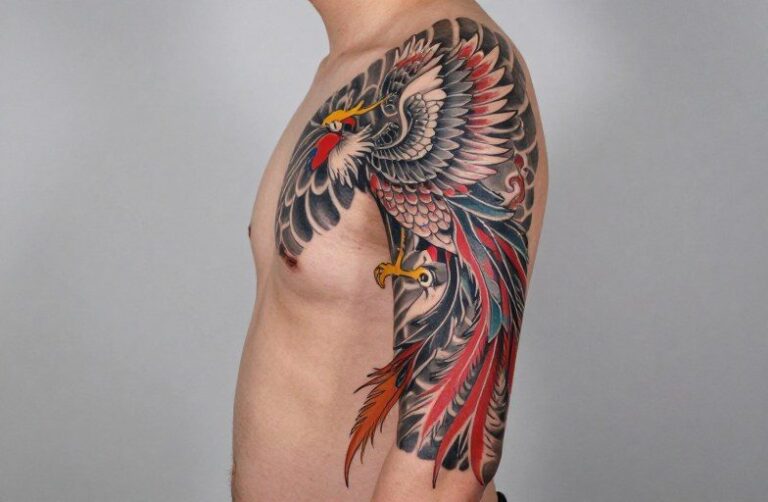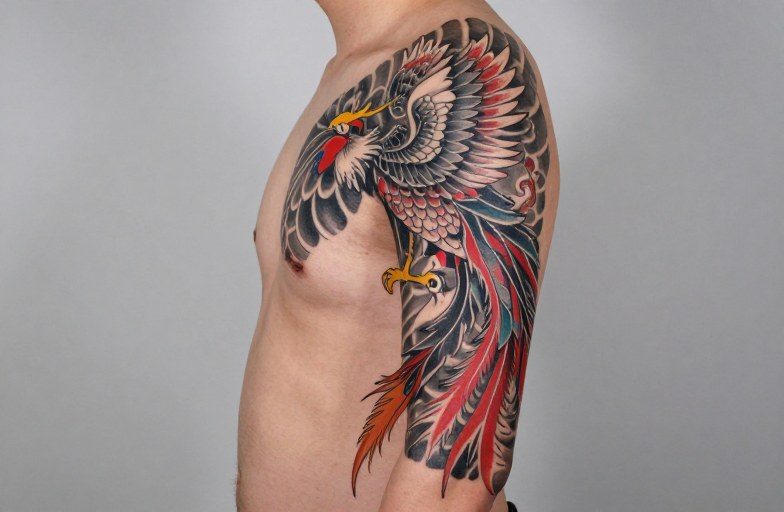
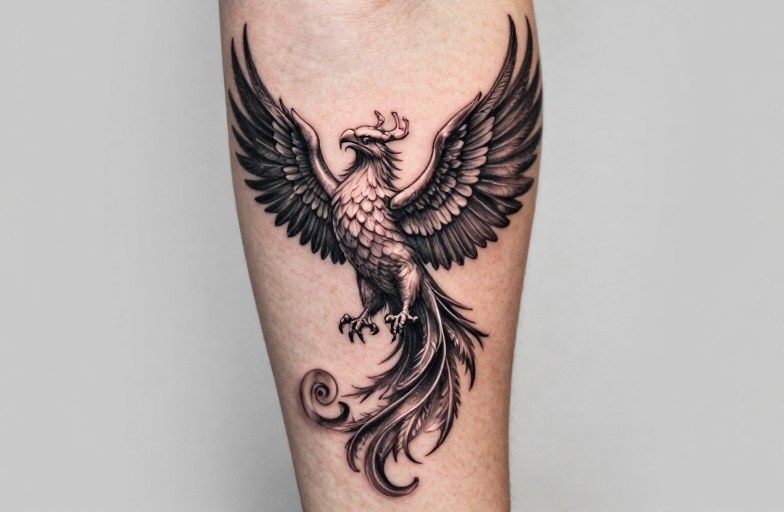
A realism phoenix tattoo renders the mythical firebird as a living creature, feathers catching light, embers floating from wingtips, smoke curling from burned edges. Unlike traditional or neo-traditional phoenix designs that rely on bold outlines and flat color fields, realism approaches the subject with photographic intent. The bird might be caught mid-resurrection, emerging from ash, or in full flight with flames rendered as actual fire behavior rather than decorative pattern. The style demands technical precision in texture, temperature variation in color, and anatomical plausibility even within an impossible subject.
Best Placements
Realism phoenix tattoos need room to breathe. The feather detail and fire gradients collapse at small sizes, turning into muddy confusion within a few years.
Large Canvas Options
The back, chest, and thigh offer the most successful territory. A full back piece allows the wingspan to stretch naturally, with the tail feathers trailing down toward the lumbar. Chest placements work best when the bird rises from the sternum, flames wrapping toward the collarbones. This follows the natural muscle flow and gives the resurrection narrative a physical anchor point. Thighs provide a curved surface that can suggest the bird banking in flight, though the outer thigh sees less distortion from movement than the inner.
Related reading: realistic phoenix tattoo designs | phoenix sleeve tattoo meaning | phoenix bird back tattoo | Japanese phoenix tattoo design
Smaller Adaptations
- Upper arm/shoulder cap: Focus on the head and a single wing, cropped like a wildlife photograph rather than attempting the full body
- Forearm: Vertical compositions with the bird climbing; avoid horizontal spreads that wrap awkwardly
- Calf: Surprisingly workable for a perched or nesting pose, less so for flight
Hands, feet, and necks are poor candidates. The skin texture there blurs fine detail rapidly, and the phoenix’s complexity doesn’t simplify well without losing its essential character.
Cost & Sessions
Realism phoenix work sits at the higher end of pricing regardless of geographic market. The combination of color complexity, large scale, and the specialist skill required to execute convincing fire effects means you’re commissioning a technical piece, not a walk-in special.
Session Breakdown
A full-color realism phoenix spanning a full back typically requires 4-7 sessions of 4-6 hours each, spaced 3-4 weeks apart for healing. Black-and-grey versions with selective fire accents might drop to 3-5 sessions. Smaller shoulder or thigh pieces run 2-4 sessions.
Pricing structures vary: some artists charge hourly ($150-$400 depending on reputation and city), others quote the full project. Expect five figures for extensive back work from established specialists. Budget artists exist, but realism unforgivingly exposes technical gaps. Saving money here usually means paying for removal later.
Modern Variations
Contemporary approaches have pushed the realism phoenix beyond its classical firebird origins into territory that still reads as the same mythological creature.
Biomechanical and Structural Hybrids
Some artists render the phoenix with exposed mechanical joints beneath feathered surfaces, or construct the wings from architectural elements: stained glass, iron filigree, clockwork. The realism remains in the lighting and texture, but the subject matter borrows from other genres. These work best when the mechanical elements serve the resurrection theme rather than overwhelming it.
Double-Exposure and Embedded Imagery
Feathers containing landscapes, city skylines, or cosmic fields within their vanes. The phoenix form becomes a container for secondary narratives. Technically demanding: the embedded imagery must read at distance as feather texture, then resolve into its hidden content on closer inspection. Requires exceptional planning and steady client commitment to long sessions.
Origins & History
The phoenix as tattoo imagery has long associations with maritime and Japanese traditions. Sailors reportedly carried renditions as symbols of survival and return, though specific documentation of these early pieces is scarce. Japanese tattooing developed elaborate ho-oo designs with specific color conventions and compositional rules. The realism treatment of this subject is a relatively recent development, made possible by improved tattoo pigments, machine technology, and cross-pollination from fine art illustration.
Photorealistic fire effects gained visibility in the late 20th century as artists studied actual flame behavior and began replicating its translucent, self-illuminating qualities rather than treating fire as opaque orange shapes. The phoenix benefited directly from this technical evolution. Previously, the bird’s defining element often looked decorative rather than dangerous.
Cultural associations vary: Greek and Egyptian sources differ in their resurrection cycles and physical descriptions. Modern tattooing often blends these freely, though some clients seek specific iconographic accuracy. The realism style’s flexibility accommodates either approach.
Linework & Technique
Realism phoenix tattoos operate with minimal hard outlines, relying instead on value contrast and color temperature to define edges. This creates both their visual impact and their technical vulnerability.
Feather Construction
Individual barbs get rendered with needle groupings as fine as 3-round liners, building texture through accumulated hairlines rather than drawn lines. The transition from exposed rachis (central shaft) to fluffy down happens through needle depth variation and pigment density, not outline switches. Poorly executed, this turns to sludge within two years as the fine detail disperses.
Fire Rendering
- Core temperature: White-hot centers using negative space or very light yellow, surrounded by deepening orange and red gradients
- Smoke integration: Grey-wash opacity work that lets the skin tone show through for atmospheric effect
- Ember scatter: Strategic placement of bright points that suggest material breaking away, usually concentrated at wing edges and tail
Color saturation demands particular attention. Fire that reads as genuinely hot requires colors that would look garish in other contexts: pushed yellows, almost neon oranges. Muted palettes kill the effect immediately. The best artists build temperature through complementary contrast. Cool blues in shadowed feather areas make the adjacent flames feel hotter by comparison.
Who It Suits
Not every collector or body type serves this design well. The realism phoenix makes specific demands beyond willingness to sit for hours.
Skin Considerations
Medium to lighter skin tones carry the color temperature range most effectively. Darker skin can absolutely support realism phoenix work, but the approach shifts: more emphasis on structure and value contrast, less reliance on subtle orange and yellow gradients that can heal toward invisibility. Experienced artists adjust their palette accordingly; inexperienced ones sometimes push too light, creating scarred-looking white patches that never settle naturally.
Lifestyle Factors
The large scale and visibility of most placements mean professional contexts matter. Back and thigh pieces offer concealment; chest and arm work do not. The subject’s intensity, literal flames, reads differently in conservative environments than, say, a botanical piece of equivalent size. Commitment to aftercare is non-negotiable: realism’s subtle gradients depend on pristine healing, and the multi-session timeline means months of careful maintenance.
What to Remember
A realism phoenix tattoo succeeds when the impossible subject feels momentarily witnessed, not illustrated. The technical bar is high, the time investment substantial, and the artist pool specialized. Research matters enormously here. Portfolio examination should focus specifically on how prospective artists handle feather texture, fire behavior, and the integration of organic and elemental materials. The best results come from artists who tattoo this subject repeatedly, not as a one-off challenge. The phoenix myth endures because transformation and survival remain universally relevant; the realism treatment makes that relevance viscerally present, burned into skin with photographic conviction.