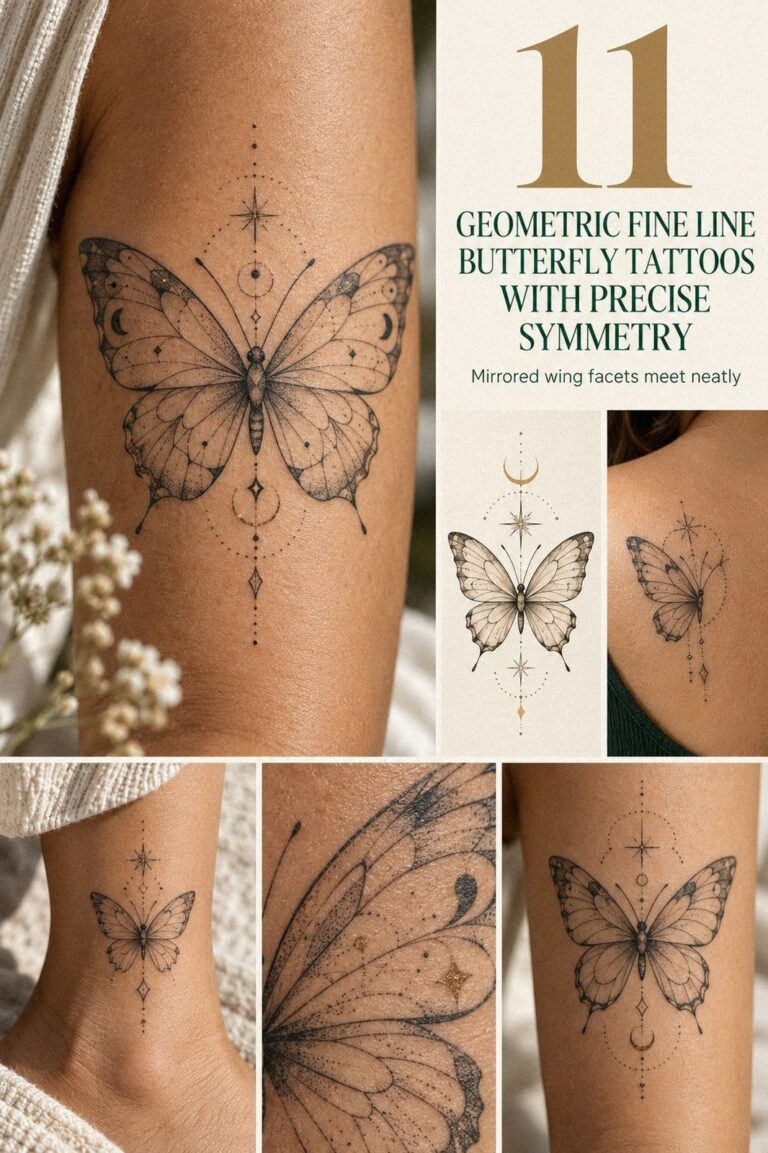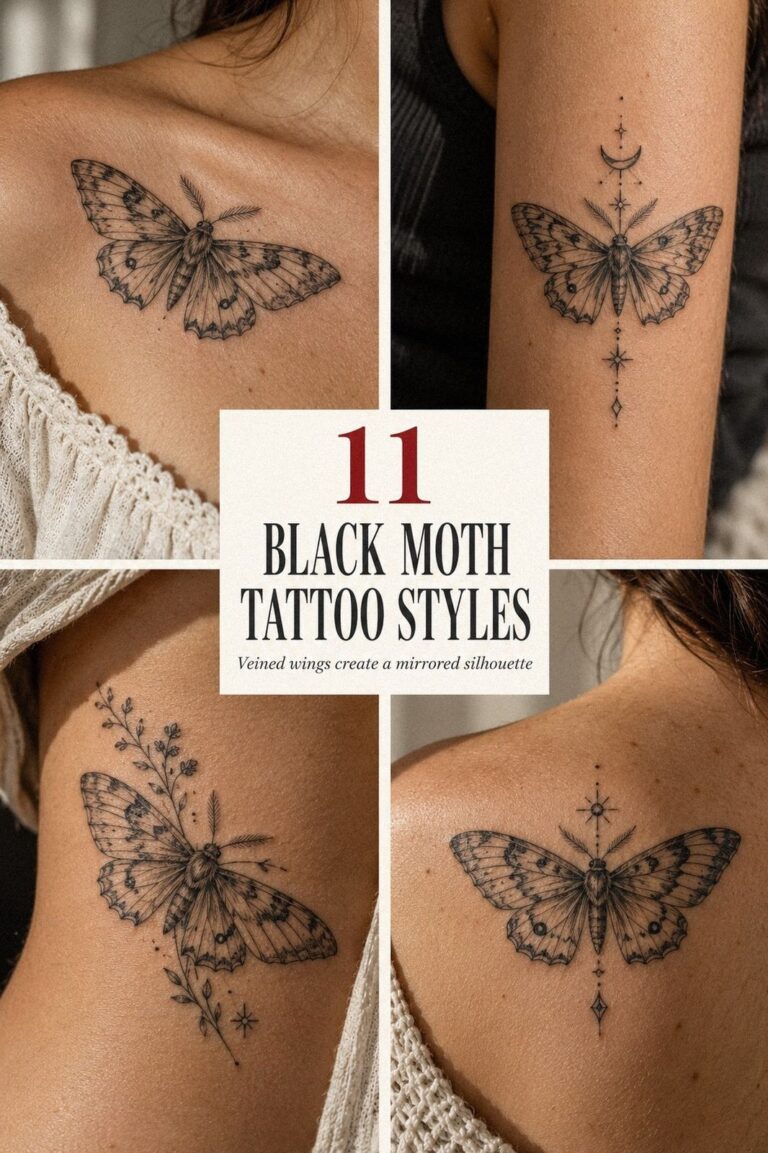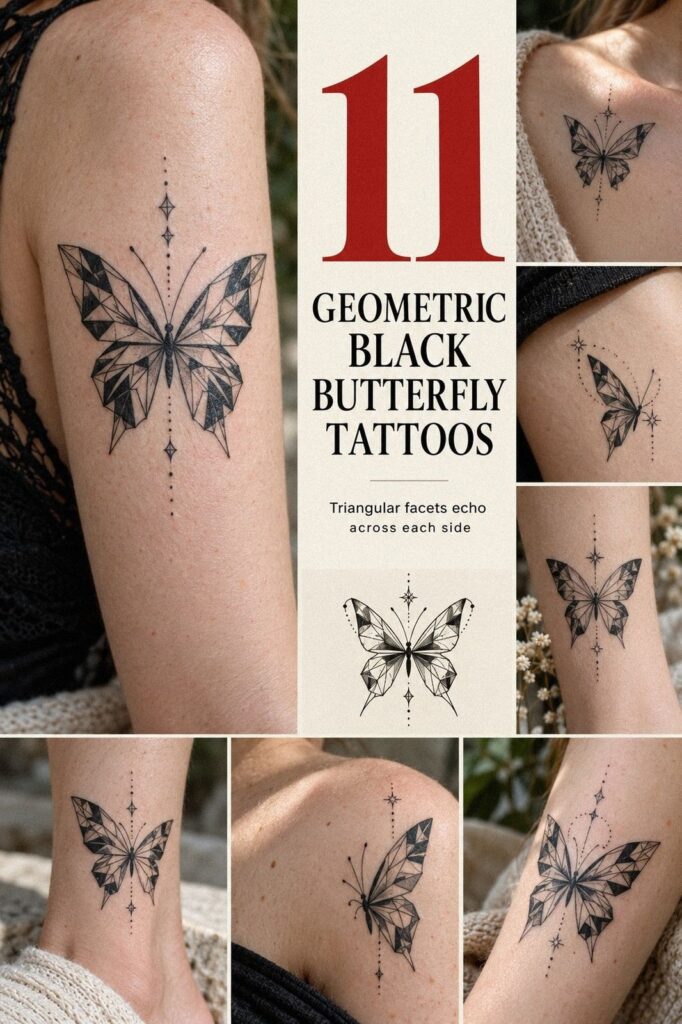
A geometric black butterfly tattoo can be a smart first tattoo when the design stays clear, balanced, and personal. I nearly backed out after staring at my blank shoulder for three weeks, then chose a small, crisp blackwork butterfly with open wings. It’s striking without shouting, and I still catch myself checking it in the mirror!
Before booking, I wanted a design that felt personal, not copied. I’d saved dozens of references, but the right one had to suit my body, my tolerance for detail, and the meaning I wanted to keep private.
Before I Booked It
Before I booked anything, I had one patch of untouched skin and far too many saved references. I’d scroll through black butterfly tattoo ideas at midnight, then reject each one by morning because they felt too ornate, too delicate, or too similar to someone else’s.
The skin itself gave me no clue. You can’t ask a blank shoulder what it wants.
I traced the natural curve with a washable pencil and compared it with small black butterfly tattoo ideas. That test showed me the design needed breathing room, clean angles, and a reason to exist.
I also wrote down what I didn’t want. No crowded symbols, no forced quote, and no pattern chosen only because it looked fashionable online. That list made the final design choice more understated and much less stressful.
- Chose a Small Geometric Black Butterfly Tattoo
- Sketched Geometric Black Butterfly Tattoo Ideas
- Compared Sharp Black Butterfly Linework
- Selected a Unique Geometric Wing Pattern
- Tested the Butterfly Tattoo Placement
- Refined Symmetry Across Both Wings
- Added Meaning Through Angular Butterfly Shapes
- Prepared for Crisp Black Ink
- Managed Pain During the Tattoo Session
- Protected the Design During Healing
- Admired My Finished Geometric Butterfly Tattoo
1Chose a Small Geometric Black Butterfly Tattoo
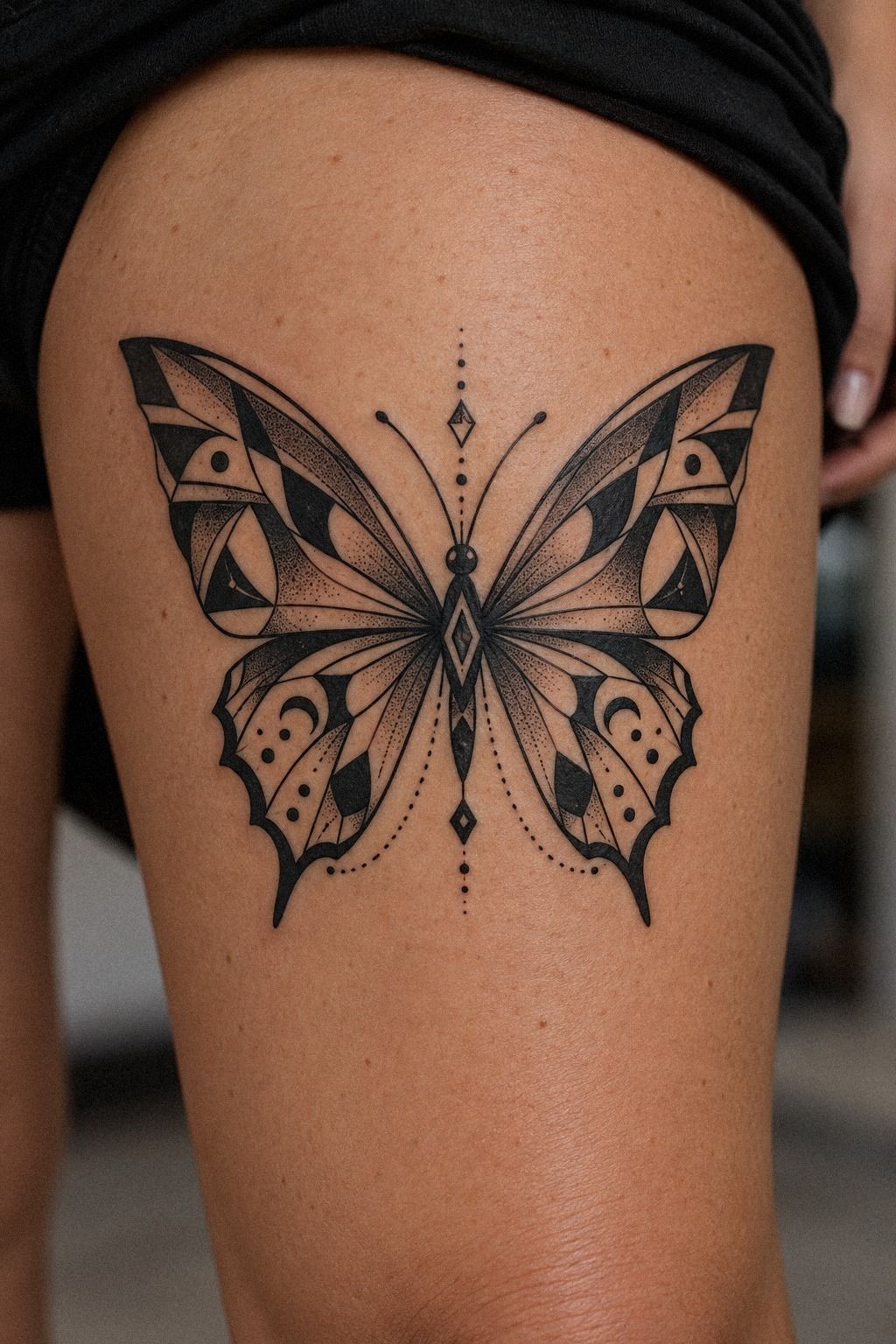
My small geometric black butterfly tattoo started with scale. I wanted open wings that would read from across the room, but I didn’t want a heavy silhouette covering my shoulder. A design around 2 to 3 inches gave me enough space for symmetrical veins and small triangular sections without turning every detail into a dark blur.
I compared the sketch against my shoulder bone, then against the sterile stencil paper used for the transfer. You’ll want to check the shape while your arm is relaxed and lifted because skin folds change the wings.
I’d skip an ultra-tiny version if you’re drawn to intricate geometry. It might look dainty on a screen, but the smallest gaps can disappear as the tattoo ages.
For another compact direction, browse tiny black butterfly tattoo designs before you commit. The value isn’t in choosing the smallest possible tattoo. It’s in choosing a size that lets the design remain readable.
The moment it felt right was oddly quiet. I stopped trying to make it impressive and asked whether I’d still want it in five years. The answer was yes.
It looked symbolic, sleek, and personal enough to keep.
The budget mattered too. A small tattoo can still cost more than expected when the artist has to prepare precise geometry and make several stencil adjustments. I decided the extra value was worth it if the result stayed sharp and balanced.
I also considered how the shoulder placement would move when I lifted my arm. A butterfly can look perfectly centered while standing still, then shift when the skin stretches. That small test saved me from choosing a design that felt rigid or awkward.
2Sketched Geometric Black Butterfly Tattoo Ideas
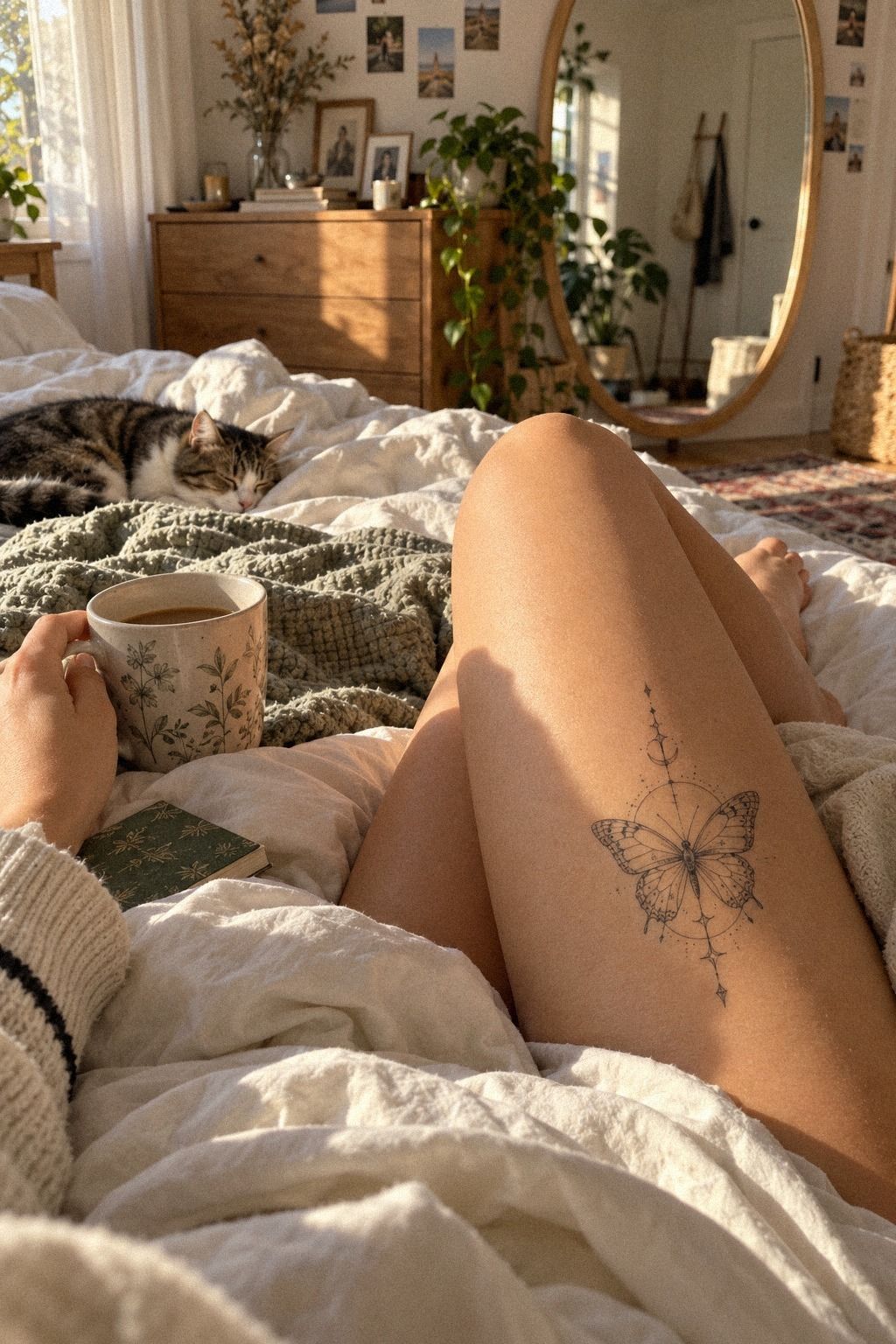
The sketching stage changed everything. My geometric black butterfly tattoo ideas looked more meaningful when I saw them as rough pencil shapes instead of polished digital art. On the spine, the butterfly felt elegant and almost sacred, with the body following the center line and the wings opening away from it.
I asked my artist to leave the interior areas unfilled. That negative space let the graphite design sheet show through, and it kept the pattern from becoming a flat black patch. You’ll want to ask for several versions, not just one cleaned-up drawing.
I’d compare a rounded wing, a sharply pointed wing, and a version with one distinctive lower-wing cutout. A graceful curve may suit you better than a severe angle, while a bold centerline can make a smaller design easier to read.
And don’t judge the sketch only from straight on. Turn your body, sit down, and look at how the design moves with you. I saved the most flowing option beside minimalist black butterfly tattoo examples, then chose the one that still looked expressive from an angle.
The best sketch wasn’t the most complicated one. It was the one with a clear visual rhythm. That made the final choice feel classic instead of temporary.
I kept one deliberately asymmetrical wing detail in the final draft. It wasn’t dramatic, but it made the butterfly feel less manufactured and more personal. That tiny irregularity gave the design a raw quality I hadn’t expected.
3Compared Sharp Black Butterfly Linework
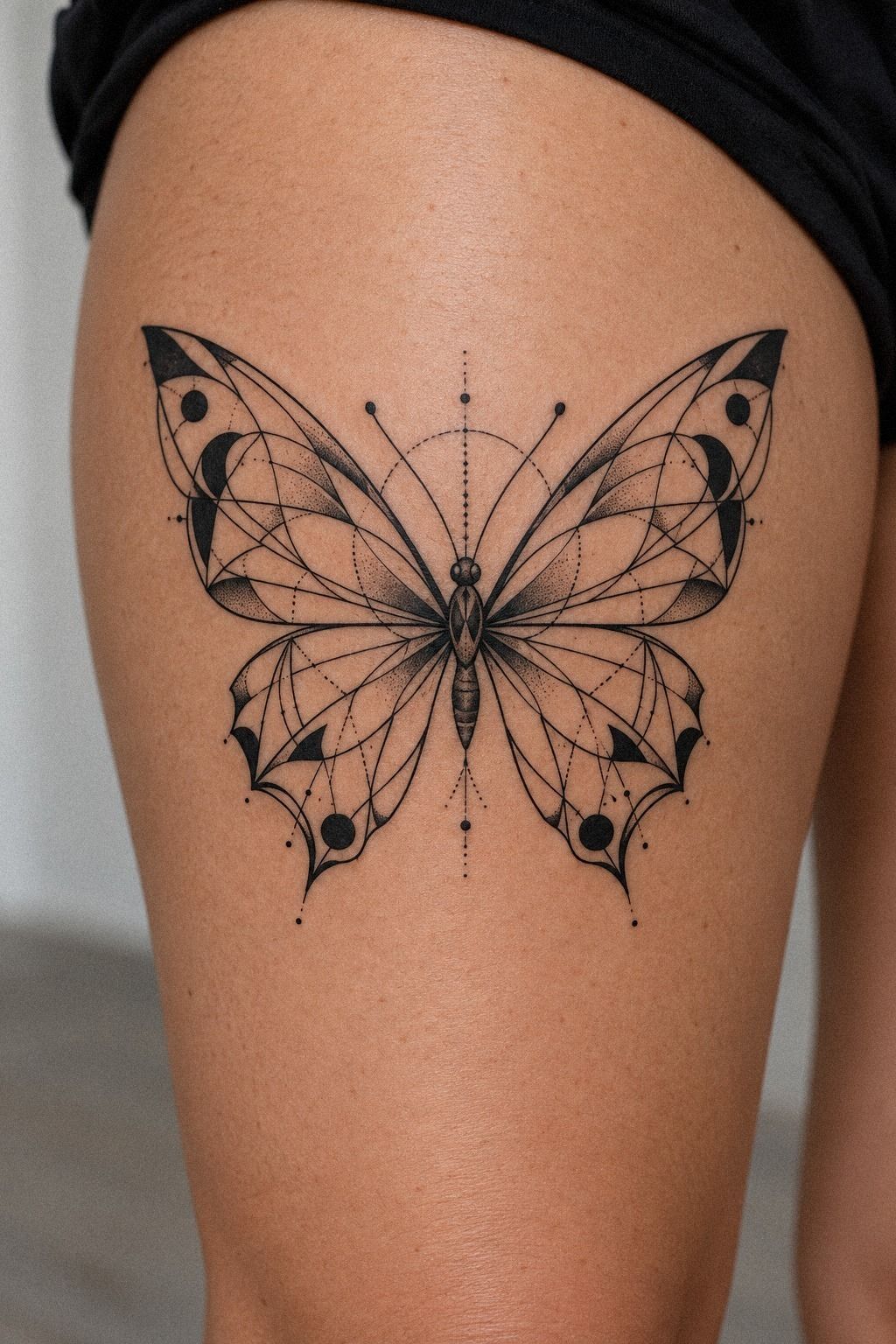
On my calf placement, the sharp black butterfly linework looked more edgy than the shoulder version, even though both designs used open wings.
When Is a Small Design Too Small?
A small geometric tattoo becomes too small when its gaps, centerline, or major wing shapes can’t remain distinct. The number itself matters less than the relationship between the details.
I measured the narrowest openings in the wings and asked whether they’d still be visible after swelling settled. That practical check protected the design’s graceful structure without making it look oversized.
You can compare compact options through small butterfly tattoo inspiration, but don’t copy the exact scale from someone else’s body. Your skin, placement, and line thickness will change the result.
My artist pointed out that a two-inch butterfly tattoo could work, but only if I removed two interior triangles. I was attached to those details at first. Once they were gone, the silhouette became bolder and the whole piece looked more polished.
4Selected a Unique Geometric Wing Pattern
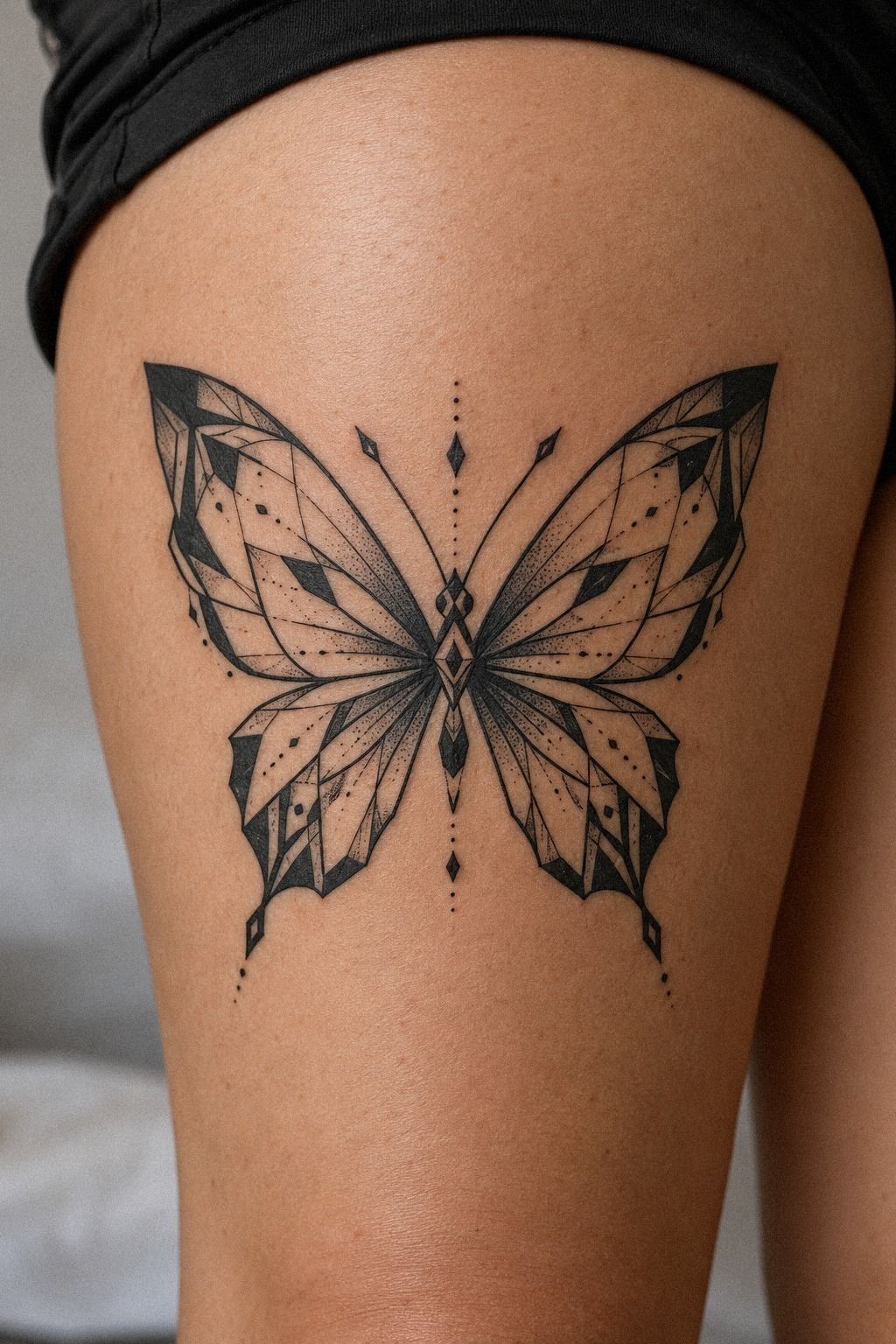
The unique geometric black butterfly tattoo I picked had one unusual detail: the upper wings were symmetrical, but each lower wing carried a different angular opening. It wasn’t random. The imbalance gave the design a raw, expressive quality while the main body stayed controlled.
I asked for black tattoo ink only, with no gray wash and no decorative shading behind it. You’ll want to know whether your artist is using solid fill, stippling, or open skin before the appointment because each approach changes the final weight.
I’d avoid adding extra symbols simply because a wing feels empty. Negative space can be intentional. A minimalist choice may look less dramatic at first, but it can remain more readable over time.
That decision made the butterfly feel more meaningful. The open side represented a part of my life I didn’t want to explain in a caption, which sounds dramatic until you see how quiet the design is.
I compared it with black butterfly tattoo meaning ideas and kept the interpretation private. The pattern only needed to make sense to me. That personal meaning made the cost feel worth it.
The final angular wing pattern was bold without becoming noisy. I liked that it could read as a butterfly immediately, then reveal its more intricate structure when someone looked closer.
5Tested the Butterfly Tattoo Placement
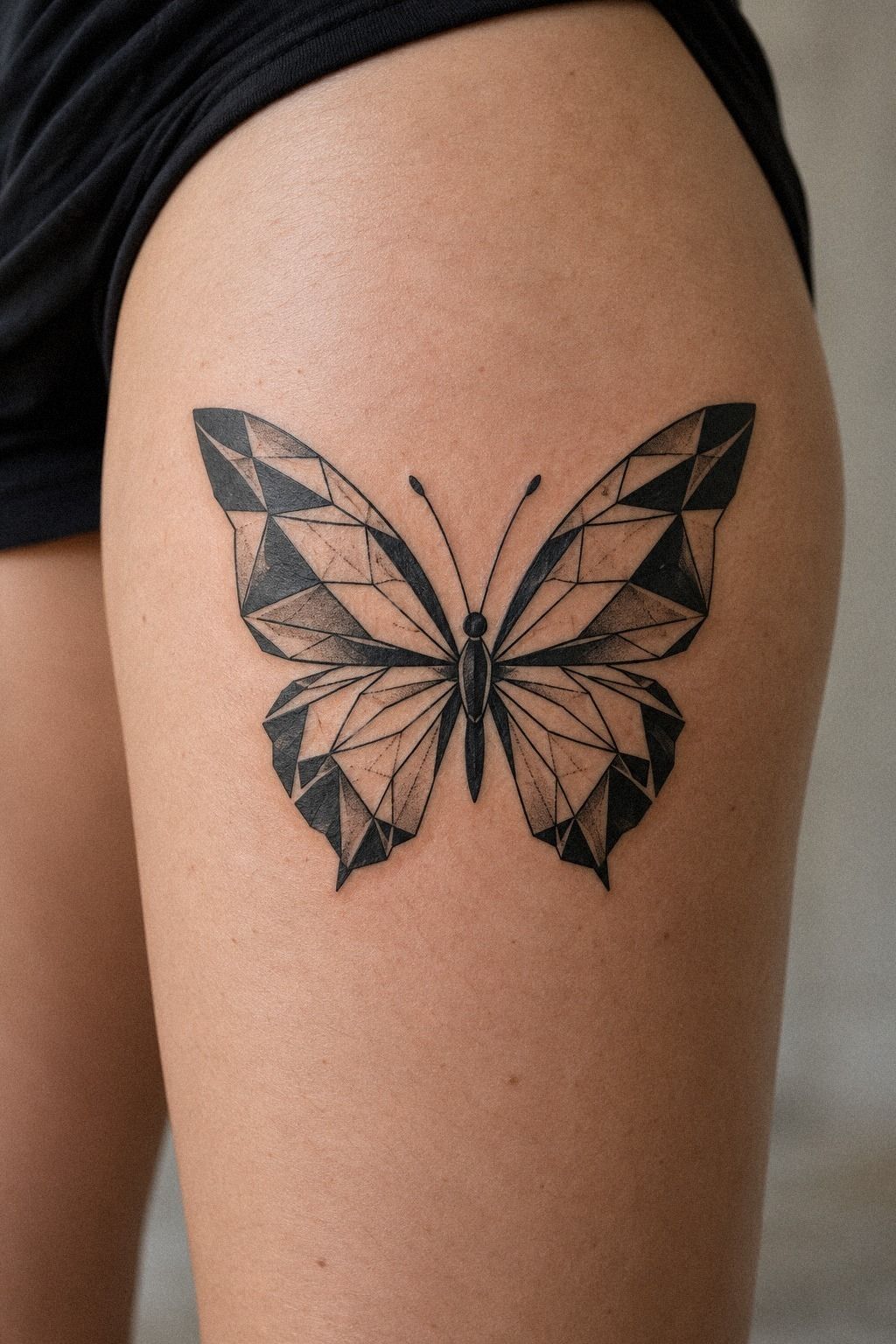
Placement changed the entire design. The same butterfly looked sharp on my calf, intimate near my ribs, and more balanced on the shoulder. The right tattoo placement made the whole idea feel more confident.
I tested the transfer while standing, sitting, and moving my arm. You’ll want to notice how the wings shift when your shoulder rolls forward. I’d choose the position that keeps the body centered during ordinary movement, not just when you’re posing.
The shoulder won because it gave the wings enough room and offered a relatively manageable session. It also let me cover the tattoo during early healing, which added practical value.
I checked the design beneath a shirt strap, with my arm lowered, and while reaching for something above me. The temporary tattoo transfer stayed aligned in all three positions, which gave me more confidence than any digital mockup could.
I also thought about visibility. Sometimes I wanted the butterfly to feel expressive and noticeable. Other times, I wanted it to remain a private symbol I could cover easily.
The shoulder offered both options.
What Should Stay Open?
The empty areas are part of the tattoo, not unfinished leftovers. My artist and I treated each channel of skin as carefully as the black sections.
A delicate wing can still feel powerful when its structure is clear. I didn’t need every triangle filled to make the butterfly look complete.
If you prefer a quieter result, compare the open layouts in minimalist black butterfly tattoo examples. I found that the most understated option gave the body and wings more definition.
The most important opening was the negative-space center triangle. It separated the lower wings from the body and kept the design from becoming a single dense shape. That one decision made the tattoo feel crisp instead of heavy.
6Refined Symmetry Across Both Wings
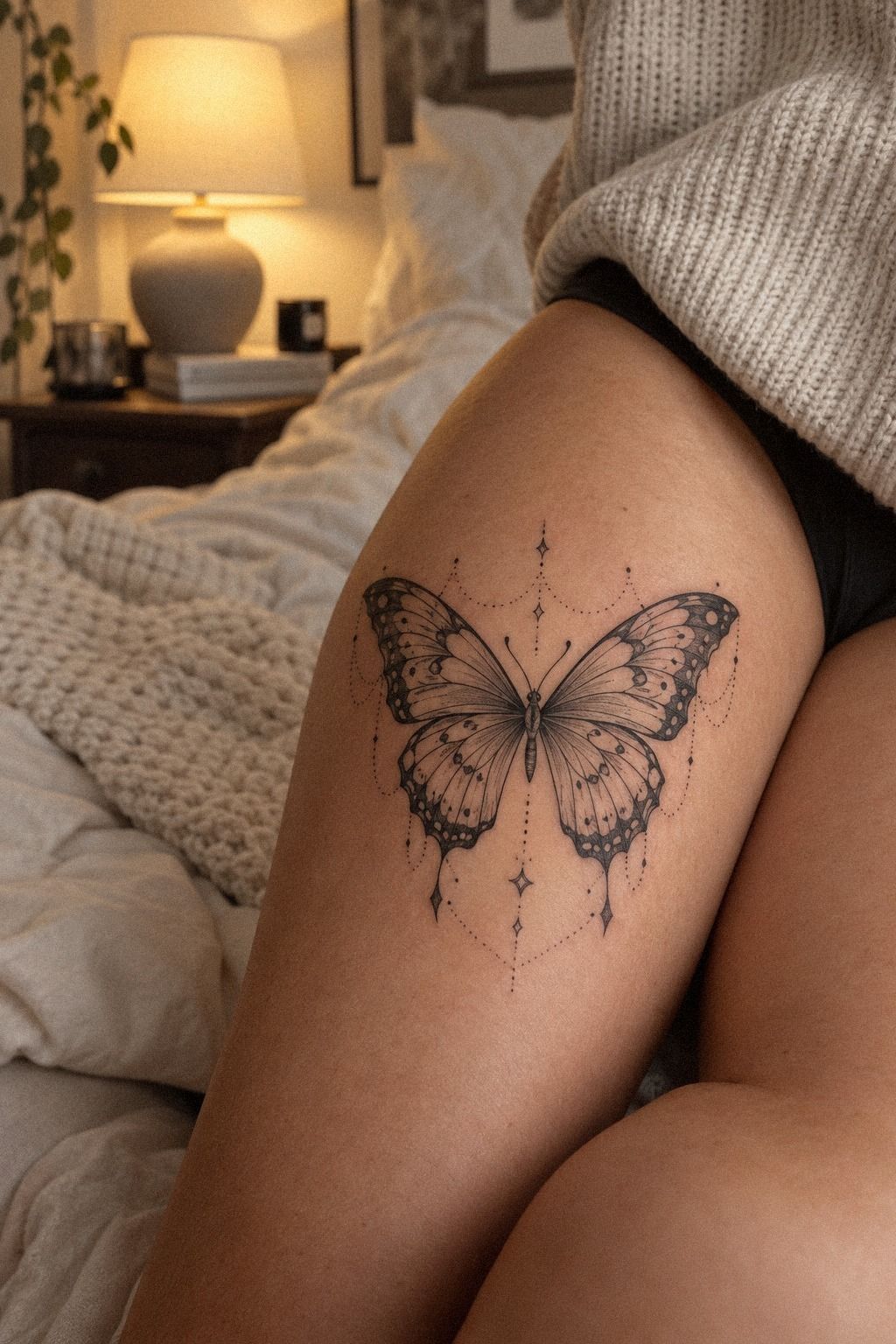
The shoulder placement made wing symmetry look simple. It wasn’t. The butterfly had matching outer wings, but the interior veins needed to meet at the same visual points on both sides.
My artist used a carbon transfer stencil and checked the center body before placing it. You’ll want to check the stencil while standing naturally because a perfectly centered drawing can look tilted when your shoulders aren’t level.
I’d rather have a slightly organic line than a rigid design that ignores the body beneath it. Geometry should guide the tattoo, not make it look disconnected from you.
But the symmetry still had to be disciplined. The final version felt polished, sharp, and balanced without losing warmth. I checked the stencil facing forward, then with my arm lowered.
That small symmetry check caught a lower-wing angle I didn’t like. We adjusted it before any needle touched skin, and that was the most empowering part of the process. It proved that asking for a change is responsible, not difficult.
The centerline alignment mattered more than perfect mathematical sameness. My shoulders aren’t identical, so the artist made tiny adjustments that helped the butterfly look balanced on my actual body.
7Added Meaning Through Angular Butterfly Shapes
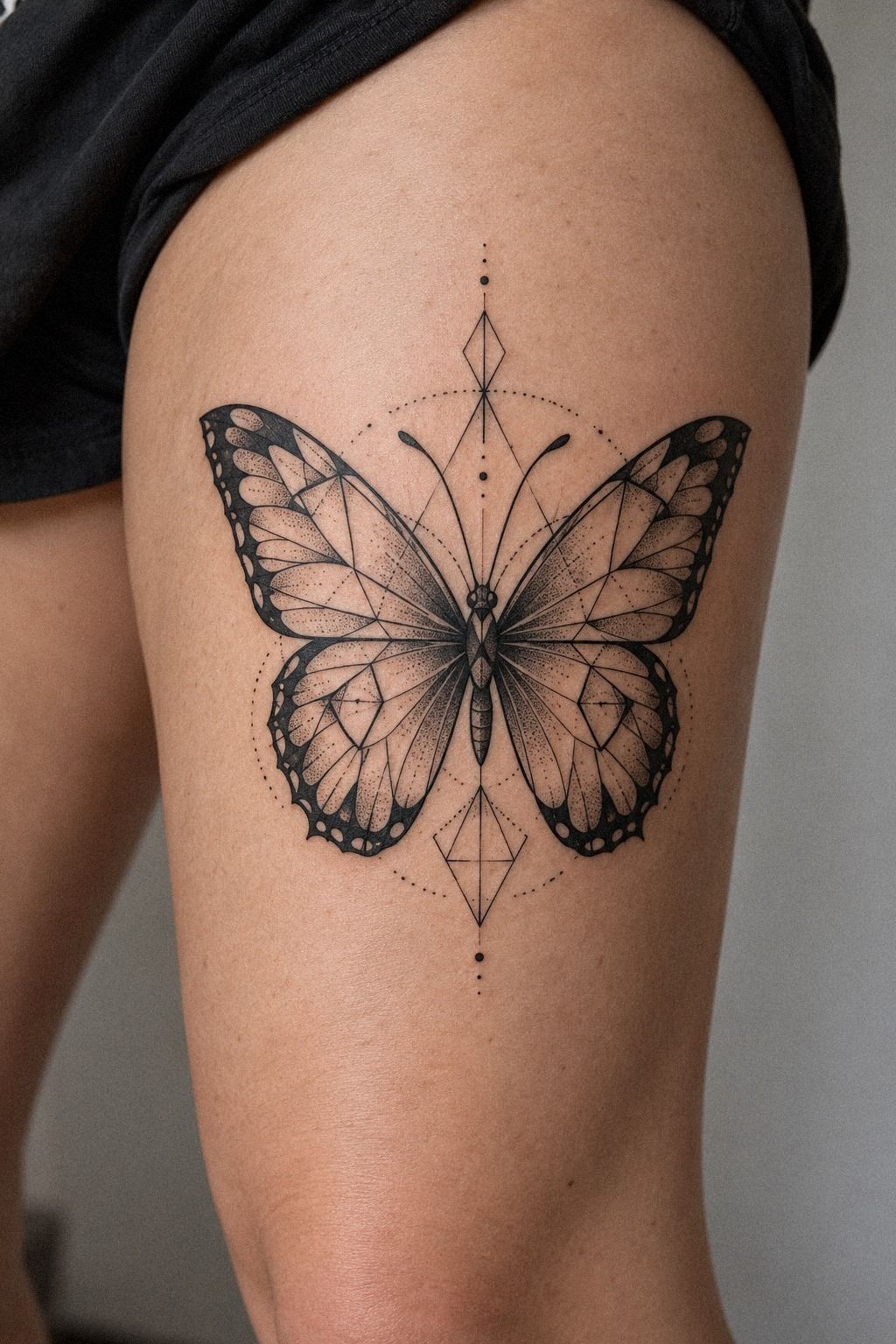
The spine version made me think about butterfly symbolism more seriously. My geometric butterfly wasn’t a generic symbol of change. The angular shapes represented decisions that felt uncomfortable at the time but gave me a clearer direction later.
You don’t need a dramatic explanation, but you should know what makes your design yours. That reason can be private, practical, spiritual, or simply aesthetic.
I kept the body narrow and the wings open around it, using negative-space channels rather than filling every triangle. That made the result meaningful, timeless, and slightly haunting in the best way.
I’d skip tiny initials or dates if they distract from the butterfly itself. The structure should carry the emotion. A classic symbol doesn’t need several extra explanations attached to it.
What would you choose if nobody else ever saw it? That question helped me remove two decorative stars and a circle that I’d added only because the sketch looked unfinished.
Once those pieces were gone, the design breathed. I linked my notes with black butterfly tattoo inspiration to compare symbolic approaches, then returned to the simpler drawing.
The private tattoo meaning doesn’t need to be obvious to anyone else. I like that the piece can feel fierce and empowering to me while looking minimal and understated to someone who only sees the outline.
8Prepared for Crisp Black Ink
Tattoo preparation was less glamorous than saving reference photos, but it mattered.
Which Details Earn Their Place?
Every angular detail needed a job. If a line didn’t improve the wing, center, or overall balance, I removed it.
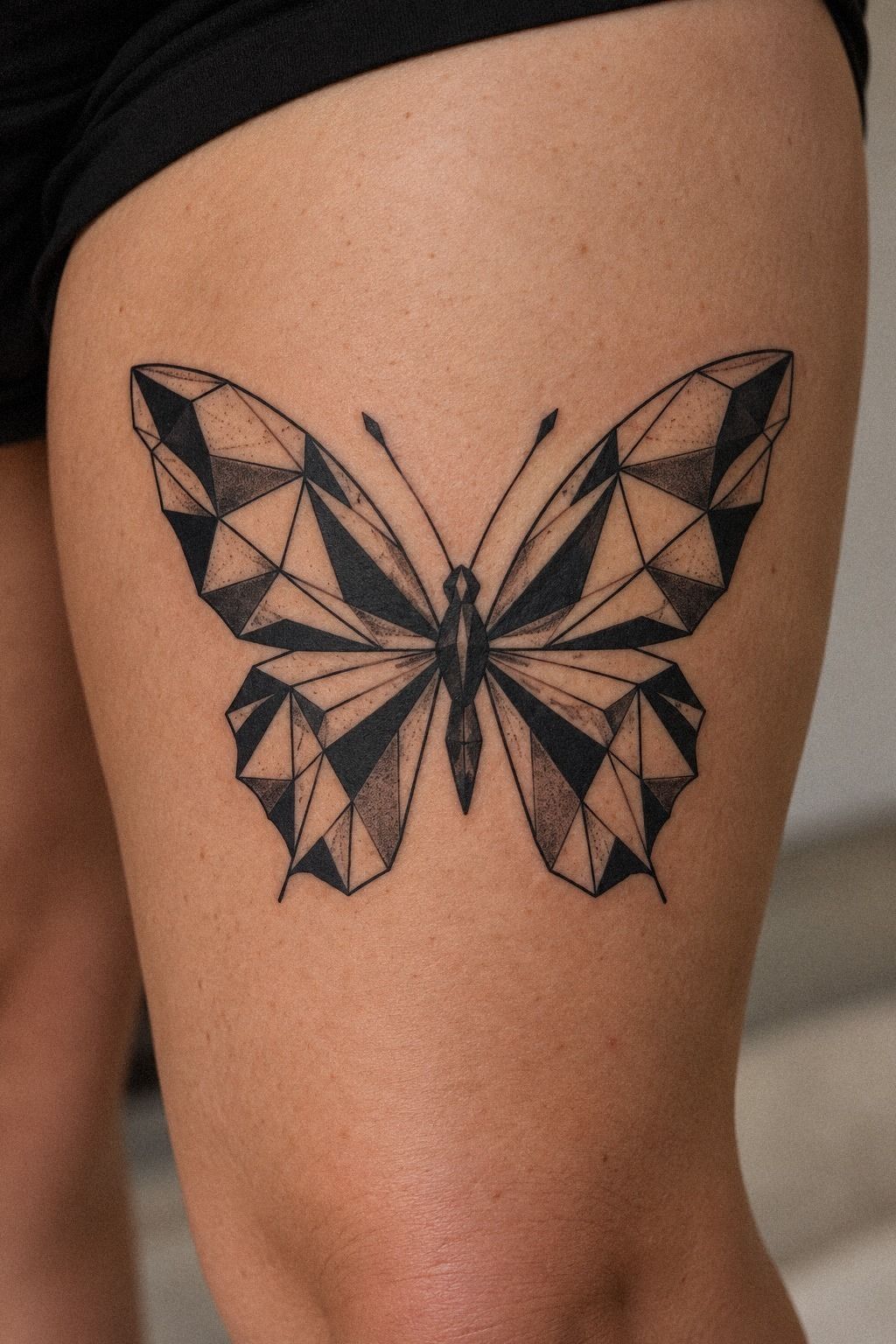
The final tattoo had a bold central body, open upper wings, and two smaller cuts near the lower edges. That was enough to make it distinctive without turning it into visual noise.
I reviewed fine-line options through black butterfly tattoo designs that age well and noticed the strongest examples all respected spacing. Their appeal came from control, not from packing in every possible symbol.
A vibrant accent wasn’t necessary because I wanted blackwork. The contrast between dark ink and untouched skin gave the tattoo its own blackwork contrast.
The solid black body earned its place because it gave the wings a visual anchor. Without it, the open geometry looked disconnected. With it, the silhouette became iconic and easier to recognize.
I removed one extra outline, three dots, and a tiny star. Those draft edits made the butterfly less ornate but more expressive. The final drawing had fewer parts and a stronger point of view.
9Managed Pain During the Tattoo Session
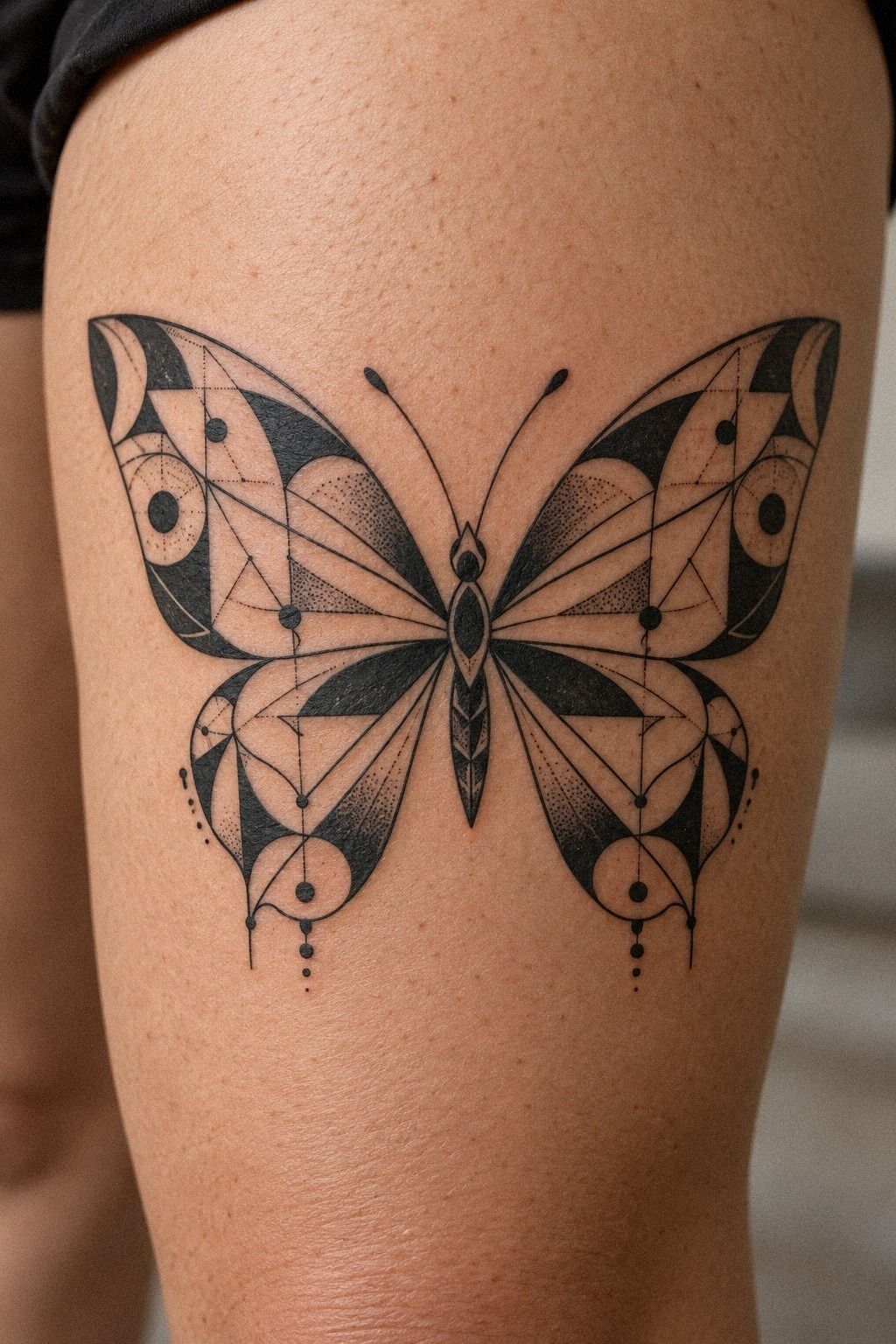
Pain depends on placement, pressure, and your own body. My shoulder skin felt tolerable, with a hot scratching sensation that came and went as the artist moved through the wings.
You’ll want to eat beforehand, bring water, and tell your artist if you need a pause. A session break can protect your focus and keep your body from tightening.
I expected the tattoo machine to sound louder than it felt. The outline was the most noticeable part, while the small filled sections felt warmer and heavier.
I’d skip pretending you’re fine if you aren’t. Your first tattoo can be fierce and personal without requiring you to suffer for the story. That matters!
The process felt surprisingly calming once I stopped watching the clock. I focused on breathing through the sharper moments and kept my arm still.
The completed tattoo outline gave me a clear visual target, which helped. The session wasn’t painless, but it was manageable, and I never felt pressured to prove anything.
I told my artist when I needed a pause, and the session continued without drama. A short tattoo break didn’t make me difficult. It helped me stay relaxed enough for clean lines.
The most intense sensation came during the denser black sections. The open areas were quicker, while the central body required more repeated passes. That difference was noticeable but brief.
10Protected the Design During Healing
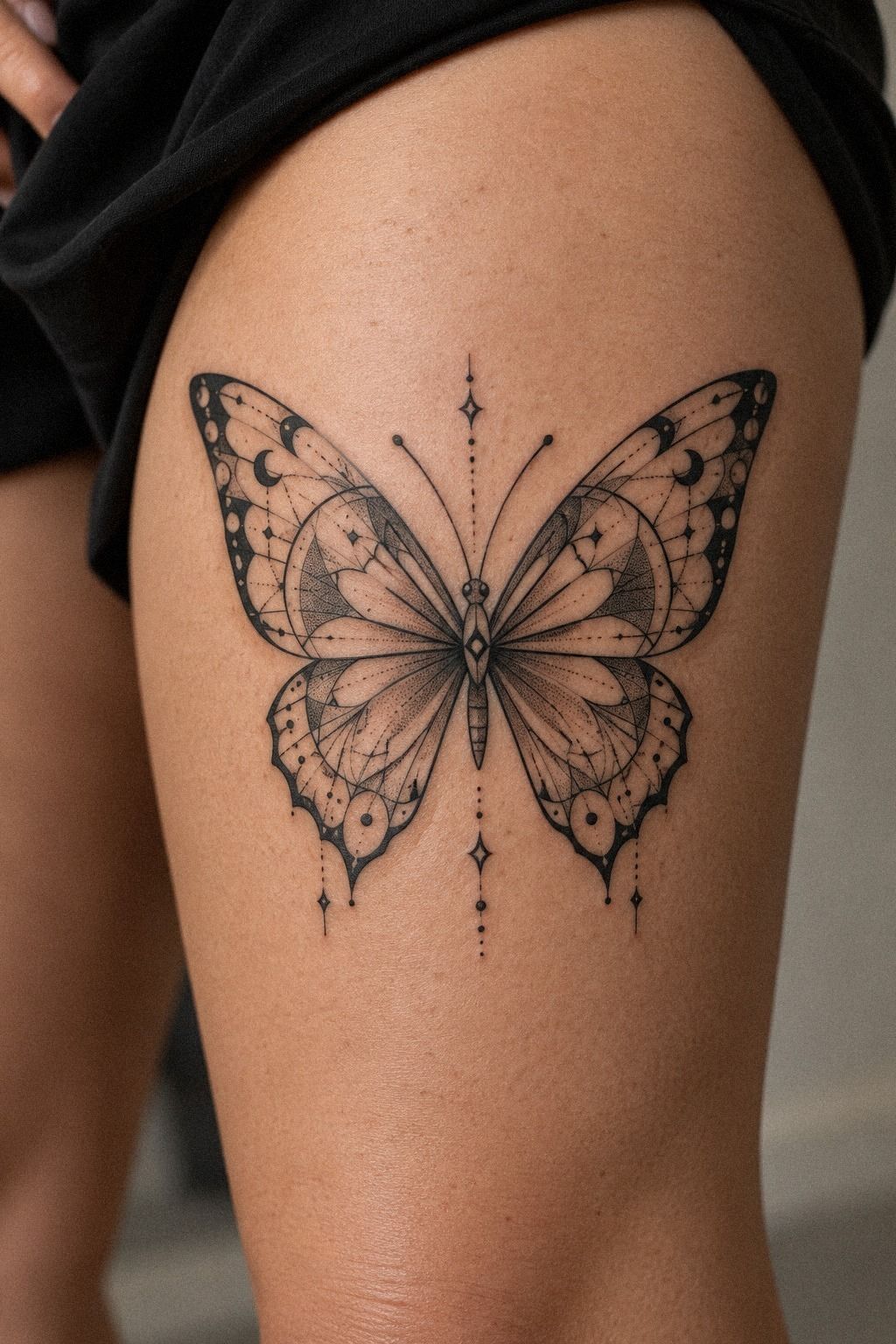
Fresh black ink can look darker and sharper, while a healed tattoo settles into the skin and may appear slightly softer. You’ll want to follow your artist’s instructions rather than copying someone else’s routine.
I washed the area gently, kept it moisturized with a thin layer of fragrance-free aftercare lotion, and avoided direct sun and swimming. The surface usually heals in about 2 to 3 weeks, while complete healing can take roughly 2 to 3 months.
I’d avoid scratching, picking, or covering it with tight clothing during that early period. If the skin becomes unusually painful, hot, or swollen, contact a medical professional instead of guessing.
The most difficult part was patience. The tattoo looked a little dull before it looked settled, and I worried for no reason. That healing stage is common.
Keep the skin clean, avoid UV exposure, and let the design finish healing. If you’re comparing long-term styles, black butterfly tattoo designs that age well can help you study line weight and spacing.
I also kept my expectations realistic. No tattoo stays frozen in its first-day appearance, but a well-planned blackwork design can remain bold, elegant, and readable.
The healed black ink looked softer than it had on the first day, but the major shapes stayed clear. That was exactly why I’d insisted on open areas and a readable silhouette.
I didn’t pick at the peeling skin, even when it felt irritating. The restraint was annoying for a few days, but it protected the crisp result I’d paid for.
How Do You Protect Fine Geometry?
Protection starts before the appointment. Placement, line thickness, and daily friction all affect long-term clarity.
I chose the shoulder partly because it didn’t rub constantly against a waistband or shoe. You’ll want to think about work clothing, sports, straps, and how much sun reaches the area.
A sleek tattoo can lose clarity when it receives repeated friction or careless sun exposure. That doesn’t mean you need to hide it forever. It means you should know what your routine demands.
For more compact ideas, I revisited tiny black butterfly tattoo designs and noticed how much the best examples depended on clean open areas.
I now use broad-spectrum sunscreen once the tattoo is fully healed. During the early stage, I followed my artist’s instructions instead of applying products that hadn’t been recommended.
I’m also careful with backpack straps and rough fabric. Those habits aren’t dramatic, but they help preserve the sharp intersections that make geometric tattoos feel intentional.
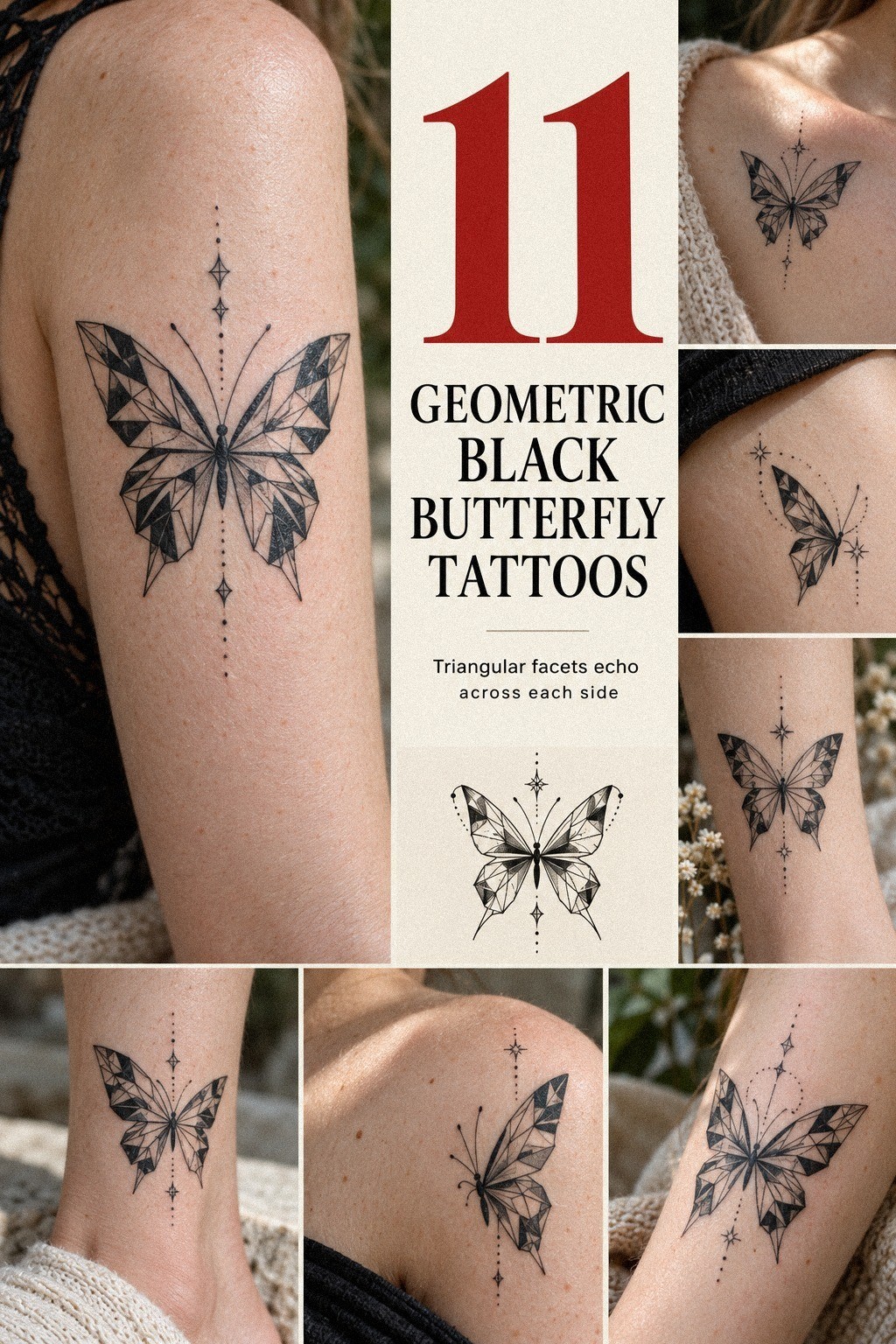
11Admired My Finished Geometric Butterfly Tattoo
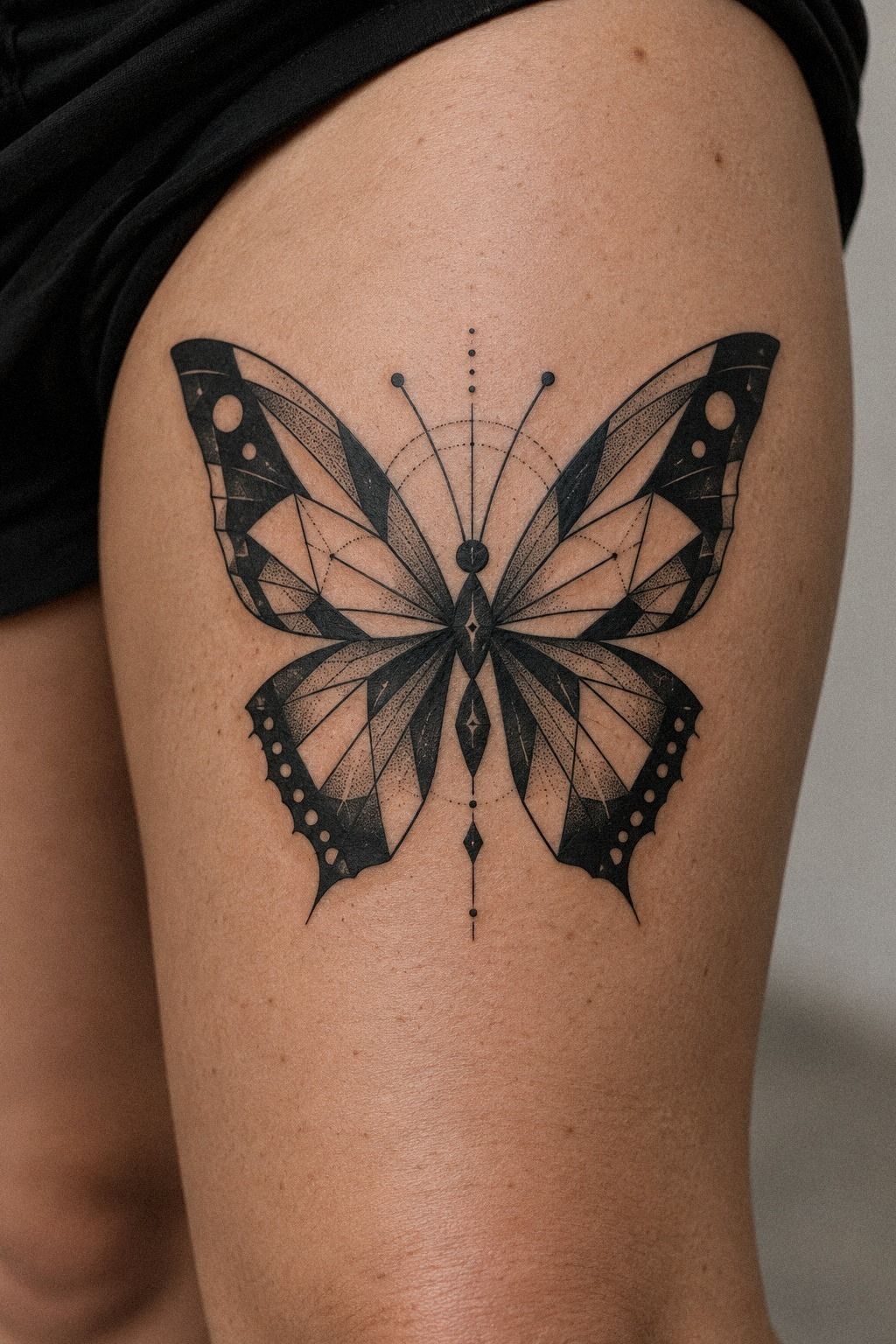
The finished tattoo felt intimate without being hidden.
How Much It Cost
I won’t invent an exact receipt for a tattoo I’m not physically booking for you. Typical US pricing gives you a more useful planning range: small geometric black butterfly tattoos often land around $100 to $300, while shop minimums may sit near $50 to $100 and hourly rates commonly range from $100 to $250.
My practical budget would start with the shop minimum, then leave room for a higher hourly rate if the artist’s healed linework is excellent. You’ll want to ask whether the quote includes the consultation, stencil changes, and touch-up policy.
I’d spend more on an artist with consistent healed work than on extra decorative details. That’s the better long-term value, especially when the design depends on precise symmetry.
A 2-inch butterfly with open geometry may take less time than a dense 4-inch piece, but the exact session length varies. Ask for a range rather than demanding a precise promise.
The cost is worth considering, but the artist’s placement advice and hygiene standards matter more than chasing the lowest number. Cheap isn’t automatically a good deal when a correction costs more later.
For another comparison point, review small black butterfly tattoo ideas and note how size, detail, and placement change the likely tattoo budget.
I also asked about the shop minimum fee before confirming the appointment. That avoided an awkward surprise and helped me decide whether the extra stencil revisions fit my budget.
The Crisp-Line Rule
I learned one rule from this process: a geometric tattoo needs enough empty skin to stay readable. That sounds obvious, but I nearly packed my butterfly with tiny triangles, extra dots, and a second outline because the first draft felt too quiet.
The quieter version won. It looked minimal, polished, and confident without asking every line to perform. A tattoo doesn’t need to be loud to be memorable.
I also learned that “small” doesn’t mean “simple.” A small butterfly still needs clean spacing, a stable centerline, and an artist who understands how skin moves.
You’ll want to inspect healed examples, especially if you’re choosing fine lines. I’d rather see three excellent healed butterflies than thirty dramatic fresh tattoos.
The most understated choice often has the strongest staying power. Solid black sections can age more reliably than extremely fine lines, while heavy detail can blur if it’s crowded.
I went back and forth on the shoulder and forearm, then chose the shoulder placement that protected the shape from constant rubbing and sun. That decision gave me a powerful, sleek design I still enjoy looking at.
I don’t think every first tattoo needs to be safe or tiny. It needs to be considered. Your design can be daring, elegant, or gritty, but you should know why each part is there.
My favorite detail is still the empty triangle between the lower wings because it gives the whole piece definition without making it feel unfinished. That small choice added more character than another symbol would have.
The open-wing geometry is what I notice first now. It gives the butterfly a confident outline, while the smaller interior marks reward a closer look.
If I changed anything, I’d probably keep the same placement and remove one more minor line. That’s how strongly I now prefer clarity over decoration.
The Questions Worth Answering First
How much does a geometric black butterfly tattoo usually cost?
A geometric black butterfly tattoo usually costs about $100 to $300 in the US, though shop minimums may be $50 to $100 and hourly rates about $100 to $250. The final quote depends on size, placement, artist, and region, so ask for pricing before booking.
Are geometric black butterfly tattoos a good idea for a first tattoo?
Yes, they can be an excellent first tattoo when the design has clear spacing and a tolerable placement. Open geometry gives you a readable, personal design, while the shoulder, outer forearm, or thigh can feel easier than ribs, feet, hands, or sternum.
How do I choose a tattoo artist for geometric black butterfly tattoos?
Choose an artist with clean geometric linework, healed portfolio photos, and clear studio hygiene. Healed portfolio examples are the strongest evidence, so ask to see work several months old. You can also compare minimalist black butterfly tattoo artists before your consultation.
How much do geometric black butterfly tattoos hurt?
Pain varies by person and placement. Ribs, feet, hands, and sternum often feel more intense, while the shoulder, thigh, and forearm are commonly more tolerable. Short breaks can make the session easier, so you don’t need to treat pain like a contest.
How long does a geometric black butterfly tattoo take to heal?
The surface usually heals in about 2 to 3 weeks, while complete healing takes roughly 2 to 3 months. Gentle washing and light moisturizing support healing, but your artist’s aftercare instructions should guide your routine.
What’s the best placement for a geometric black butterfly tattoo?
The shoulder and outer forearm are practical choices because they offer visibility, relatively tolerable sessions, and room for clean spacing. Placement advice should account for constant friction and UV exposure, especially if your butterfly uses fine geometric lines. For additional compact references, browse minimalist black butterfly tattoo examples.
Where I’d Start First
If I had to pick one, I’d start with the shoulder tattoo. It gives a small geometric butterfly enough space to stay legible, and clothing can protect it while it heals.
Pin the idea for later, then compare healed portfolios before you book. I’d also read black butterfly tattoo meaning ideas and black butterfly tattoo inspiration before finalizing the symbols.
My strongest advice is simple: choose the design you’ll still recognize as yours after the trend passes. Keep the geometry open, check the stencil carefully, budget for quality, and let the butterfly speak in its own sharp, personal way.
If the sketch feels crowded, pause. If the placement keeps shifting, test it again. And if the design still feels meaningful after the excitement fades, trust that pause!
My final choice was striking, symbolic, and quietly empowering. It didn’t need extra symbols or a complicated explanation. The clean wings, sharp center, and private meaning were enough.