
A black butterfly tattoo can fit a careful budget when you choose the size, placement, and linework before booking. I once planned around the design first and the body placement second. Then I had to redraw everything. Start small, stay specific, and your final piece can look fine-line black ink instead of underplanned. You’ll save money and regret!
Your first decision should be the body area. Next, decide how much detail that area can hold. A thoughtful placement stencil can prevent an expensive redesign.
I’d also review a tattoo artist’s healed work before you book. Fresh ink can look vibrant and crisp, while healed work reveals the real line quality. Your artist’s portfolio should match the style you want.
- Start with a Small Black Butterfly Tattoo
- Which Intricate Black Butterfly Tattoo Ideas Can Stay Affordable?
- Collarbone Alignment: Place Your Butterfly Tattoo With Care
- Keep Linework Crisp on Delicate Wings
- What Meaningful Details Belong in Black Butterfly Tattoos?
- Silhouette First: Choose a Unique Black Butterfly Tattoo
- Can Your Wing Pattern Match Your Personal Style?
- Negative Space vs. Solid Fill: Create Striking Contrast
- Place Tiny Butterflies Across Your Wrist
- Curves or Contrast? Balance Bold Ink With Grace
- Protect Your Black Butterfly Tattoo During Healing
1Start with a Small Black Butterfly Tattoo
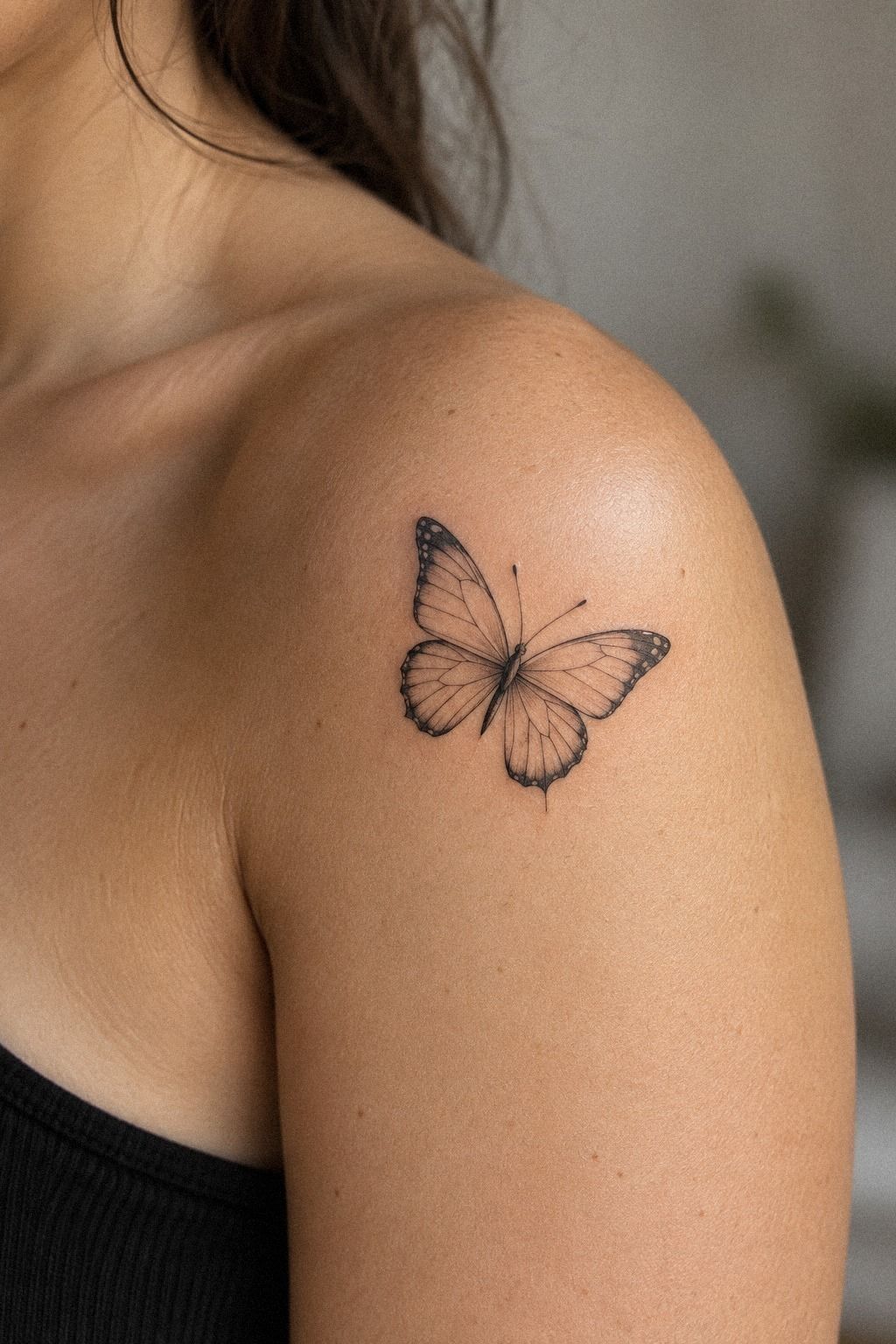
Begin with a small black butterfly tattoo if you want to control both cost and detail. A compact design can feel delicate, personal, and understated without losing its meaning.
I’d keep the first draft between roughly 1.5 and 3 inches. Ask your artist whether the smallest details can survive at that scale. A small butterfly can look striking when its outer shape stays clear.
A calf placement gives you useful space for a readable design. It also tends to offer simpler aftercare than the ribs, foot, or hand. If you’re new to tattoos, the calf can be a graceful starting point.
Focus on the silhouette before you add veins, stars, flowers, or initials. Your butterfly should still read clearly from close range and from several feet away. Tiny details shouldn’t carry the entire concept.
A single-needle cartridge can create delicate lines, but ultra-small veins may soften as the skin changes. I’d choose a slightly larger outline over a microscopic design that loses its shape.
Ask to see healed examples in a similar size. Fresh black ink can look sharp at first. Healed lines show whether the artist understands spacing and long-term clarity.
Your budget benefits from restraint. A small calf piece may take less studio time than a dense design, but the shop minimum still matters. Typical US minimums often land around $50 to $100, while hourly pricing may run about $100 to $250.
The Small-Scale Rule is simple: keep the silhouette clear, keep the wing pattern selective, and give your skin enough room to hold the concept. You don’t need every possible detail for the result to feel intricate, iconic, and bold.
For more starting points, compare these small black butterfly tattoo designs. Save the references that still look readable when you shrink them on your phone.
A minimalist butterfly tattoo can also reduce drawing time without feeling plain. One graceful contour, a selective wing pattern, and a crisp body may say more than an ornate design packed with competing marks.
2Which Intricate Black Butterfly Tattoo Ideas Can Stay Affordable?

Intricate does not have to mean enormous. The strongest wrist placement may use only a few sharp veins, one clean body, and a confident outer contour.
Choose one focal feature. It could be a dramatic lower wing, an ornate border, or a symbolic mark near the body. Adding every attractive detail can push the design toward visual noise.
A fine interior pattern should support the silhouette, not compete with it. I prefer three or four deliberate wing sections over ten cramped ones. That restraint can still feel fierce and expressive.
Ask your artist for a consultation sketch before the appointment. You’ll see which details increase the price and which ones add little value. Start there!
A black butterfly can feel edgy, romantic, or empowering without using heavy shading. Browse this black butterfly tattoo meaning guide when you want the symbolism to guide the design.
You could also borrow one idea from a delicate black butterfly tattoo and simplify it for your budget. The goal isn’t to copy every reference. It’s to identify the one detail that makes your butterfly feel personal.
3Collarbone Alignment: Place Your Butterfly Tattoo With Care

A collarbone tattoo can look elegant and visible, but the placement needs thoughtful sizing. Your shoulder and chest move constantly. The butterfly should follow your natural line instead of sitting stiffly across it.
Ask for a transfer stencil and check it while standing, sitting, and lifting your arm. This quick test can reveal a tilted wing or an awkward center point. I’d spend ten extra minutes checking the position.
The collarbone can feel more intense than the forearm because the skin sits near bone. Pain varies from person to person, though. Your sleep, hydration, nerves, and breathing can all affect the experience.
Your artist should consider body movement before finalizing the design. A butterfly that looks balanced with your arm down may shift when you reach forward. Test the position in the movements you make every day.
Keep the outer wings open and the center selective. Solid black can create a fierce result, but too much weight near the body may make the design look uneven. A graceful balance usually ages better than maximum darkness.
If you’re comparing placements, read this delicate black butterfly tattoo guide. The Collarbone Alignment Check is simple: follow the clavicle with your finger, then see whether the butterfly seems to travel with your body.
A collarbone stencil can reveal whether the design feels classic, feminine, masculine, or unexpectedly edgy once it follows your actual anatomy. Don’t judge the placement from one glance or one body position.
4Keep Linework Crisp on Delicate Wings
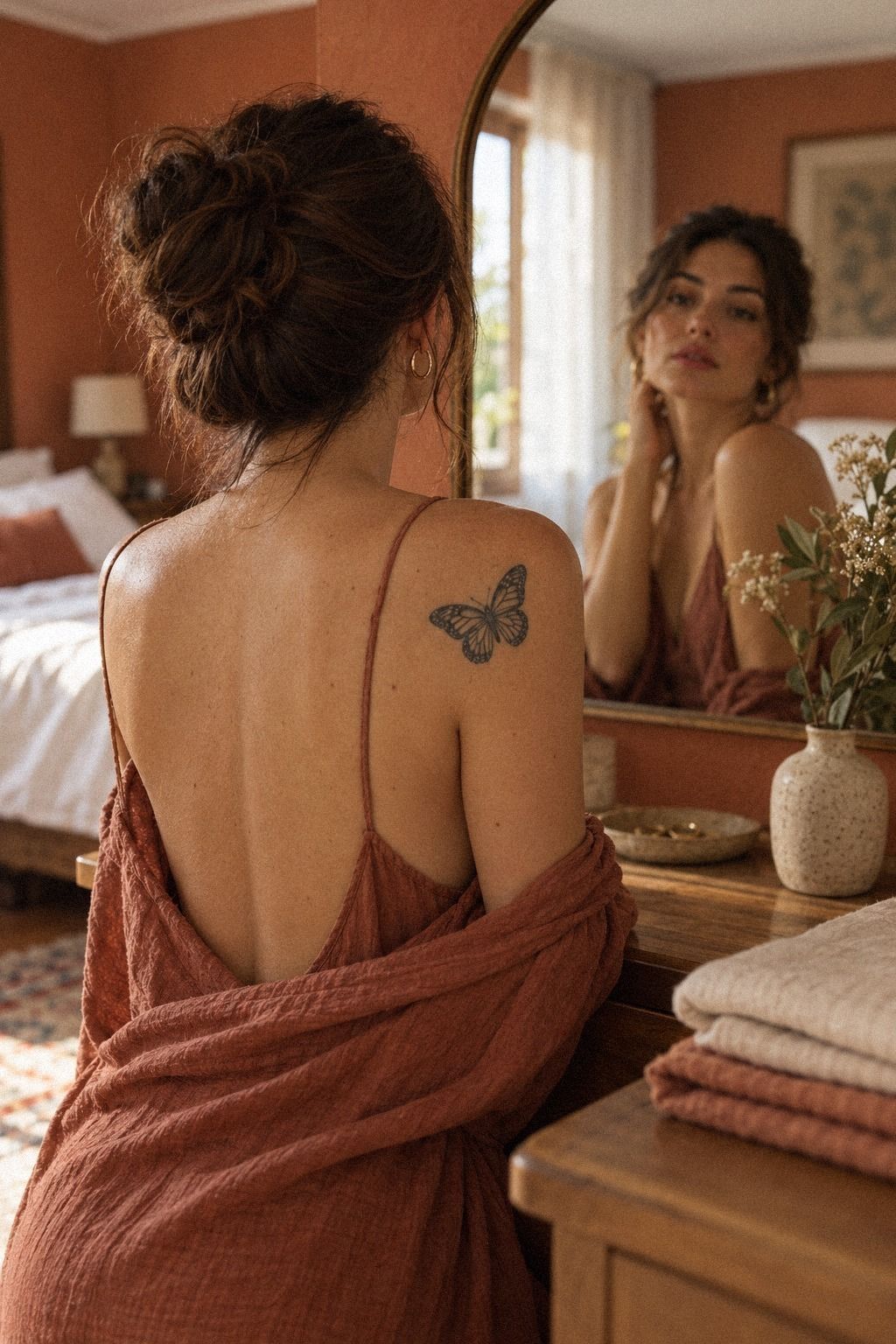
The inner forearm tattoo is a practical choice for readable fine lines. The surface is relatively accessible, and many people find it easier to tolerate than the ribs or feet.
Choose a fine-line stencil with fewer, more deliberate interior marks. Intricate does not have to mean crowded. A sharp outer contour usually matters more than twelve tiny veins.
Ask to see the artist’s healed portfolio, not only fresh tattoos. Fresh ink can look vibrant and dramatic. Healed work shows how lines settle, soften, and spread.
Your artist should explain line spread in plain language. Fine lines may widen slightly over time. Sun exposure, placement, skin type, and aftercare can all affect that change.
Use paper or a digital mockup to test the design while your arm hangs naturally. If the butterfly feels tilted in a relaxed position, you’ll notice it every day. The Crisp-Line Rule says the design should look intentional before the needle touches skin.
For more examples, compare these fine-line black butterfly tattoos. Understated lines can still feel powerful when the silhouette has enough contrast.
I’d be cautious with a hyper-realistic wing pattern at a very small scale. A crisp, expressive outline often remains more readable than a delicate design that depends on dozens of fragile marks.
5What Meaningful Details Belong in Black Butterfly Tattoos?

Start with the symbolic tattoo idea in one sentence. Your meaning might involve grief, rebirth, independence, family, or a personal turning point. That sentence can keep the design personal without making it overworked.
A flash sheet can give you several options while keeping the consultation efficient. Compare wing shape, body length, antennae, and interior pattern. Remove anything that doesn’t add emotional weight.
You can use a tiny star, initial, flower, or date. First, ask whether the meaningful detail will remain legible at the chosen size. A mark that is only a few millimeters wide may blur into the wing.
Your strongest design might be the one with one symbol instead of six decorations. That choice can feel more personal, polished, and timeless. Ornate details should earn their place.
Here are practical budget ranges to discuss with your artist:
These numbers are guideposts, not quotes. Your final cost depends on the artist, region, design complexity, and appointment length. Read this black butterfly tattoo meaning guide before you edit your concept.
A personal symbol can stay meaningful without making the tattoo visually busy. If the idea matters deeply, give it breathing room. Meaning doesn’t become stronger just because the wing contains more marks.
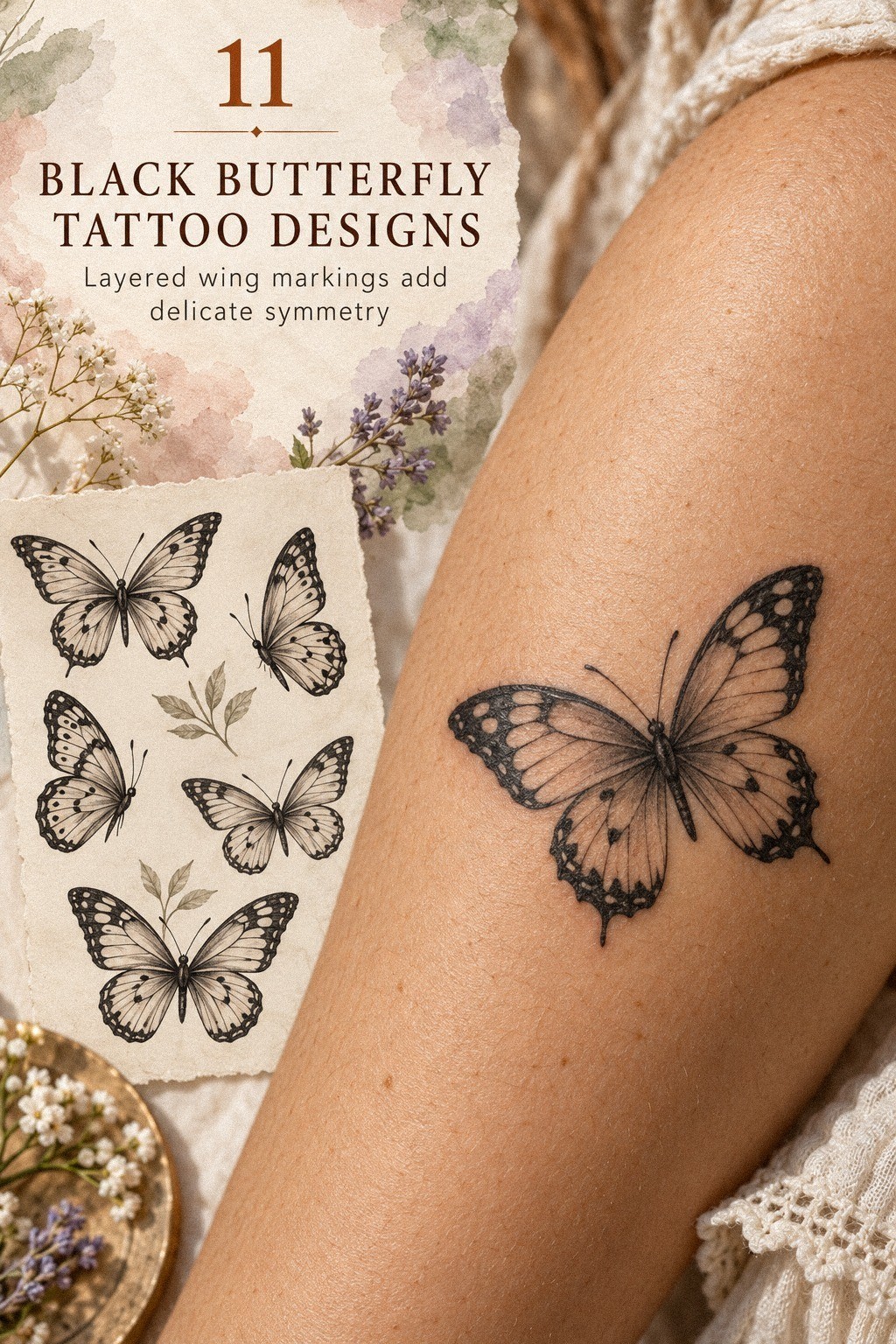
6Silhouette First: Choose a Unique Black Butterfly Tattoo
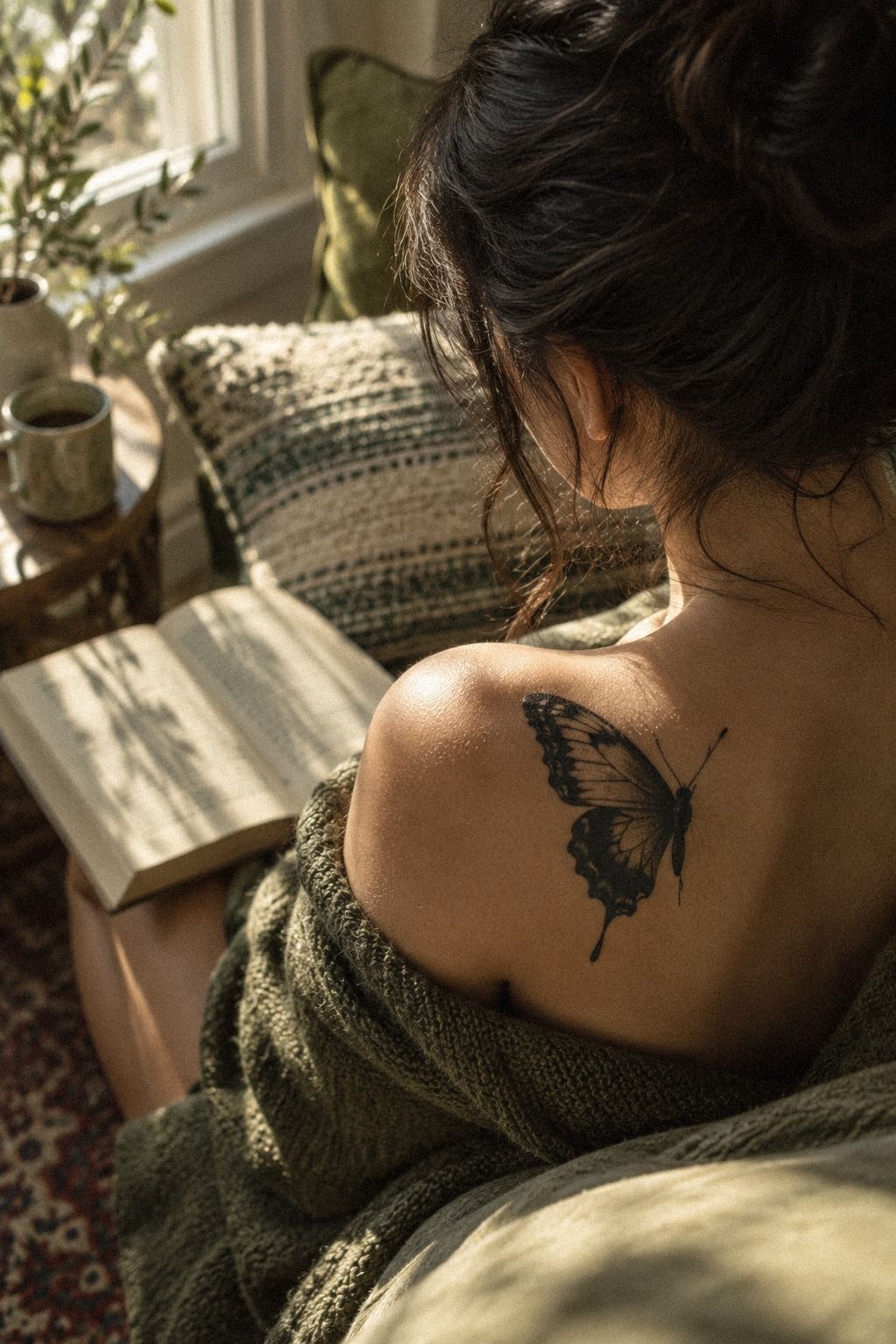
A unique black butterfly tattoo doesn’t need an unusual subject. It can come from one elegant change, such as longer lower wings, a sharper body, or an asymmetrical notch.
Your artist should choose pigment, spacing, and line weight for your skin. A reference that looks clear at first may not translate well to every skin tone. The plan should be personal.
Try a silhouette stencil in several orientations. A horizontal butterfly can feel classic and calm. A slight diagonal may feel daring and energetic.
Ankle placement can be sensitive because of bone, thin skin, and friction from socks or shoes. If you walk often or wear tight footwear, discuss the appointment timing with your artist. You’ll want to reduce rubbing during early healing.
The Silhouette First Rule protects your budget. Make the biggest visual decision before paying for small decorative changes. Compare these unique black butterfly tattoo references before you commit.
I’d rather see one daring contour than a generic butterfly covered in filler. That small change can make the piece feel expressive, iconic, and unmistakably yours.
7Can Your Wing Pattern Match Your Personal Style?
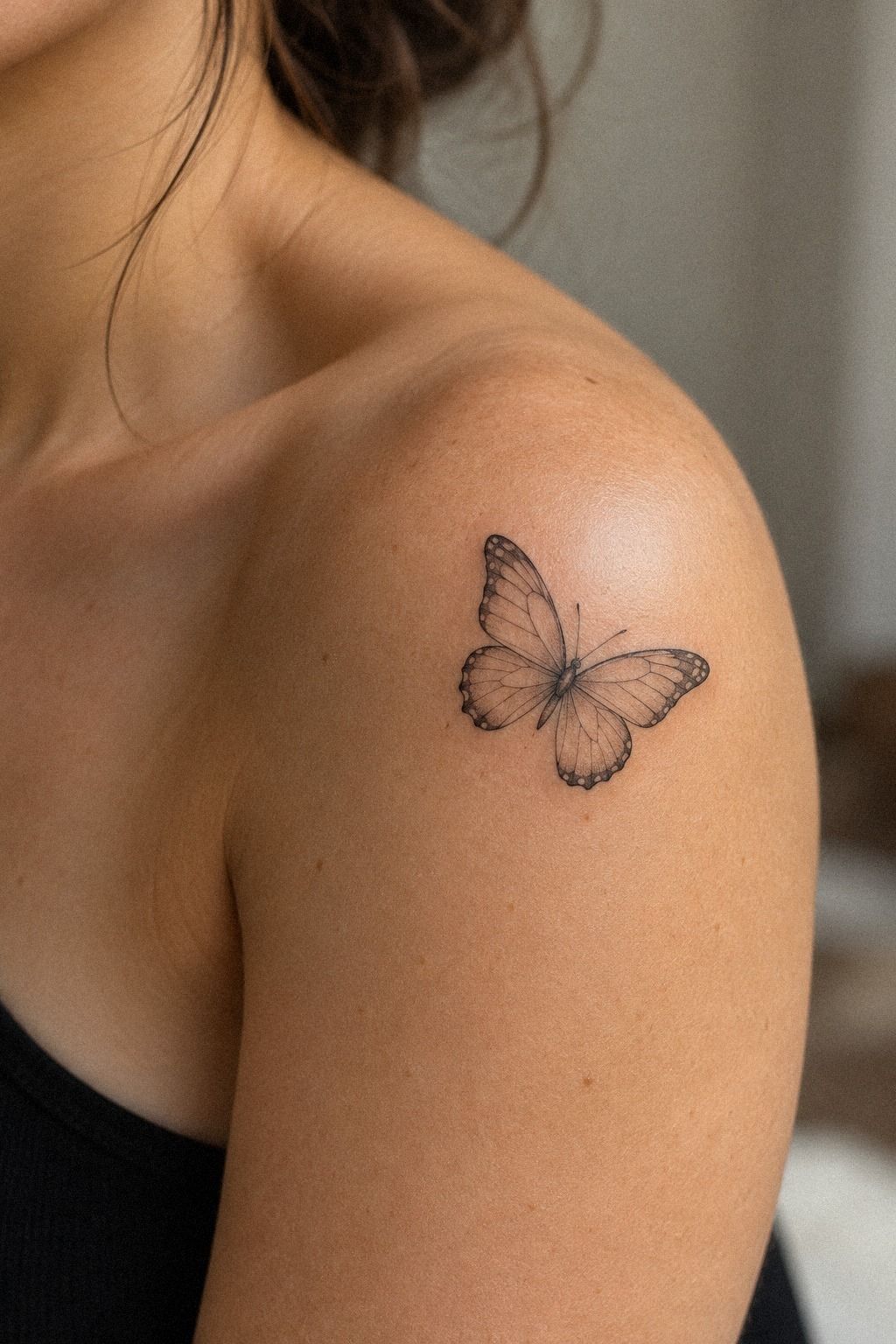
Your personal style should guide the wing pattern before trends do.
A flowing pattern can feel romantic and graceful. A sharp, symmetrical pattern may look sleek, polished, and powerful. If you prefer something softer, choose dainty gaps and understated curves.
For a more expressive result, ask about asymmetry, pointed lower wings, or a small symbolic break in the outline. A fierce idea does not need heavy shading to feel bold.
I’d bring three references with different moods: one minimal, one ornate, and one timeless. Then tell your artist what you like about each. That makes the consultation more useful than asking for an exact copy.
A style reference should explain the mood, not dictate every mark. Your skin, placement, and budget still need to lead the final design.
8Negative Space vs. Solid Fill: Create Striking Contrast
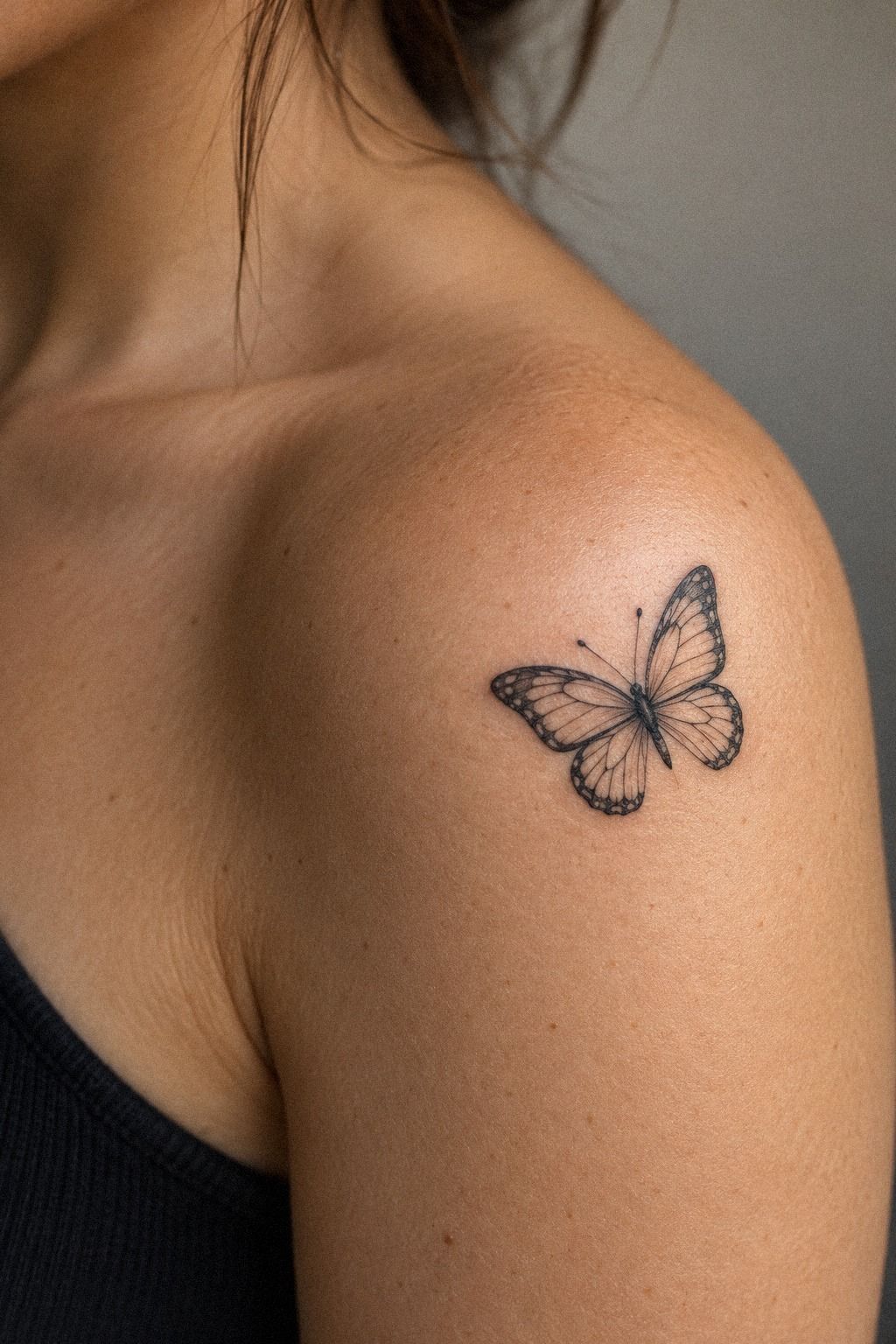
Negative space keeps the design light and lets your natural skin become part of the butterfly. It can make black marks look sharper without adding more session time.
Ask for open wing spacing where the lines need room. This matters in small tattoos because narrow gaps can close visually as the skin changes. Keep the clearest open areas near the upper wings and body.
You might use heavier solid black on the body and outer wing tips. Then leave the inner veins open. That contrast can create a bold, crisp result without turning the design into a dark patch.
Think five years ahead. Would you rather see a readable butterfly or a vague outline?
Fine lines may broaden slightly, and UV exposure can speed fading. Open spacing gives the design useful visual insurance.
Use this delicate fine-line butterfly reference to compare filled and open versions. The Negative-Space Ladder has three steps: light outline, selective fill, and a final readability check.
A contrast plan should consider your skin tone, the placement, and the distance at which you’ll usually see the tattoo. Strong contrast isn’t the same as maximum black. Sometimes restraint looks sharper.
9Place Tiny Butterflies Across Your Wrist

If you’re considering several wrist butterflies, arrange them before booking. Each piece needs enough separation for its outline to stay distinct.
Use temporary stencil marks to test one butterfly, a pair, and a loose sequence. Your artist can help you judge whether the shapes follow the wrist crease or sit better above it.
I’d choose two well-spaced butterflies over four cramped ones. Tiny tattoos can feel dainty, expressive, and playful, but size has limits. Your design still needs enough room for the body and antennae.
A tiny tattoo may require simplified veins or a shorter body. Simplifying is a design decision, not a failure. The result can remain symbolic and personal.
Wrist tattoos face regular washing, sun exposure, and movement. That doesn’t mean they’ll fail, but you should be realistic about touch-ups. Your artist may recommend a slightly larger width.
For compact references, browse these tiny black butterfly tattoo examples. Leave enough skin between shapes that each butterfly can be seen without squinting.
A wrist sequence can look playful or haunting depending on spacing and direction. Keep the arrangement simple enough that each butterfly still has its own identity.
10Curves or Contrast? Balance Bold Ink With Grace

A bold ink design can still have graceful curves.
Ask your artist to keep the outer shape flowing even when the body and wing tips use heavier black. A soft curve can make a fierce design feel elegant instead of rigid.
You might pair a sharp upper wing with a rounded lower wing. That contrast creates movement without requiring extra shading or a larger appointment.
If the tattoo is small, prioritize the outer contour. Interior curves should support the movement of the wings, not compete with it. A sleek outline often stays clearer than crowded decoration.
A curve plan can also help the butterfly follow your anatomy. The wrist, collarbone, ankle, and forearm each create different lines. Test the stencil before choosing the final direction.
For me, the most successful balance is powerful at first glance and delicate when you look closer. That combination can feel feminine, masculine, raw, or quietly personal depending on the details.
11Protect Your Black Butterfly Tattoo During Healing

A rib tattoo can feel more intense because the skin sits close to bone and moves with breathing. If you choose this area, plan a calm day afterward. Wear loose clothing that won’t drag across the fresh design.
Follow your artist’s instructions for fragrance-free soap. Advice can vary with the dressing used. Wash carefully, pat dry, and avoid rubbing the area.
Apply only the amount of recommended moisturizer your artist suggests. A thick layer can leave the tattoo shiny or sticky. Light hydration is usually easier to manage.
Surface healing often takes 2 to 3 weeks. Complete healing can take around 2 to 3 months. Your skin may peel, feel tight, or look dull while the deeper layers settle.
Once healed, daily broad-spectrum SPF 30 can help protect black ink from UV exposure. Avoid swimming, prolonged soaking, and direct sun during early healing. Don’t scratch or pick.
The Healing Window Rule is practical: gentle washing, light hydration, no picking, and patience. If redness, swelling, or discomfort concerns you, contact your tattoo artist or a medical professional.
A healing schedule should fit your work, exercise, travel, and clothing. Planning those details before the appointment can protect the tattoo and prevent avoidable stress.
A Budget Check Before You Book
Your consultation range gives the artist a useful starting point. You don’t need to apologize for having a limit. Say what you can spend and ask which version offers the strongest result.
A small tattoo may still meet a studio minimum. That minimum can cover setup, sterilization, drawing time, and the appointment itself. Ask what the minimum includes before you confirm.
Hourly pricing may make a larger or more intricate butterfly worthwhile. It may also make extra decorative details expensive. Decide which features matter before the session begins.
A clear price question can prevent stress. Ask whether the quote includes the design, stencil changes, touch-ups, and aftercare guidance. Your artist should answer without making you feel awkward.
Ask anyway! A direct budget conversation can lead to a smaller, sharper, more meaningful design instead of a rushed compromise.
For another pricing reference, compare the small butterfly tattoo guide. Treat online ranges as starting points, not promises.
Meaning Before Decoration
Your personal meaning should survive every edit. If the butterfly represents change, grief, freedom, or family, write that down first. Then choose only the visual details that support it.
A symbolic mark can be powerful when it has room to breathe. A small star may matter more than an ornate border. A date may matter more than a crowded wing pattern.
Think about the emotional tone you want. A haunting butterfly will need a different silhouette from a playful one. A sacred or empowering idea may suit a more centered design.
The best meaningful design won’t need a long explanation every time someone sees it. It can remain private while still feeling expressive. Personal meaning gives the tattoo staying power.
A meaningful black butterfly can be romantic, raw, timeless, or empowering without using every available symbol. Decide what the tattoo needs to say, then let the design stay quiet around that message.
Skin Tone and Contrast Need Their Own Plan
Your skin tone should guide the artist’s choices. Line weight, spacing, and contrast must be planned on your skin, not copied from a reference.
Ask to see healed work on skin tones close to yours. This can show how the artist handles black saturation and open areas. It also gives you a more honest idea of the final result.
A contrast plan might use thicker outer wings and lighter interior veins. Another plan might use a small solid center with wide negative space. Neither approach is universal.
Judge your design in the conditions where you normally see your skin and from a comfortable distance. The butterfly should keep its shape without relying on dramatic conditions.
You can compare more delicate black butterfly designs at this reference guide. Look for spacing and healed clarity, not only the first impression.
Your artist should be willing to explain how the design will translate to your skin. A thoughtful plan can feel elegant and polished without depending on a copied template.
The Five-Minute Stencil Test
The placement stencil should be checked from several body positions. Stand normally. Sit down.
Lift your arm. Turn your body.
Look at the butterfly with your muscles relaxed. A graceful curve can shift when the skin stretches. That movement is part of the design.
Ask whether the tattoo feels visible enough for you. A collarbone or wrist piece reads differently from a rib or upper-thigh piece. There is no single correct level of visibility.
A five-minute test can save hours of regret. If the stencil feels wrong, speak up before the appointment starts. You can change the position without changing the entire concept.
I’d also take one quick look while standing naturally. A striking stencil can feel different when you move, and your tattoo needs to feel right in the places you’ll actually live with it.
Questions Worth Asking Your Artist
Ask about the artist’s tattoo portfolio first. Look for clean outlines, balanced spacing, and healed examples. You want evidence of repeatable work.
Ask how the artist handles very small details. A confident artist will explain which marks may need simplifying. They won’t promise that every tiny vein will stay unchanged forever.
Ask how the design fits your budget range. The answer may involve a smaller size, fewer details, or a different placement. Those changes can preserve the idea while lowering the cost.
Ask about aftercare before you book. Your aftercare plan should fit your work, exercise, clothing, and daily routine. Practical planning makes healing easier.
Finally, ask how the artist approaches darker or lighter skin. A thoughtful answer should include healed results, contrast, and spacing. You deserve a plan made for your body.
You can also compare fine-line butterfly tattoo examples before your consultation. Bring questions, not a demand for an exact copy.
The Opinion I’d Give Before You Book
I’ve seen people spend more because they began with a complicated drawing. Then they discovered that the placement couldn’t support it. The better decision is usually quieter: choose the body area first, print the design at scale, and ask what will still read after the skin settles.
I’d skip the most crowded reference in your saved folder. It may look intricate, elegant, and captivating on a large screen. The same pattern can turn muddy when reduced to a wrist or ankle.
Your budget should shape the design early. Tell the artist your range and ask what version gives you the strongest silhouette. A smaller tattoo with confident linework can feel more polished than a larger piece with weak spacing.
For me, the most important question isn’t whether black butterflies are popular. It’s whether you’ll still recognize yourself in the choice after the first excitement fades. A symbolic, personal, and empowering design can earn its place on your skin.
I’d also plan for aftercare before the appointment. A tattoo isn’t finished when the session ends. Your habits during the next few weeks will influence how the lines settle.
My honest pick would be a medium-small butterfly with a crisp outer contour, selective interior marks, and one personal symbol. It’s expressive enough to feel meaningful, but restrained enough to stay readable and budget-conscious.
The Questions I Get Asked Most
How much does a black butterfly tattoo usually cost?
A black butterfly tattoo usually costs about $100 to $300 in the US. Shop minimums may be around $50 to $100.
Hourly rates may run about $100 to $250. Your final price depends on size, detail, artist, and region. Compare these small black butterfly tattoo styles before requesting a quote.
Are black butterfly tattoos a good idea for a first tattoo?
Yes, a black butterfly can be a strong first tattoo when you choose a manageable placement and readable scale. Clean linework keeps the design easy to understand. The forearm, calf, and outer shoulder may feel more tolerable than the ribs or feet.
How do I choose a tattoo artist for a black butterfly tattoo?
Review the artist’s portfolio for clean linework, healed examples, and designs on skin tones similar to yours. A consistent healed portfolio is the strongest trust signal. Confirm studio hygiene, consultation practices, and experience with fine-line or blackwork tattoos.
How much do black butterfly tattoos hurt?
Pain varies by person and placement. Ribs, feet, hands, and sternum often feel more sensitive than the forearm, thigh, or shoulder. Placement affects comfort more than the butterfly subject itself.
Sleep, stress, hydration, and personal tolerance also matter.
How long does a black butterfly tattoo take to heal?
The surface often heals in about 2 to 3 weeks. Complete healing can take around 2 to 3 months.
Gentle washing and patience protect the final lines. Avoid picking, prolonged soaking, and early sun exposure while following your artist’s instructions.
What’s the best placement for a black butterfly tattoo?
The forearm and calf are practical choices for readable linework and easier aftercare. The collarbone, ankle, and ribs create a more visible or intimate effect.
Your best placement balances meaning, comfort, visibility, and future line spread. Test a stencil while standing and moving.
Can I design a black butterfly tattoo myself?
You can sketch your idea, collect references, and choose the mood. Professional adjustments help the design age more clearly. Bring your preferred silhouette, placement, and budget, then let the artist simplify details that are too small.
For another compact reference set, compare these small black butterfly tattoo designs.
Where I’d Start First
If I had to pick one step, I’d start with the placement stencil. You can fix a crowded wing pattern, but you can’t easily fix a butterfly that sits awkwardly on your body.
Test the shape while you move. Then book the cleanest version that fits your budget, placement, and meaning. Save this guide for your consultation.
If you want one final reference before booking, revisit this fine-line butterfly tattoo guide. Choose the concept that still feels striking, personal, and readable after you remove everything unnecessary.

One response to “How to Create a Black Butterfly Tattoo That Fits Your Budget”
[…] I also considered a heavier solid fill butterfly style, but I rejected it for this placement. Solid fill can age well when it’s applied carefully, yet it would’ve made the calf piece feel more forceful than I wanted. A crisp outline gave me a graceful silhouette, and I could still explore a bolder version through this fine line black butterfly tattoo guide. […]