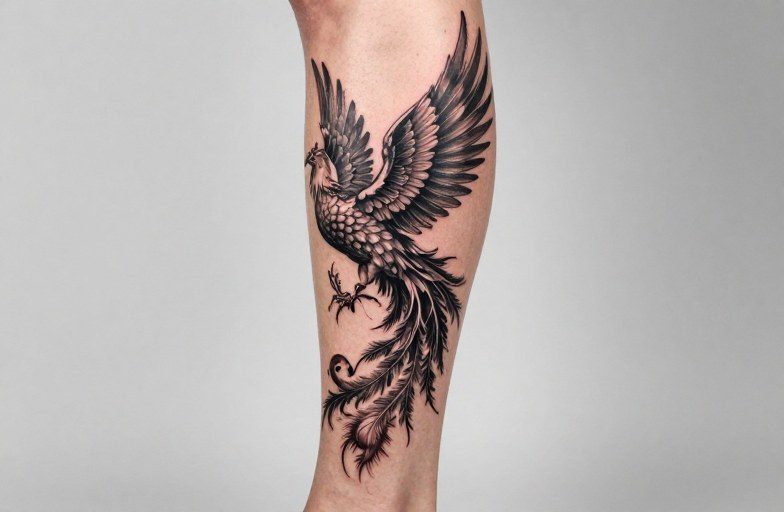
A phoenix tattoo on the leg carries the core symbolism of rebirth, resilience, and triumph over adversity. The leg’s long, vertical canvas lets the bird stretch in full flight or rising posture, emphasizing upward motion and escape from hardship. Unlike smaller symbols tucked away, a leg phoenix commands space. It becomes part of how you move through the world, carrying meaning forward with each step.
Color vs Black and Grey
The choice between color and black and grey changes not just the look but how the tattoo ages on leg skin, which sees constant friction from pants, socks, and movement.
Color: Fire and Longevity
Traditional reds, oranges, and yellows make the flames unmistakable. Color saturation holds up reasonably well on the thigh and outer calf, where skin takes less direct rubbing. Inner thigh and back of the knee are danger zones; constant flexing and fabric contact fade color faster. Bright pigments like yellow and light orange need more frequent touch-ups than deep reds or blacks. Watercolor-style phoenixes without black outlines blur significantly on the leg, sometimes within just a few years. If you want color that lasts, ask for bold outlines and saturated mid-tones rather than pastel washes.
Related reading: Japanese phoenix tattoo design | phoenix sleeve tattoo meaning | phoenix bird back tattoo | minimalist phoenix tattoo
Black and Grey: Structure and Aging
Black and grey ages gracefully on legs. The contrast between deep blacks and skin tone creates readable flame shapes through negative space and dotwork. Fine-line black and grey phoenixes can look stunning fresh but soften faster on calves and ankles where skin is thinner and more mobile. Heavy black in the wing feathers and tail provides anchor points that keep the composition readable even as grey tones settle. For large-scale pieces wrapping the thigh or shin, black and grey often flows better with the body’s natural shadows.
Best Placements
Leg anatomy dictates what works for a phoenix design. The bird’s elongated body and sweeping wings need room to breathe.
Thigh and Hip Connection
The outer thigh offers the largest uninterrupted canvas. A phoenix rising from flames fits naturally here, with wings spanning toward the hip and tail feathers trailing toward the knee. The muscle curve adds dimension; wings can appear to wrap slightly, creating depth without forced perspective. Front thigh placement puts the bird’s face forward, confrontational and direct. Inner thigh is more private, the pain sharper, but the intimacy matches the personal nature of rebirth symbolism.
Calf, Shin, and Ankle
Calves work well for vertical compositions: phoenix ascending with flames at the ankle, head near the knee. The gastrocnemius muscle provides a rounded surface that suits the bird’s chest and folded wings. Shins are flatter, better for profile views with wings extended horizontally. Ankle phoenixes are possible but cramped, typically stylized, small, or focused on a single wing or flame element rather than the full bird. The ankle’s bone proximity makes sessions rough, and detail blurs faster here than on fleshier areas.
Common Variations and Styles
Phoenix designs on legs adapt to several established approaches, each with different maintenance and visual impact.
- Japanese (Irezumi): Often paired with peonies, maple leaves, or wind bars. The phoenix (hou-ou) in this tradition carries slightly different associations: virtue, grace, and the imperial household. On legs, these frequently become full thigh-to-ankle sleeves with background elements filling gaps. The style demands commitment but ages exceptionally well due to bold outlines and heavy saturation.
- Neo-Traditional: Thick black outlines, limited but bold color palette, exaggerated proportions. The phoenix’s eyes often stare directly forward, beak open. Leg placement lets the tail feathers extend dramatically, sometimes wrapping to the back of the calf. Holds up well over time; the graphic clarity survives fading.
- Realistic: Feather detail, anatomical accuracy, dramatic lighting. Requires large scale to avoid muddying, thigh or full calf minimum. References often blend golden eagle and pheasant anatomy. Realistic flames demand either exceptional color work or careful grey-wash temperature shifts. Touch-ups are almost guaranteed as fine feather detail settles.
- Geometric/Mandala: The phoenix form constructed from repeating shapes, sometimes with sacred geometry backgrounds. Lower leg placement suits these well; the flat shin and rounded calf create natural variation in how the geometry reads from different angles. Black-dominant versions last; color geometric fades unevenly.
Design Tips and Pairings
Smart design choices separate leg phoenixes that work from those that fight the body’s structure.
Flowing With Movement
The knee is a joint, not a canvas. Avoid placing the phoenix’s eye or critical detail directly on the kneecap; flexing distorts the image constantly, and healing is miserable. Instead, let flames or tail feathers cross the knee area loosely, accepting the movement as part of the design. Wings should follow the leg’s long axis; horizontal wings across the thigh rarely look natural when standing. Consider how the tattoo reads from the front, side, and back. Leg tattoos are three-dimensional in a way chest or back pieces aren’t.
Complementary Elements
Popular pairings include:
- Hourglasses or clocks (time, cycles, mortality)
- Lotus flowers (emerging from mud, parallel rebirth symbolism)
- Script or lettering (names, dates, phrases, placed where it won’t compete with the bird’s silhouette)
- Mountains or clouds (grounding the ascent, adding landscape context)
Avoid overcrowding. The phoenix is already visually dense: feathers, flames, motion lines. Adding too many secondary elements turns the leg into a cluttered collage rather than a coherent image. Let the empty skin work for you.
Mythology and Folklore
The phoenix spans multiple traditions, though details vary significantly. Greek sources often link it to the sun god Helios, with the bird’s life cycle mirroring solar rising and setting. The burning and rebirth from ashes appears in Herodotus and later Roman writers, though early accounts describe the phoenix as rare rather than strictly immortal. Some versions allow only one phoenix to exist at any time.
Chinese and Japanese traditions feature the fenghuang or hou-ou, sometimes translated as “phoenix” though the creature differs. It appears in pairs with the dragon, symbolizing imperial balance, yin and yang, feminine and masculine. The fenghuang incorporates elements from multiple real birds: pheasant body, mandarin duck head, peacock tail. On a leg tattoo, this distinction matters mainly if you’re commissioning Japanese-style work; mixing iconographic traditions without awareness can produce confused imagery.
Medieval Christian bestiaries adopted the phoenix as a resurrection symbol; the bird’s self-sacrifice and return prefiguring Christ. This association persists in some contemporary religious tattoo contexts, though the imagery has largely secularized in modern Western tattooing.
Religious and Spiritual Angles
For some wearers, the phoenix carries explicit spiritual weight. Survivors of illness, addiction, or trauma often choose the symbol to mark a definitive break with past suffering. The leg placement makes this visible on their own terms, shown or covered depending on circumstance, but always present as they move through daily life.
In Buddhist-adjacent spirituality, particularly Western interpretations, the phoenix represents purification through fire, the burning away of attachment. This resonates with certain meditation and recovery practices. Tattooing the symbol on the leg, the limb that carries you forward, reinforces the idea of walking a transformed path rather than returning to old ground.
Christian wearers sometimes explicitly connect the phoenix to resurrection theology, though this is less common in mainstream denominations than in personal spirituality. The symbol functions more often as general hope or endurance rather than doctrinal statement. If religious meaning matters to you, discuss specific imagery with your artist. Crosses integrated with phoenix designs require careful composition to avoid visual clash or unintentional sacrilege.
Before You Decide
A leg phoenix tattoo works when the design respects the body’s movement and the symbolism matches your actual experience, not an aspirational version of yourself. The best pieces come from honest conversations with your artist about scale, placement, and how much maintenance you’re willing to commit. Color or black, Japanese or neo-traditional, thigh or calf, the variables matter less than fit: between image and body, between meaning and lived truth.
Start with reference images that move you, not trends. Bring your artist photos of poses, flame treatments, and wing positions you respond to. Ask how the design will read when you’re walking, sitting, standing. Request a stencil session before committing to needle. A phoenix is too permanent, too loaded, to rush.
Consider timing, too. Leg tattoos heal during a period when you’ll need loose clothing, limited sweating, and patience with peeling skin. Plan around your work, your climate, your season. The bird may rise from ashes, but you don’t want to nurse a fresh tattoo through a summer marathon or winter wool layers.
Finally, budget for completion. Large leg pieces often need multiple sessions. The outline, the shading, the color passes, the background, each layer demands healing time. A phoenix that looks finished in one marathon session usually looks unfinished in six months. Spread the work. Let the skin recover. The bird will wait; it knows something about endurance.
Frequently Asked Questions
Does a leg phoenix tattoo hurt more than other placements?
The thigh outer and front is generally manageable, though the inner thigh stings sharply. Calves are moderate. Shins and ankles hurt significantly more due to bone proximity and thin skin. The back of the knee is notoriously rough for healing and sensation.
How long does a full leg phoenix sleeve take?
A full thigh-to-ankle Japanese-style phoenix sleeve typically needs 40 to 80 hours across multiple sessions, depending on complexity, color versus black and grey, and your pain tolerance per sitting. Smaller calf or thigh pieces might finish in 10 to 20 hours.
Will my leg phoenix stretch if I build muscle or lose weight?
Moderate changes have minimal impact. Significant muscle gain in thighs or calves can distort proportion slightly. Major weight fluctuation affects any tattoo, but legs are relatively stable compared to stomach or upper arms. Design with your long-term body in mind.
Can I cover an old tattoo with a phoenix on my leg?
Phoenixes work well as cover-ups because the flames, dense wings, and dark feather areas can absorb older ink. Your artist will need to design specifically around the existing tattoo’s location and color. Black and grey cover-ups often succeed more reliably than color over color.


Leave a Reply